
Online Listings vs. In-Person Markets: Where Used Furniture Deals Actually Hold Up
Compare the trade-offs between buying secondhand furniture digitally versus in person — convenience, risk, price, and inspection access.
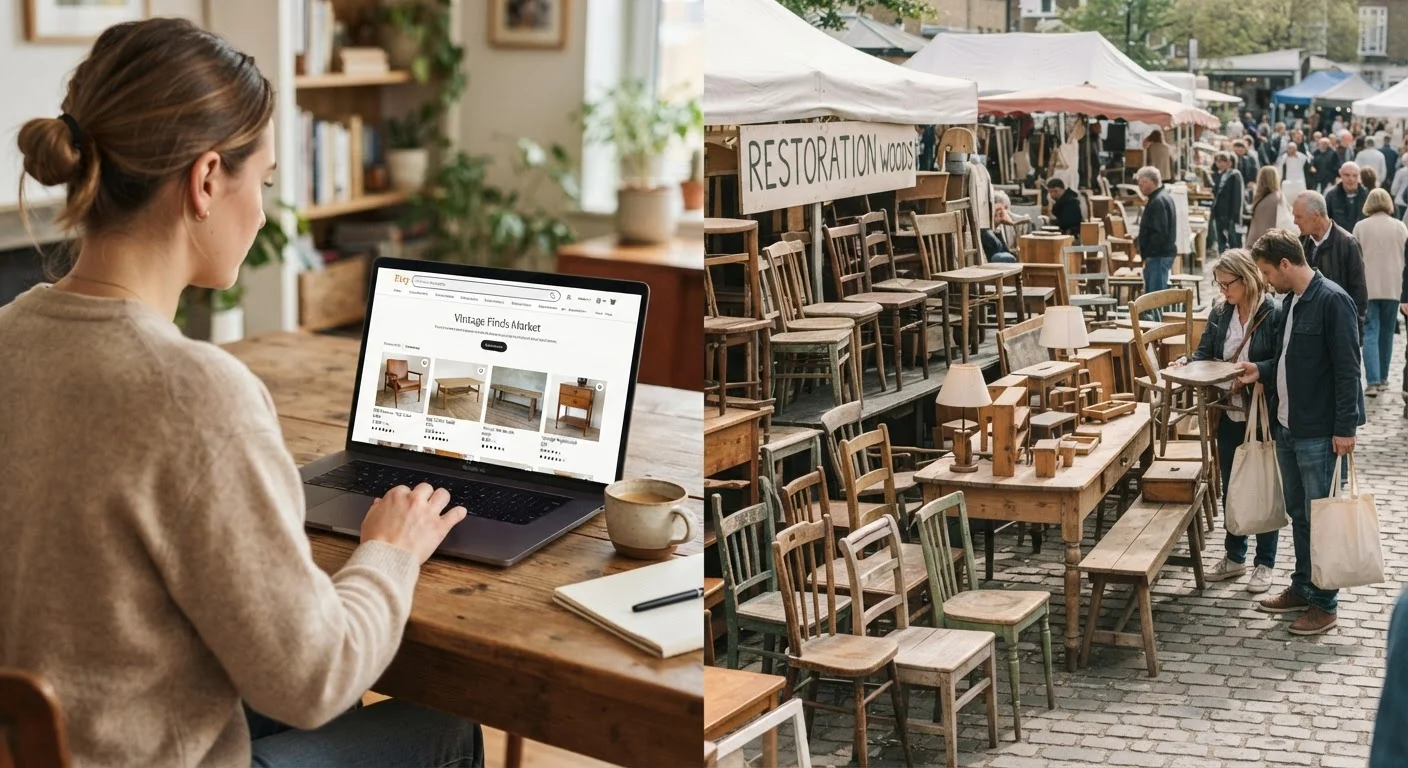
Photo: SaverSteals.com | Explore More. Shop Smarter. editorial
—— In This Article
Key Takeaways
- Online listings offer wider selection but carry higher risk of misrepresentation without physical inspection.
- In-person markets let you assess condition directly, but inventory is unpredictable and location-dependent.
- Scam exposure is significantly higher with online transactions; in-person cash deals reduce but don't eliminate risk.
- Prices online are often more negotiable in text; in-person sellers may move further on price when you're standing there.
- Logistics - transport, measurement verification - are harder to manage remotely than on-site.
- Combining both channels strategically produces better outcomes than committing exclusively to one.
What Each Channel Actually Offers
Online listings and in-person markets represent two fundamentally different approaches to the same goal: finding usable furniture at a price below retail. Before comparing them directly, it helps to understand what each channel is actually built for.
Online platforms aggregate listings from private sellers across wide geographic areas, giving you filtering tools, photo galleries, and message-based negotiation. The inventory is vast, but the information is controlled entirely by the seller. You see what they choose to show you.
In-person markets - covering estate sales, flea markets, consignment shops, and informal pop-ups - put you physically in front of the item. You can press on cushions, check drawer slides, smell for moisture damage, and ask the seller direct questions with immediate responses. The trade-off is that selection is limited to what happened to be available that day, in that location.
For a fuller picture of how these channels fit into the broader secondhand landscape, see the secondhand furniture ecosystem explained.
| Criterion | Online Listings | In-Person Markets |
|---|---|---|
| Selection breadth | Very wide; cross-city search | Limited to local inventory that day |
| Physical inspection | Not possible before purchase | Full hands-on access |
| Scam exposure | Higher; payment-before-viewing risk | Lower; cash on the spot |
| Price negotiation | Text-based; slower back-and-forth | Face-to-face; end-of-day discounting |
| Logistics / transport | Buyer usually arranges independently | On-site; bring your own transport |
| Condition accuracy | Dependent on seller honesty and photos | Verified in person before purchase |
| Time investment | Search anytime; wait for responses | Fixed hours; may require travel to multiple sites |
Where Each Channel Fails Buyers
Online listings carry a specific, underappreciated risk: misrepresentation. A seller photographs a sofa from the one angle that hides a split seam. Dimensions get rounded or omitted. "Minor wear" is a phrase that covers everything from a light scuff to a broken internal frame. By the time you've arranged pickup and driven across town, you've already invested enough that walking away feels costly.
Scams are a separate issue. Payment-before-viewing requests, implausibly low prices, and sellers who won't meet locally are red flags that appear regularly on peer-to-peer platforms. Protecting yourself from scams and misrepresentation when buying furniture online requires a specific set of verification habits that most casual buyers haven't developed.
In-person markets have their own failure modes. Inventory is unpredictable - you can spend a Saturday morning covering three markets and find nothing worth buying. Pricing at estate sales, in particular, is set by the estate company and is often non-negotiable on day one, then deeply discounted by day two or three as sellers try to clear inventory. If you don't know the pattern, you either overpay early or lose the piece to someone else.
~30%
Listings with inaccurate condition descriptions
Consumer advocacy research has consistently found that a significant minority of peer-to-peer listings contain condition descriptions that don't match the physical item on arrival.
15-40%
End-of-sale price reduction range
Estate sale operators commonly discount remaining inventory by 15-40% on the final day to clear stock, a pattern documented by estate sale industry associations.
Price, Negotiation, and Hidden Costs
Sticker price doesn't tell the full story in either channel. Online, the listed price is a starting point - most private sellers expect some back-and-forth, and a polite written offer citing comparable listings tends to get a response. However, you also need to factor in transport. If the seller isn't offering delivery, you're arranging a vehicle or hiring movers, which can offset savings on mid-to-large pieces.
In-person markets shift the negotiation dynamic. Sellers can read your reaction in real time, which works both ways - a buyer who clearly wants a piece has less leverage than one who seems indifferent. End-of-day pricing is a genuine tactic worth knowing: many market traders would rather sell at a discount than transport items back. Arriving in the final hour of an estate sale or flea market often opens price conversations that weren't available in the morning.
For practical negotiation approaches that apply in both contexts, see negotiating a fair price on used furniture.
One hidden cost that affects online buyers disproportionately: the failed trip. Arranging pickup for a piece that turns out to be misrepresented costs time and fuel with no return. In-person, you make the go/no-go call before committing.
How to Use Both Channels Together
The most practical approach isn't a strict choice between channels - it's knowing when each one is worth the effort. Online listings work well when you're hunting for something specific, you have time to wait, and you've developed enough pattern recognition to filter listings effectively. In-person markets work better when you need something soon, when the piece type requires physical vetting (upholstered items, anything structural), or when you enjoy the unpredictability of browsing.
A combined workflow might look like this: use online listings to research what comparable pieces sell for in your area, then visit in-person markets with that pricing baseline already established. Sellers at markets often don't adjust their prices against current listing data, which means a buyer who has done that homework can spot genuine value faster.
Furnishing an entire room with secondhand pieces amplifies both the benefits and the frustrations of either channel - understanding the trade-offs at the piece level helps when you're managing an entire room's worth of decisions simultaneously.
Neither channel is reliably cheaper. Both require verification habits. The variable that matters most is usually how much time pressure you're under and whether the piece type demands hands-on inspection.
This article is for informational purposes only. Prices, seller behaviors, and market conditions vary widely by location and over time. Always verify item condition and payment safety before completing any purchase.

Furniture Editorial Team
Furniture Editorial Team is the collective byline for our editorial team and contributor network. Articles published under this byline or an editorial pen name are researched, written, and reviewed according to our editorial standards for clarity, consistency, and independence before publication.
View author profile