
DIY Home Décor: Honest Trade-Offs Between Making and Buying
DIY can save money, but not always. A balanced look at the real costs, skills, and time involved in making your own home décor.
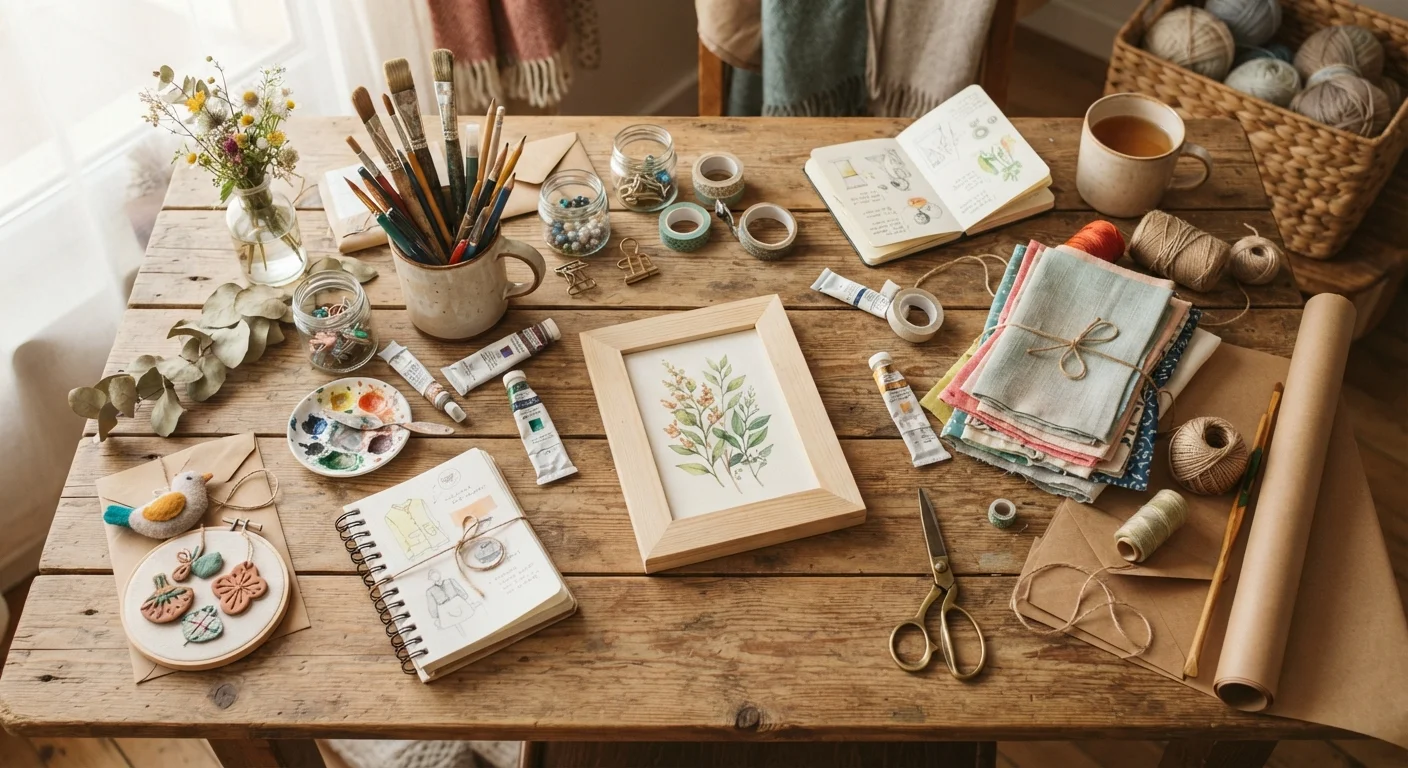
Photo: SaverSteals.com | Explore More. Shop Smarter. editorial
—— In This Article
Key Takeaways
- DIY home décor is not always cheaper once materials, tools, and time are factored in.
- Skill level and project complexity significantly affect whether making or buying delivers better value.
- Some décor categories — like custom sizes or one-of-a-kind pieces — genuinely favor the DIY route.
- Store-bought items often win on time, consistency, and warranty protection.
- Evaluating total cost, not just material cost, leads to smarter décor decisions.
Custom sizing for non-standard spaces
DIY lets you build or sew to exact dimensions, avoiding the premium retailers charge for custom orders or the compromise of ill-fitting standard sizes.
Upcycling reduces material costs significantly
Repurposing secondhand or discarded materials keeps project costs near zero while producing pieces that are genuinely one-of-a-kind.
Creative control over style and finish
When a specific color, texture, or aesthetic isn't available in stores at a reasonable price, DIY is often the only practical route to getting what you envision.
Skill-building has compounding value
Each completed project typically reduces time and waste on future similar projects, gradually improving the cost-effectiveness of DIY over time.
Intrinsic value of the making process
For many people, crafting is a meaningful activity in its own right — the time spent has personal value beyond just the finished object.
Tool costs are often underestimated
Many DIY projects require specialized equipment that adds substantially to upfront costs, particularly for first-timers who don't already own a well-stocked workshop.
Material waste from beginner mistakes
Learning curves on new techniques routinely result in ruined materials, requiring additional purchases that erode the perceived savings of DIY.
Time investment is rarely accounted for
A project that takes six hours to complete represents real opportunity cost, even if time itself doesn't appear on a receipt.
Finished quality can fall short of expectations
Without practiced technique, handmade items may not achieve the polish or durability of manufactured equivalents, leading to disappointment or early replacement.
No warranty or safety certification
Handmade structural or load-bearing items carry none of the safety testing or warranty protection that manufactured goods typically include.
Mass production undercuts DIY material costs
For common décor items like picture frames or throw pillows, manufacturers produce at volumes that make their retail prices genuinely difficult to beat with homemade versions.
The Myth of 'It's Cheaper to Make It'
The appeal of DIY home décor often starts with a simple premise: raw materials cost less than finished goods, so making something yourself must save money. In practice, this is only sometimes true. A handmade macramé wall hanging might require rope, a dowel, scissors, and several hours of labor — and when comparable finished pieces sell at modest price points in mass-market stores, the math gets murky fast.
The costs most people underestimate include tool acquisition (a basic cricut machine, drill set, or sewing kit adds up quickly), material waste from learning curves, and the value of time itself. If a project takes five hours and you could have earned or saved money doing something else in that window, the "savings" narrow considerably.
That said, this doesn't mean DIY is a poor choice — it means the decision deserves honest accounting. For more on how apparent savings can mislead, see how inflated reference prices distort décor value.
Where DIY Genuinely Wins
There are real scenarios where making your own décor outperforms buying — and understanding them helps you allocate effort wisely.
Custom sizing for non-standard spaces
DIY lets you build or sew to exact dimensions, avoiding the premium retailers charge for custom orders or the compromise of ill-fitting standard sizes.
Upcycling reduces material costs significantly
Repurposing secondhand or discarded materials keeps project costs near zero while producing pieces that are genuinely one-of-a-kind.
Creative control over style and finish
When a specific color, texture, or aesthetic isn't available in stores at a reasonable price, DIY is often the only practical route to getting what you envision.
Skill-building has compounding value
Each completed project typically reduces time and waste on future similar projects, gradually improving the cost-effectiveness of DIY over time.
Intrinsic value of the making process
For many people, crafting is a meaningful activity in its own right — the time spent has personal value beyond just the finished object.
Custom sizing is perhaps the clearest win. Standard curtain panels, shelving units, or cushion covers rarely fit unusual spaces. A DIY approach lets you match exact dimensions without paying the premium that custom orders command from retailers.
Upcycling and repurposing also favor DIY strongly. Transforming a secondhand wooden crate into a planter or an old frame into a chalkboard menu board keeps costs near zero and produces something genuinely unique. For a broader look at where secondhand materials make sense, secondhand vs. new home décor offers a useful framework.
Where Buying Usually Makes More Sense
For all its appeal, DIY has consistent blind spots that budget-conscious shoppers should recognize before committing time and resources.
Tool costs are often underestimated
Many DIY projects require specialized equipment that adds substantially to upfront costs, particularly for first-timers who don't already own a well-stocked workshop.
Material waste from beginner mistakes
Learning curves on new techniques routinely result in ruined materials, requiring additional purchases that erode the perceived savings of DIY.
Time investment is rarely accounted for
A project that takes six hours to complete represents real opportunity cost, even if time itself doesn't appear on a receipt.
Finished quality can fall short of expectations
Without practiced technique, handmade items may not achieve the polish or durability of manufactured equivalents, leading to disappointment or early replacement.
No warranty or safety certification
Handmade structural or load-bearing items carry none of the safety testing or warranty protection that manufactured goods typically include.
Mass production undercuts DIY material costs
For common décor items like picture frames or throw pillows, manufacturers produce at volumes that make their retail prices genuinely difficult to beat with homemade versions.
Structural or safety-critical items — think wall-mounted shelving, electrical fixtures, or load-bearing furniture — generally warrant purchased, tested products with manufacturer warranties. A DIY bookshelf that fails is a safety hazard and an additional expense. This connects to a broader principle explored in why cheap home décor often costs more long-term: durability and safety have real financial consequences.
High-repetition items like picture frames, decorative vases, or throw pillows are often manufactured at a scale that makes their retail prices genuinely hard to undercut with handmade versions, especially once your time is counted.
~30%
DIY projects that exceed initial budget estimates
Industry surveys of home improvement participants consistently suggest that a significant share of DIY projects run over budget, often due to tool needs and material waste.
3–5×
Typical cost multiplier for custom retail orders
Custom sizing or finishing from retailers commonly carries a premium of several times the equivalent standard-size product price, which is where DIY value is clearest.
Making the Decision: A Practical Framework
Before committing to a DIY project, run through a few straightforward questions:
- Do I already own the tools? If not, factor in acquisition or rental costs.
- Have I done this before? First attempts often involve waste, restarts, and a steeper time investment.
- Is the finished result genuinely unavailable or significantly overpriced in stores? If not, purchasing may offer equivalent value with far less friction.
- Do I enjoy the process? If the activity itself has value to you — as a hobby, stress outlet, or creative practice — the equation shifts. Not everything needs to be optimized purely for cost.
Furnishing decisions often benefit from blending DIY, secondhand, and new purchases strategically. Buying furniture on a budget covers how to apply similar thinking to larger purchases. And for those sourcing materials online, comparing online vs. in-store shopping can help you find supplies at honest prices.
When the Process Is the Point
Not every DIY project needs to win on pure economics. If crafting is a hobby you genuinely enjoy, the time spent has recreational value that doesn't appear in a cost comparison. Treating some projects as leisure activity rather than cost-saving exercise removes the pressure of justifying every hour spent — and often produces better results because you're engaged, not just economizing.

Home & Garden Editorial Team
Home & Garden Editorial Team is the collective byline for our editorial team and contributor network. Articles published under this byline or an editorial pen name are researched, written, and reviewed according to our editorial standards for clarity, consistency, and independence before publication.
View author profile