
The Real Pros and Cons of Furnishing an Entire Room with Secondhand Pieces
A balanced look at what you genuinely gain — and give up — when you commit to an all-secondhand approach for a living space.
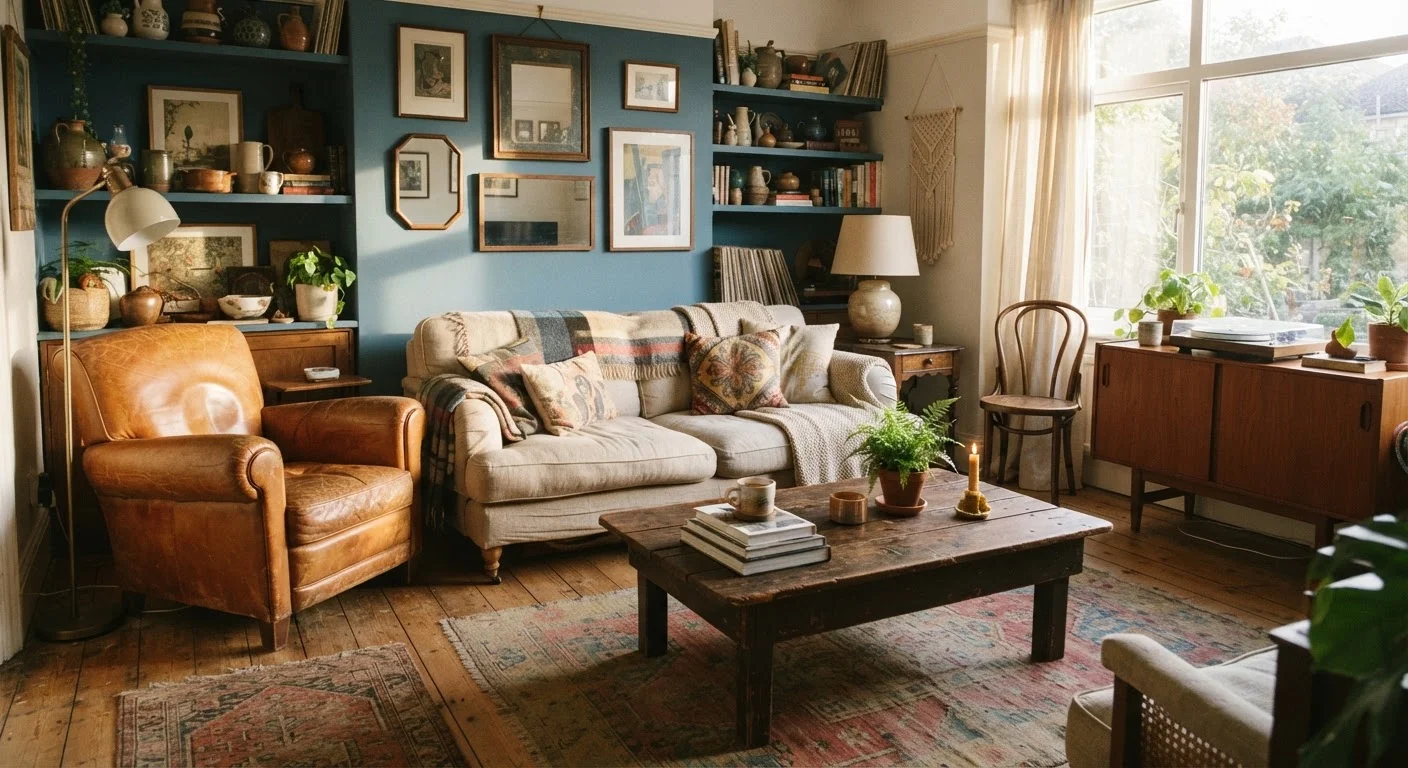
Photo: SaverSteals.com | Explore More. Shop Smarter. editorial
—— In This Article
Key Takeaways
- Furnishing a room entirely secondhand can cut costs significantly compared to buying new, but savings vary widely by item and source.
- Structural pieces like solid-wood frames hold up well used; upholstered and foam-heavy items carry more risk.
- The process takes more time and patience than retail shopping — sourcing a complete room rarely happens in one trip.
- A coherent look is achievable secondhand, but requires intentional curation rather than opportunistic buying.
- Vetting each piece carefully before purchase protects against hidden repair costs that can erode your savings.
Significant cost reduction on solid structural pieces
Solid-wood dressers, dining tables, and bed frames often sell secondhand for a fraction of comparable new retail prices. The savings on durable structural items are where the all-secondhand approach delivers most reliably.
Access to construction quality rarely found at entry-level retail
Older furniture, particularly pieces made before the widespread use of engineered wood composites, frequently offers joinery and material quality that's difficult to match at equivalent new price points.
Reduced environmental footprint
Keeping existing furniture in use avoids the manufacturing, shipping, and packaging costs of new production. For shoppers who factor environmental impact into purchasing decisions, this is a meaningful benefit.
Greater visual distinctiveness
An all-secondhand room is unlikely to look like anyone else's — the combination of eras, materials, and styles that emerges from deliberate curation creates a space with genuine character rather than a showroom-uniform look.
Flexibility to upgrade or replace without major financial loss
Secondhand pieces that are well-maintained tend to resell at prices close to what was paid, giving you more flexibility to swap out items as your needs or tastes change compared to new furniture that depreciates sharply.
Time investment is substantially higher than retail
Sourcing a complete room secondhand rarely happens quickly. Finding pieces that meet your functional requirements, fit your space, and hold up to inspection can take weeks or months of active searching.
Achieving visual cohesion requires active curation
Without deliberate planning around color, material, and scale, a room assembled from unrelated sources can feel chaotic rather than eclectic. Cohesion is achievable, but it doesn't happen by accident.
Upholstered pieces carry significant condition risk
Fabric, foam, and padding deteriorate in ways that aren't always visible at inspection — mold, pet dander, and structural foam collapse can make secondhand upholstered pieces costly to remediate or unusable.
No warranty, return policy, or recourse on defects
Private-party and thrift purchases are typically final. A structural defect discovered after transport gives you no practical remedy, making thorough pre-purchase inspection non-negotiable.
Logistics — transport, hauling — fall entirely on you
Secondhand sellers rarely offer delivery. Arranging transport for large furniture items adds cost and effort that should be factored into any cost comparison with new retail.
Matching sets and specific dimensions are hard to guarantee
If you need a specific size or a coordinating set — matching nightstands, for example — secondhand sourcing may require extended searching or compromise on dimensions, which can complicate room planning.
What You're Actually Committing To
Going fully secondhand for a room isn't just a shopping preference — it's a sourcing strategy that changes how you approach the entire project. Instead of visiting a showroom, selecting a set, and scheduling delivery, you're assembling pieces from disparate sources over an unpredictable timeline. That shift has real consequences, both positive and negative.
Understanding those consequences in advance helps you decide whether the approach is right for your situation — and how to execute it effectively if it is. See our overview of the secondhand furniture ecosystem to understand which channels are likely to yield what you need.
Significant cost reduction on solid structural pieces
Solid-wood dressers, dining tables, and bed frames often sell secondhand for a fraction of comparable new retail prices. The savings on durable structural items are where the all-secondhand approach delivers most reliably.
Access to construction quality rarely found at entry-level retail
Older furniture, particularly pieces made before the widespread use of engineered wood composites, frequently offers joinery and material quality that's difficult to match at equivalent new price points.
Reduced environmental footprint
Keeping existing furniture in use avoids the manufacturing, shipping, and packaging costs of new production. For shoppers who factor environmental impact into purchasing decisions, this is a meaningful benefit.
Greater visual distinctiveness
An all-secondhand room is unlikely to look like anyone else's — the combination of eras, materials, and styles that emerges from deliberate curation creates a space with genuine character rather than a showroom-uniform look.
Flexibility to upgrade or replace without major financial loss
Secondhand pieces that are well-maintained tend to resell at prices close to what was paid, giving you more flexibility to swap out items as your needs or tastes change compared to new furniture that depreciates sharply.
The Real Drawbacks to Account For
The cons of an all-secondhand approach aren't dealbreakers for every shopper, but they're worth confronting honestly before you start. The biggest friction points are time, consistency, and condition risk.
Time investment is substantially higher than retail
Sourcing a complete room secondhand rarely happens quickly. Finding pieces that meet your functional requirements, fit your space, and hold up to inspection can take weeks or months of active searching.
Achieving visual cohesion requires active curation
Without deliberate planning around color, material, and scale, a room assembled from unrelated sources can feel chaotic rather than eclectic. Cohesion is achievable, but it doesn't happen by accident.
Upholstered pieces carry significant condition risk
Fabric, foam, and padding deteriorate in ways that aren't always visible at inspection — mold, pet dander, and structural foam collapse can make secondhand upholstered pieces costly to remediate or unusable.
No warranty, return policy, or recourse on defects
Private-party and thrift purchases are typically final. A structural defect discovered after transport gives you no practical remedy, making thorough pre-purchase inspection non-negotiable.
Logistics — transport, hauling — fall entirely on you
Secondhand sellers rarely offer delivery. Arranging transport for large furniture items adds cost and effort that should be factored into any cost comparison with new retail.
Matching sets and specific dimensions are hard to guarantee
If you need a specific size or a coordinating set — matching nightstands, for example — secondhand sourcing may require extended searching or compromise on dimensions, which can complicate room planning.
Upholstered pieces deserve particular scrutiny. Fabric, foam, and padding degrade in ways that aren't always visible on inspection — and remediation costs can approach or exceed the price of buying new. Our guide to which upholstered pieces tend to recover well gives you a practical framework for what to accept and what to walk away from.
Vetting Pieces Before You Commit
The difference between a secondhand room that works and one that becomes an expensive headache usually comes down to inspection discipline. A few consistent checks go a long way:
- Structural integrity: Press down on frames, flex joints, and sit in seating. Wobble and creaking under light pressure signal weakened joints that are difficult to repair durably.
- Solid wood vs. engineered board: Solid wood survives refinishing and minor damage; particleboard swells, chips, and generally can't be restored once it's compromised.
- Upholstery smell test: Musty or chemical odors in fabric often indicate mold, pet saturation, or smoke damage — conditions that rarely fully resolve with cleaning.
- Hardware and mechanism checks: Open drawers, test hinges, and operate any moving parts. Missing or broken hardware is usually fixable; bent or warped tracks often aren't.
~50–80%
Typical price reduction vs. new retail
Industry observers and resale platform data generally suggest solid used furniture sells for 50–80% below comparable new retail, though this varies widely by condition, category, and source.
~12 billion lbs
Furniture discarded annually in the US
The US Environmental Protection Agency estimates that Americans discard billions of pounds of furniture each year, underscoring the supply available in the secondhand market.
For sourcing strategy, consistent sourcing habits separate shoppers who find quality pieces regularly from those who browse without a system. Applying the same rigor across channels — whether online listings or in-person markets — closes most of the risk gap.
Making the Approach Work in Practice
The shoppers who furnish a full room secondhand most successfully tend to share a few habits: they start with a clear brief (dimensions, function, rough aesthetic), they prioritize structural pieces first and accent pieces last, and they resist filling gaps with pieces that don't pass inspection just because they need something there now.
Comparing online listings against in-person markets helps you allocate your time efficiently — each channel has different strengths for different item types. The same intentional discipline that makes secondhand wardrobe building work transfers directly to furniture: define what you need before you shop, not after you've already bought.
When New Makes More Sense
Not every category is worth buying secondhand. Mattresses, heavily used office chairs, and any item where hygiene is difficult to verify are categories where new — or at minimum, extremely cautious vetting — is the safer call. For a broader breakdown of where used pays off and where it doesn't, see what's actually worth buying secondhand in home décor.

Furniture Editorial Team
Furniture Editorial Team is the collective byline for our editorial team and contributor network. Articles published under this byline or an editorial pen name are researched, written, and reviewed according to our editorial standards for clarity, consistency, and independence before publication.
View author profile