Key Takeaways
Why Most Shoppers Leave Money on the Table
Most consumers know at least one savings tool - a cashback app, a browser extension, a store loyalty program. What they rarely do is use all of them simultaneously on the same purchase. That gap is where significant savings evaporate every day.
The problem isn't awareness. It's workflow. Digital tools multiply quickly, the rules governing which can combine aren't always obvious, and the fear of getting something wrong at checkout pushes most people to default to one tool and call it a day. The result is a partial stack - capturing maybe 20-30% of available savings.
Understanding how these tools interact - and where the real restrictions lie - is the foundation of any reliable stacking system. For a grounding in the mechanics, see how layering discounts actually works before going further.

This article focuses on the practical layer: which combinations consistently deliver real savings, how to apply them without triggering fraud flags, and how to build a repeatable pre-checkout system that takes less than two minutes to run.
The Digital Stacking Hierarchy: What Goes on Top of What
Effective stacking starts with understanding that savings tools sit in a hierarchy. Some discounts apply to the final purchase price; others apply to the pre-discount price. Getting the order wrong doesn't just reduce your savings - it can occasionally invalidate a portion of your stack entirely.
Layer 1: Cashback Portals
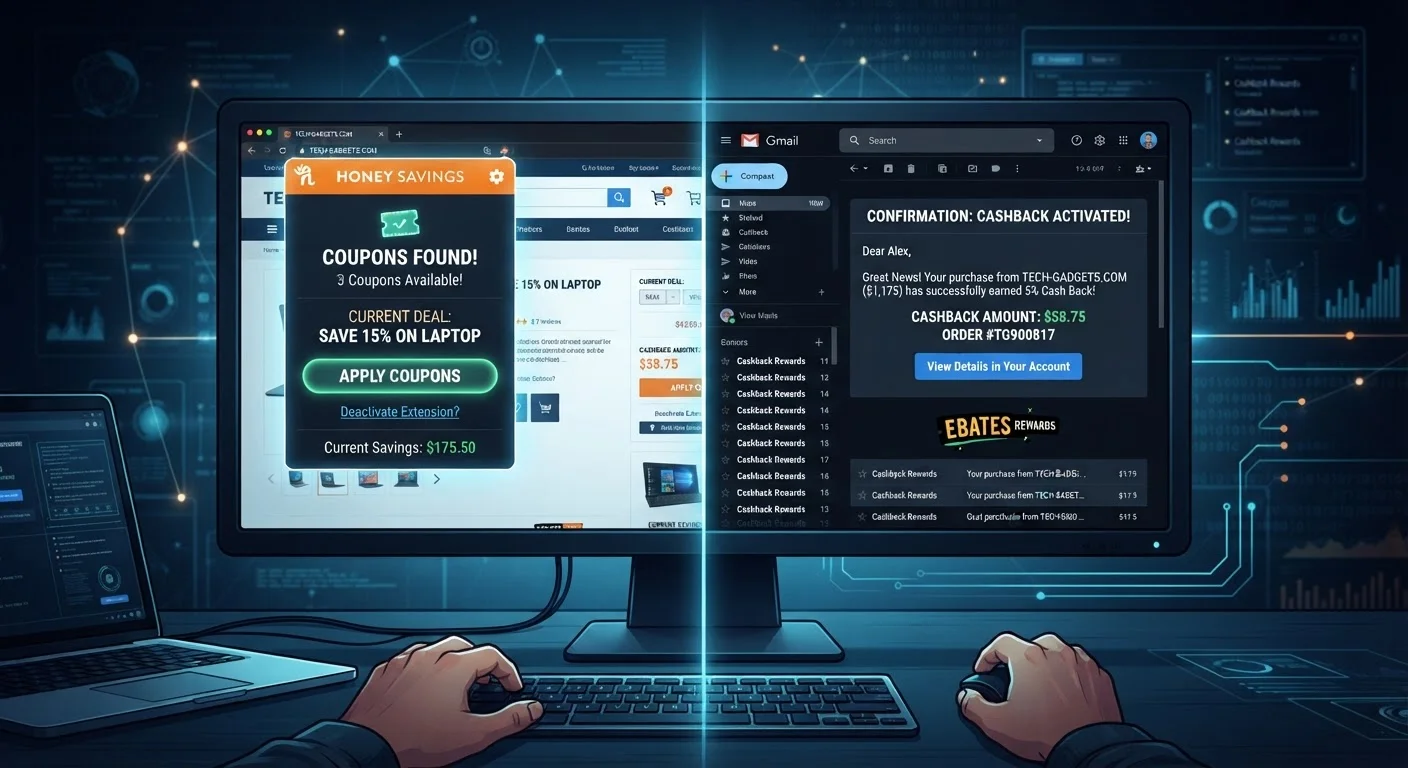
Cashback portals like Rakuten, TopCashback, and Honey Gold track your session and pay a percentage of your qualifying purchase back to you. They sit at the base of the stack because they apply to whatever you spend after discounts. Always activate your portal session first, then apply codes - not the other way around.
Layer 2: Promo Codes and Sitewide Discounts
Promo codes reduce the purchase price directly at checkout. Because most portals calculate cashback on the final charged amount, applying a code before the portal tracks your order means your cashback base is already lower - which is fine. What's not fine: using a code the portal explicitly excludes, which can zero out your cashback entirely. Read the portal's exclusion list before stacking.
Layer 3: Clipped Store Digital Coupons
Most major grocery chains and big-box retailers allow you to clip digital offers directly to your loyalty account. These stack with portal cashback and, in many cases, with manufacturer digital offers as well. The key distinction: store coupons and manufacturer coupons serve different discount pools, so combining them is usually permitted. Which coupon types can actually stack varies by retailer, so verify before assuming.
Layer 4: Credit Card Rewards and Category Bonuses
The final layer is your payment method. Cards offering elevated cashback on grocery, gas, or online shopping categories compound every other layer below. A 5% grocery card on top of a portal, a manufacturer offer, and a clipped store coupon is where stacking becomes genuinely powerful.
“The best coupon strategy isn't finding one great deal - it's building a repeatable system where savings happen automatically, layer by layer, every time you buy.”
— Stephanie Nelson, Founder of CouponMom.com and published author on consumer savings strategies
Which Tool Combinations Consistently Pay Off
Not every stack delivers equal value. Some combinations are reliable and widely supported; others require more setup than they're worth. Here's where to focus effort.
89%
Shoppers who don't use cashback portals consistently
According to a 2023 survey by RetailMeNot, nearly 9 in 10 online shoppers regularly forgo cashback portal savings despite having access to free tools.
Up to 40%
Total savings on stacked grocery purchases
Shoppers combining store digital offers, manufacturer coupons, and loyalty point multipliers regularly achieve 30-40% total savings per trip, per documented user case studies on major frugal living forums.
$150+
Average annual cashback earned per active Rakuten user
Rakuten's published annual savings data indicates active portal users average over $150 in cashback annually - with heavy stackers earning substantially more.
3-5x
Savings multiplier from combining portal and promo code
Internal analyses from cashback comparison sites suggest layering a portal with a sitewide promo code typically triples to quintuples the savings compared to either tool alone.
Cashback Portal + Promo Code (Online Retail)
This is the most accessible high-value stack for online shopping. Portal rates on major retailers often run 3-8%, and combining them with a 10-15% off sitewide code frequently pushes total savings past 20%. The catch: some portals specifically exclude orders placed with certain codes. Check the portal's current terms for the retailer before clicking through.
Store App Offer + Manufacturer Digital Coupon + Loyalty Points (Grocery)
Grocery stacking operates on its own logic. Most major chains - Kroger, Albertsons, Safeway - allow you to combine store digital offers with manufacturer offers loaded to the same loyalty account. Add in the loyalty point multiplier events they run weekly and a single shopping trip can yield 25-40% total savings on targeted items. Cutting grocery bills by 40% or more through coupon stacking is well-documented - but it requires knowing which items have both types of offers available simultaneously.
Browser Extension + Store Sale + Loyalty Discount (Big-Box Retail)
Extensions like Honey or Capital One Shopping automatically test promo codes at checkout. Pair that with a member-exclusive sale price and any loyalty reward credits you've accumulated, and you can layer three separate discount mechanisms on a single cart. The critical nuance: if you're using a dedicated cashback portal for the session, disable competing extensions first - some interfere with portal tracking cookies.
Ibotta + Store Digital Offer + Loyalty App (Grocery/Drug Store)
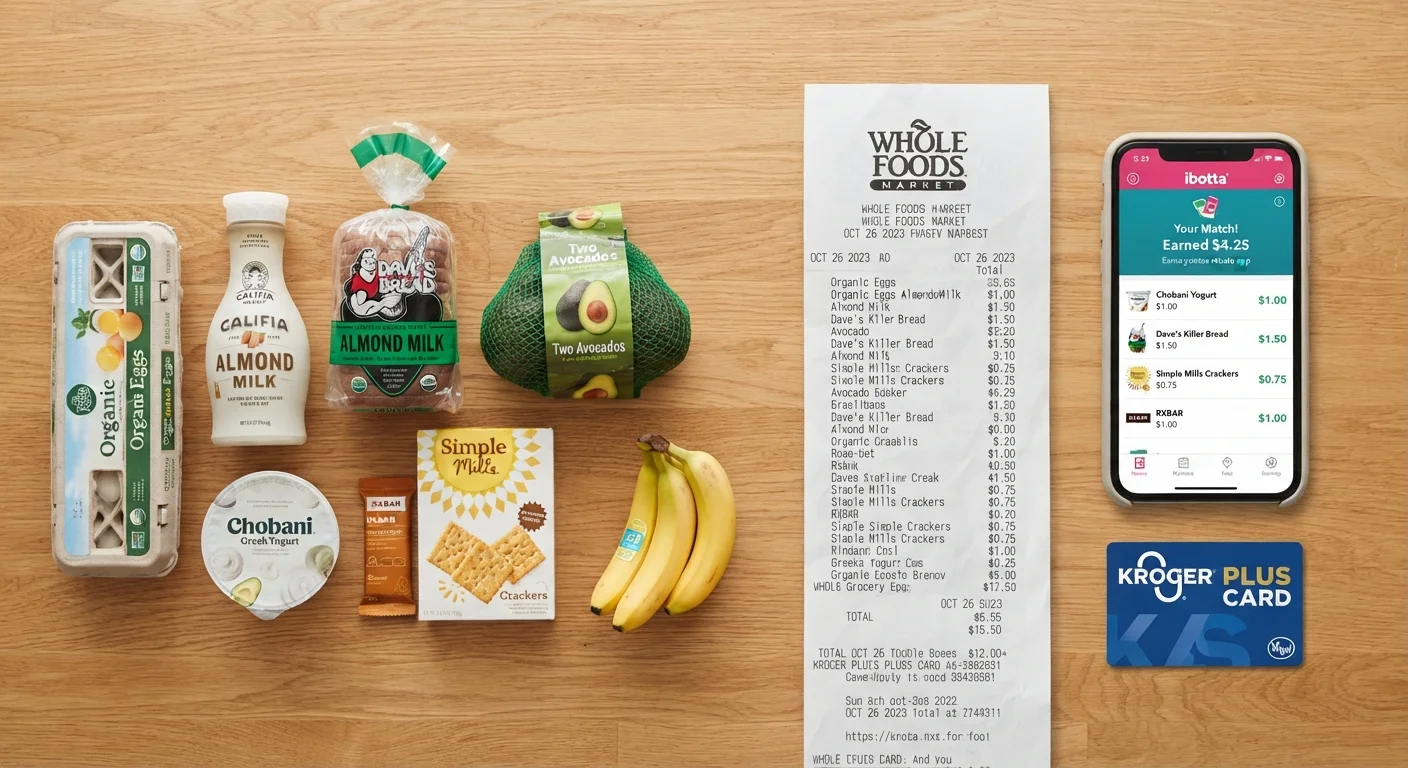
Ibotta functions as a rebate app rather than a portal, which means it doesn't conflict with most store digital coupon systems. Clip the store offer, buy the item, submit to Ibotta, collect both. Walgreens, CVS, and Walmart all have documented compatibility with Ibotta alongside their native app offers. See stacking promo codes with cashback portals for a more detailed walkthrough of how these rules apply across major online retailers.
Best Practices for Stacking Without Getting Burned
The difference between a successful stack and a rejected one usually comes down to a few specific habits. These aren't optional niceties - they're the mechanics that prevent your savings from being reversed after the fact.
Always activate your cashback portal session before adding items to your cart
Cashback portals set a tracking cookie when you click through. If you've already added items or are mid-session on a retailer's site, the cookie may not register correctly, resulting in no payout. Sequence matters - portal first, then shopping.
Read the portal's current exclusion list for your specific retailer before applying any promo code
Portals frequently exclude cashback on orders where certain types of codes are used - particularly codes from unauthorized aggregator sites. A $5 promo code that voids a $18 cashback payout is a losing trade, and it happens more often than shoppers realize.
Disable competing browser extensions before any portal-tracked shopping session
Extensions like Honey, Capital One Shopping, and Coupert can overwrite affiliate cookies set by a cashback portal. Even if the extension doesn't successfully apply a code, the cookie interference can still cause the portal to fail to credit your session.
Clip all relevant store and manufacturer digital offers before leaving for the store or opening the retailer's site
Clipped offers loaded to your loyalty account apply automatically at checkout only if they're loaded before the transaction. Retroactive clipping after purchase doesn't work for digital coupons, and you can't apply offers that weren't pre-loaded when you scan your loyalty card.
Verify Ibotta and rebate app offers match exact product specifications before buying
Rebate app offers are frequently item-specific down to size, variety, and count. Buying the 12-oz version when the offer requires 16-oz means the submission won't qualify, wasting both your money and the time spent submitting.
Stack credit card category bonuses as the final layer, not the starting point
Your credit card cashback rate applies to whatever you spend, so it should be the last consideration in building a stack - not the anchor. Building a stack around a card bonus first can cause you to overlook higher-value portal or coupon opportunities.
Browser Extensions: Friend, Foe, or Both?
Browser extensions are simultaneously the most convenient and most misunderstood tool in the digital stacking toolkit. Understanding their role - and their limitations - prevents the most common technical stacking failure.
Choose One Tracking Tool Per Session
Before any cashback session, decide whether you're using a portal (like Rakuten or TopCashback) or a cashback extension - not both. Competing tools overwrite each other's affiliate cookies, causing one or both to fail silently. A quick rule: use the portal link if the cashback rate is higher than the extension's current offer for that retailer, and disable other code-testing extensions until checkout is complete.
Check Portal Rates Weekly, Not Just at Checkout
Cashback portal rates fluctuate - sometimes dramatically - around sales events, seasonal promotions, and retailer-specific campaigns. A retailer offering 3% on a regular Tuesday might jump to 10% the week before a major holiday. Checking rates as part of a weekly five-minute sweep lets you time large purchases to capture elevated portal rates.
Extensions like Honey, Rakuten's extension, Capital One Shopping, and Coupert all compete for the same real estate: your checkout page. The problem is that each one may attempt to apply codes, redirect affiliate tracking, or override portal cookies set by a different tool.
When Extensions Help
If you aren't using a dedicated cashback portal for a session, a cashback extension like Rakuten's handles both code-testing and portal tracking in one step - solid for routine purchases where you haven't pre-selected a portal. Honey is useful for testing codes when a site doesn't have a public promo code and you want a quick sweep before manually applying anything.
When Extensions Hurt
The conflict scenario: you click through a cashback portal link (setting a tracking cookie), then an extension auto-applies a code and - in doing so - overwrites the affiliate cookie. Result: portal doesn't pay out, and you've just worked for a promo code that saved you $3. Disable competing extensions before any portal-tracked session. Most browsers make this a two-second toggle in the extensions menu.
Cashback Portals Don't Credit Retroactively
If you forget to activate your portal session before completing a purchase, there is no mechanism to claim that cashback after the fact. Some portals have a 'Missing Cashback' claim process, but these are manually reviewed, frequently denied for portal-first violations, and take weeks to resolve. The only reliable fix is activating the session before you shop - every time.
Gift Cards Are Almost Always Excluded
Purchasing gift cards through a cashback portal - even for a retailer where you'd normally earn cashback - is explicitly excluded in virtually every portal's terms of service. This applies even when the gift card purchase shows up in your cart alongside eligible items. Portals and retailers both monitor for this pattern, and repeated attempts can result in account suspension.
Bottom line: choose one tracking tool per session. Use the portal or use the extension - not both, unless you've verified they're the same tool (e.g., using the Rakuten portal and the Rakuten extension simultaneously is redundant but not harmful).
Building a Pre-Checkout Audit in Under Two Minutes
The fastest way to ensure you're capturing your full stack every time is a brief pre-checkout ritual. This isn't about obsessing over every penny - it's a systematic sweep that takes less time than a typical checkout form.
For in-store grocery trips, run the same logic before you leave the house: clip all relevant store digital offers, cross-check with available manufacturer offers in Ibotta or Fetch Rewards, and confirm your loyalty account is linked. A full coupon stacking audit checklist breaks this process down step by step for shoppers who want a more structured approach.
The audit habit also protects you from the most common reason stacks fail: eligible discounts that weren't activated before purchase. Cashback portals don't credit retroactively. Ibotta offers don't apply if you forget to link before shopping. Clipped coupons that weren't loaded to your loyalty account before scanning won't apply at the register. Prevention is the only fix.
For situations where your legitimate stack does get rejected - whether at a physical register or through a reversed portal payout - avoiding common stacking errors gives you both the prevention strategy and the recovery path.

Where Stacking Has Real Limits (And What to Do Instead)
Knowing where stacking doesn't work is as valuable as knowing where it does. Trying to force a stack that violates terms wastes time and risks your account standing with cashback platforms.
Exclusions You'll Encounter Repeatedly
- Gift card purchases: Almost universally excluded from cashback portals. Don't attempt to use a portal to buy gift cards for future discounted shopping - portals specifically blacklist this.
- Marketplace seller orders on Amazon: Amazon's cashback portal exclusions often apply to third-party sellers. The rate shown on the portal landing page frequently doesn't apply to your actual cart if it contains marketplace items.
- Clearance items: Many retailers explicitly exclude already-reduced clearance merchandise from additional digital coupon stacking. The fine print usually says "not valid with other offers" - and clearance qualifies.
- Promo codes from coupon aggregator sites: Some codes found on third-party coupon sites are expired, non-functional, or explicitly excluded from portal cashback. Portals track which codes trigger exclusions - habitually using excluded codes can result in your cashback being reversed even on orders where the code didn't apply.
When a Single Strong Tool Beats a Weak Stack
There's a temptation to layer every available tool regardless of compatibility. But a single 15% portal rate with no code restrictions frequently outperforms a fragile three-tool stack where two of the three tools conflict. Evaluate the realistic payout of each layer, not just the theoretical maximum.
Cashback Portals Don't Credit Retroactively
If you forget to activate your portal session before completing a purchase, there is no mechanism to claim that cashback after the fact. Some portals have a 'Missing Cashback' claim process, but these are manually reviewed, frequently denied for portal-first violations, and take weeks to resolve. The only reliable fix is activating the session before you shop - every time.
Gift Cards Are Almost Always Excluded
Purchasing gift cards through a cashback portal - even for a retailer where you'd normally earn cashback - is explicitly excluded in virtually every portal's terms of service. This applies even when the gift card purchase shows up in your cart alongside eligible items. Portals and retailers both monitor for this pattern, and repeated attempts can result in account suspension.
For understanding how store coupons and manufacturer coupons stack together, the rules differ significantly from digital portal stacking - worth reviewing separately if grocery is your primary stacking arena.
Also worth considering: loyalty programs aren't always the best use of your stacking energy. Where consistent shoppers earn the most from loyalty programs breaks down where loyalty points actually deliver value versus where they just create lock-in without proportionate return.