

Key Takeaways
Our Verdict
Grocery loyalty programs win on frequency and practical ROI for essential spending. Big-box retail programs offer superior returns on larger, less frequent purchases. Brand programs are high-yield only if you're a true single-brand devotee with no need to comparison shop. For most consistent shoppers, a two-program strategy - one grocery, one big-box or brand - layered with a cashback credit card delivers the best total return.
| Best for | Recommended |
|---|---|
| Shoppers with high weekly grocery spend and brand flexibility | Grocery Loyalty Programs |
| Those making frequent mid-to-large discretionary purchases | Big-Box Retail Programs |
| Dedicated fans of a single brand across multiple product lines | Brand Loyalty Programs |
| Maximizers who want layered savings across all categories | Combined strategy with a cashback credit card |
How to Read a Loyalty Program's Real Return Rate
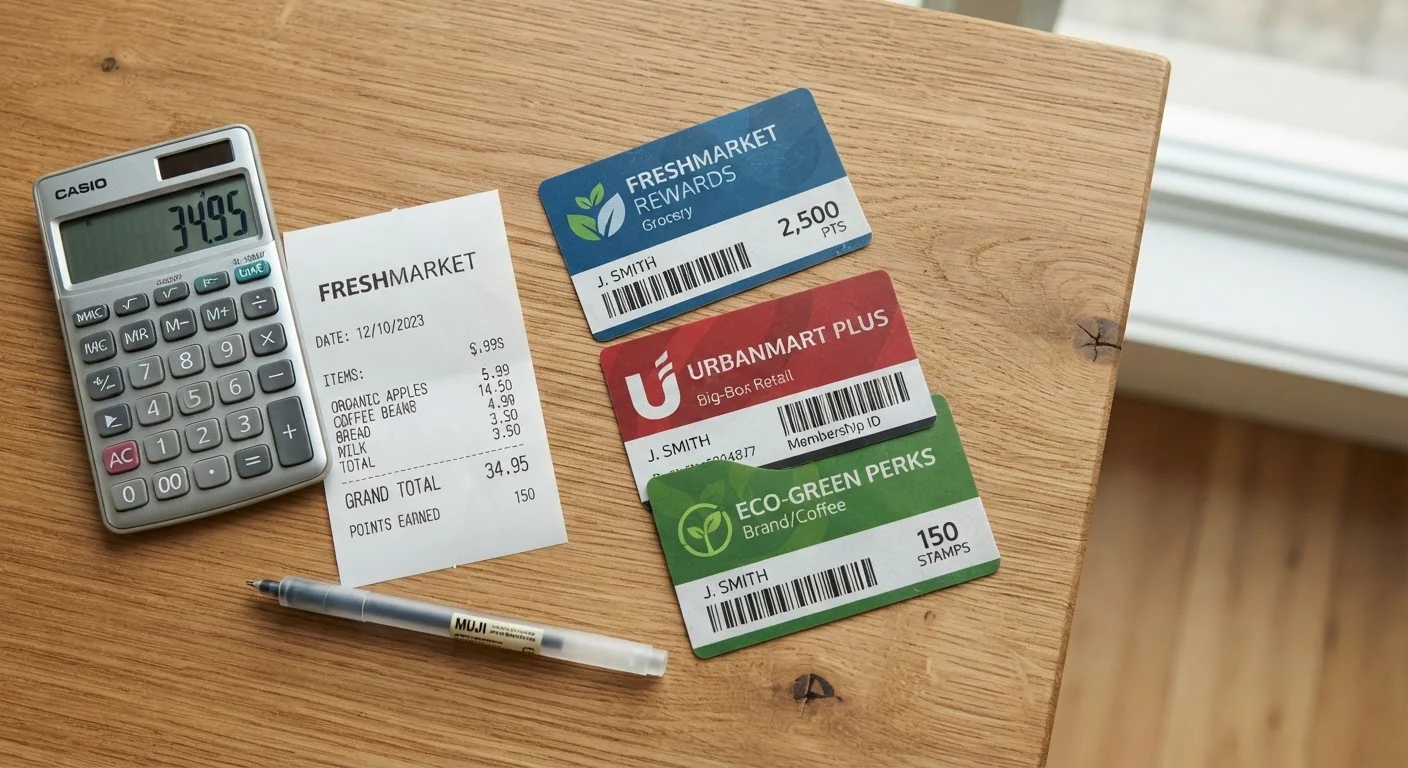
Before comparing grocery, retail, and brand programs side by side, you need a consistent lens for evaluating them. Most programs advertise points per dollar or percentage-back figures, but those headline numbers routinely obscure the actual value you receive. The metric that matters is effective return rate: the dollar value of rewards earned divided by the dollars spent to earn them.
A program that offers 1 point per dollar and redeems at $0.01 per point returns 1%. A program offering 5% back on a specific category sounds better - until you realize rewards expire in 90 days or are restricted to in-store credit only. Redemption flexibility and expiration rules are part of the return calculation, not footnotes.
For a full breakdown of how points, cashback, and tiered structures differ mechanically, see how loyalty program structures actually work before deciding which type fits your spending profile.
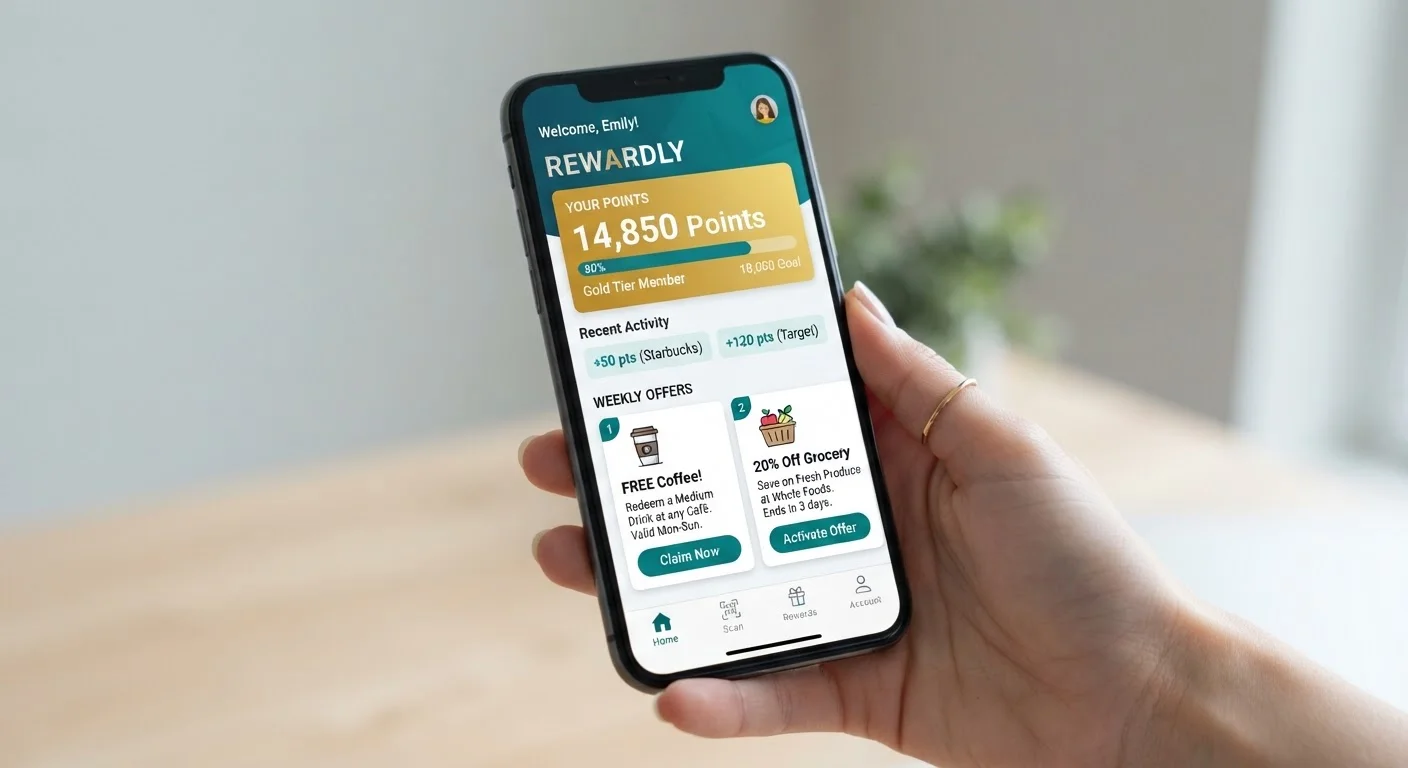
Three variables determine where a program sits on the value spectrum:
- Earn rate: How much you accumulate per dollar spent, across all purchase types.
- Redemption value: What your points or cashback actually convert to - statement credits, merchandise, travel, or store credit with restricted use.
- Burn friction: How easy it is to redeem without conditions that erode the headline value.
With that framework in place, each program category breaks down very differently.
Grocery Loyalty Programs: High Frequency, Tight Margins
Grocery chains have the structural advantage of habit. The average American household visits a grocery store 1.6 times per week, which means a well-structured grocery loyalty program can compound small rewards into meaningful annual savings with zero change in behavior. That frequency is the category's greatest strength.
1.6x
Average weekly grocery store visits per U.S. household
According to FMI - The Food Industry Association's U.S. Grocery Shopper Trends report, this visit frequency makes grocery programs uniquely positioned to compound small rewards over time.
$150+
Average annual savings for active grocery loyalty members
Grocery loyalty members who consistently activate personalized digital offers save an estimated $150-$300 annually compared to non-members shopping at the same chain.
74%
Consumers enrolled in at least one loyalty program
Bond Brand Loyalty's Loyalty Report found that while enrollment is nearly universal, only a fraction of members actively engage with earn-and-redeem mechanics.
5%
Amazon Prime Visa return rate on Amazon purchases
Amazon Prime Visa cardholders earn 5% back on Amazon.com and Whole Foods purchases, making it one of the highest single-category return rates among co-branded retail cards.
2x-10x
Bonus point multipliers during loyalty event windows
Most major grocery and retail programs run limited-time bonus multiplier events that can double or increase base earn rates by up to 10x on targeted categories.
Programs like Kroger's Plus Card, Albertsons for U, and Safeway's Just for U combine tiered fuel rewards with personalized digital coupons and periodic bonus point events. The effective return on grocery-category spending typically ranges from 1% to 5%, depending on how aggressively you activate personalized offers and stack them with manufacturer coupons.
The ceiling, however, is determined by grocery margin structures. Grocers operate on thin margins - often 1-3% net - which limits how generous any broadly applied reward can be. The programs that pay out most reliably do so through targeted personalization: the app pushes 5x or 10x point offers on items you already buy, not random categories.
Activate Offers Before Every Shopping Trip
Grocery loyalty apps typically reset personalized digital offers weekly. Offers that aren't activated before scanning your loyalty card at checkout don't apply - the system doesn't retroactively credit them. Build a 90-second weekly habit of opening the app and tapping 'Add all offers' before you head to the store. This single action is responsible for the majority of the return rate difference between active and passive loyalty members.
Time Large Purchases Around Bonus Events
Big-box retail programs and brand programs routinely run 2x-5x bonus point events tied to seasonal sales or product launches. If you're planning a purchase of $200 or more, checking the loyalty calendar before committing to a purchase date can meaningfully increase your return. Best Buy, Target, and Sephora all publish upcoming bonus event schedules in their apps. A one-week delay on a large purchase can double the points earned on that transaction.
Stack Your Layers Before Final Checkout
Before completing any online purchase, confirm all three savings layers are active: loyalty offer is applied, your category-bonus credit card is selected for payment, and your cashback extension or portal is tracking the session. Missing one layer on a $300 purchase can cost $6-$15 in foregone rewards - a small amount per transaction that compounds significantly across a year of consistent shopping.
Fuel rewards represent grocery programs' most concrete value driver. Kroger's fuel points system, for example, can knock $0.10-$1.00+ per gallon off fuel purchases for shoppers who route their spending strategically. For households filling a tank weekly, this alone can offset a meaningful portion of the annual grocery spend.
The key vulnerability: grocery rewards are almost entirely in-store or in-ecosystem credits. You can rarely convert Kroger points to cash or use them outside the chain's network. If the chain near you closes or you relocate, accumulated value often becomes stranded. Unplanned grocery trips also dilute your return - grocers are specifically designed to profit when you shop without a plan, so reward earnings without purchase discipline can mask real overspending.
Big-Box Retail Programs: Better Per-Transaction Value, Lower Frequency
Target Circle, Walmart+, Best Buy's My Best Buy Rewards, and Costco's membership model represent a different value equation. These programs operate on higher-margin categories - electronics, home goods, apparel, sporting goods - which gives them the financial headroom to offer genuinely competitive return rates on individual transactions.
Target Circle, for instance, offers 1% back on most purchases plus rotating category-specific offers of 5-20% on select items. Best Buy's program reaches 2.5% in base rewards for Elite Plus members, with multiplier events around major sales periods. The per-transaction return on a $400 electronics purchase is structurally higher than on a $100 grocery run at comparable headline rates.
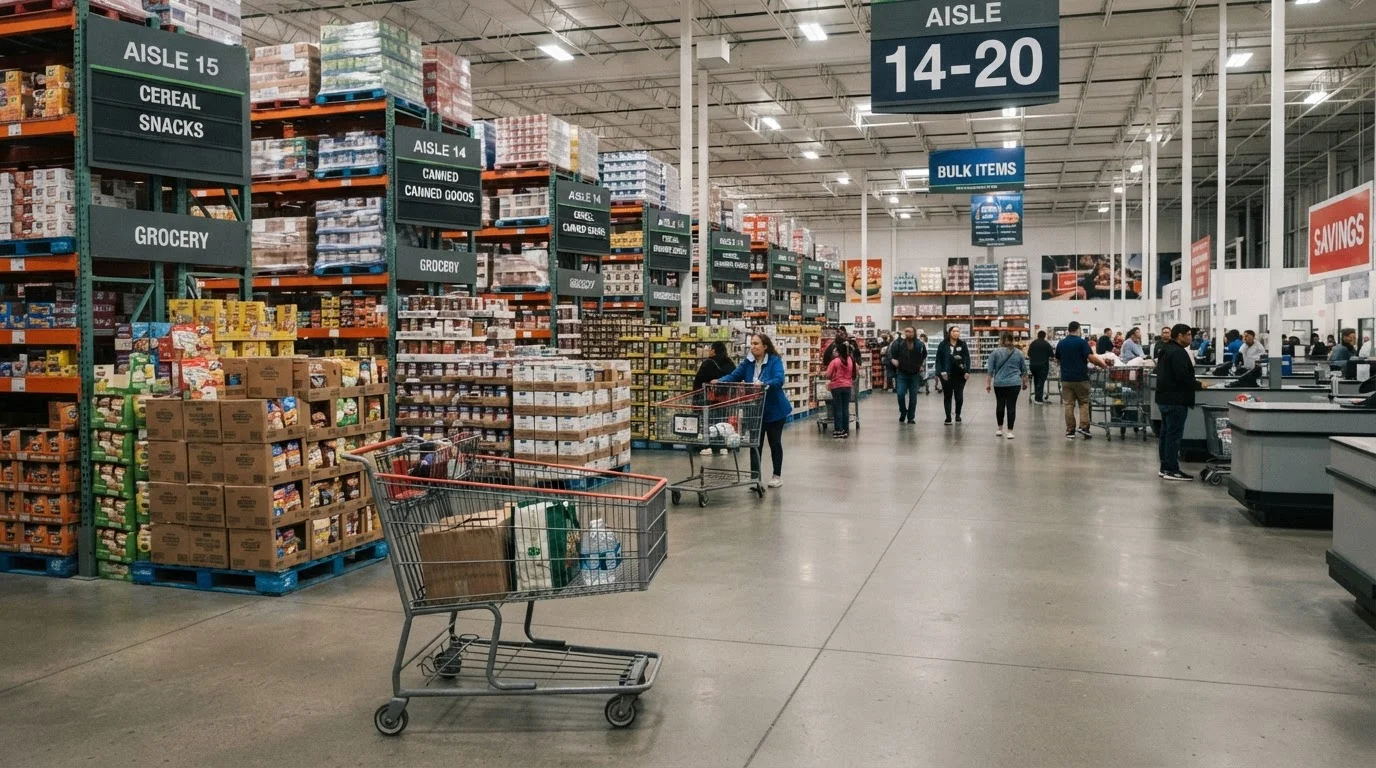
The paid-membership tier deserves specific attention. Walmart+ ($98/year) and Costco ($65-$130/year) shift the model from accumulation to access: fuel discounts, free shipping, member-only pricing, and prescription savings. The ROI calculus here is different - you're not accumulating points; you're evaluating whether the bundled benefits exceed the annual fee given your actual usage patterns.
Costco's executive membership offers 2% back on most purchases (capped at $1,000 per year), which reaches breakeven at roughly $3,250 in annual Costco spend. Consistent households spending $300+/month there typically clear that threshold and then some.
Paid Memberships Can Cost More Than They Return
Warehouse club and premium retail memberships only generate positive ROI if you spend enough to clear the break-even threshold. Costco Executive membership requires roughly $3,250 in annual Costco purchases for the 2% reward alone to cover the upgrade cost. If you're buying a membership based on aspirational spending rather than historical patterns, you're likely paying for benefits you won't use. Run the math on your last six months of actual spend before enrolling in any paid tier.
Brand Lock-In Can Override Better Deals Elsewhere
Brand loyalty programs are engineered to suppress price comparison behavior. Once you're invested in a tier - Nike's highest levels, Sephora's Rouge - the psychological cost of switching feels high even when competitors offer meaningfully better prices. Periodically compare your brand-loyal purchases against alternatives on a total-cost-of-ownership basis. Loyalty rewards rarely fully offset a 20-30% price premium versus a competing brand or retailer.
Big-box programs tend to deliver best for shoppers who make deliberate, planned purchases in higher-margin categories. Impulse buying at these stores, particularly at warehouse clubs where bulk quantities are standard, can flip the value equation - you spend more than intended, even if the per-unit price is favorable.
For shoppers who run browser extensions alongside these programs, stacking cashback extensions with big-box loyalty is one of the highest-yield combinations available, particularly during major sale events.
Brand Loyalty Programs: High Ceiling, Narrow Focus
Brand-direct programs - Nike Membership, Sephora Beauty Insider, Starbucks Rewards, Amazon Prime - operate with a fundamentally different objective than retailer programs. The brand isn't trying to capture your total wallet share; it's trying to prevent you from ever seriously considering a competitor. That defensive posture produces some genuinely aggressive reward structures for brand-committed shoppers.
Sephora's Beauty Insider program illustrates the ceiling: Rouge-tier members (spending $1,000+/year) access exclusive sales, early product launches, and free custom makeovers - perks with real dollar value that aren't reducible to a simple cashback percentage. Starbucks Rewards compounds similarly: 3 stars per $1 for registered card holders, with Gold/Rewards-tier members accessing double-star days that effectively double the return rate for a 24-hour window.
| Grocery Programs | Big-Box Retail Programs | Brand Programs | |
|---|---|---|---|
| Typical effective return rate | 1-5% (with activated offers) | 1-5% (2.5%+ at elite tiers) | 2-10% (within brand ecosystem) |
| Purchase frequency | Very high (weekly) | Moderate (monthly) | Variable (brand-dependent) |
| Redemption flexibility | Low (store credit/fuel) | Moderate (statement credit or in-store) | Low to moderate (brand-restricted) |
| Annual fee required | Rarely | Sometimes ($65-$130) | Rarely (some premium tiers) |
| Reward expiration risk | Moderate (monthly resets common) | Low to moderate | Low (most don't expire) |
| Stackability with other offers | High (coupons, cashback apps) | Moderate to high | Moderate (brand promotions) |
| Lock-in / switching cost | Low (easy to switch chains) | Low to moderate | High (tier resets) |
| Best for spending profile | High-frequency, essential goods | Planned discretionary purchases | Concentrated single-brand buyers |
The structural limitation of brand programs is exactly what makes them powerful: they only pay out if you stay within the ecosystem. A Nike member who begins buying running shoes at a competitor loses all tier progress and future access. This lock-in is intentional and should factor directly into your program enrollment decisions.
Amazon Prime is the clearest case study in brand program design. The $139 annual fee bundles shipping, streaming, grocery delivery, and a 5% return rate on Amazon purchases (with the Prime Rewards Visa). For households spending $200+/month on Amazon, the 5% return alone approaches $120/year - near fee breakeven before factoring in any other benefits.
Brand programs also typically offer the deepest integration with manufacturer promotions. If you're already a committed buyer of a specific brand across multiple product lines, their loyalty program almost always beats the retailer program's return rate on those specific products. The question is whether your actual consumption is concentrated enough to justify the constraint.
Many brand loyalty perks go unclaimed - particularly bonus multiplier windows, partner brand redemptions, and birthday offers that require advance opt-in.
Side-by-Side: Which Program Type Wins Each Criterion
The right program depends on your spending pattern, not the marketing. Here's how the three categories compare across the criteria that actually affect your take-home savings:
| Grocery Programs | Big-Box Retail Programs | Brand Programs | |
|---|---|---|---|
| Typical effective return rate | 1-5% (with activated offers) | 1-5% (2.5%+ at elite tiers) | 2-10% (within brand ecosystem) |
| Purchase frequency | Very high (weekly) | Moderate (monthly) | Variable (brand-dependent) |
| Redemption flexibility | Low (store credit/fuel) | Moderate (statement credit or in-store) | Low to moderate (brand-restricted) |
| Annual fee required | Rarely | Sometimes ($65-$130) | Rarely (some premium tiers) |
| Reward expiration risk | Moderate (monthly resets common) | Low to moderate | Low (most don't expire) |
| Stackability with other offers | High (coupons, cashback apps) | Moderate to high | Moderate (brand promotions) |
| Lock-in / switching cost | Low (easy to switch chains) | Low to moderate | High (tier resets) |
| Best for spending profile | High-frequency, essential goods | Planned discretionary purchases | Concentrated single-brand buyers |
One pattern stands out clearly: no single program category dominates across all criteria. Grocery programs win on frequency-based compounding; retail programs win on per-transaction return for discretionary spending; brand programs win on depth when your consumption is concentrated. The category that rewards you most is the one that already captures the largest share of your consistent spending.
How to Build a Stack That Beats Any Single Program
The practical takeaway from comparing these three categories isn't "choose one" - it's "understand which layer each fills." Consistent shoppers who maximize loyalty earnings treat these programs as complementary layers, not alternatives.
A functional three-layer approach looks like this:
- Loyalty program layer: Enroll in the grocery or big-box program where you already concentrate the most weekly spend. Activate personalized offers each week - this is non-negotiable; unactivated offers earn nothing.
- Credit card layer: Use a card that earns elevated rates in your top spending category (typically 3-5% on groceries or dining). The Citi Custom Cash, Blue Cash Preferred from Amex, or Chase Freedom Flex all offer category bonuses that stack directly on top of store loyalty earnings.
- Cashback portal or extension layer: For online purchases, route through a cashback portal (Rakuten, TopCashback) or run a browser extension before completing checkout. This layer adds 1-10% on top of what you're already earning from the loyalty and credit card layers.
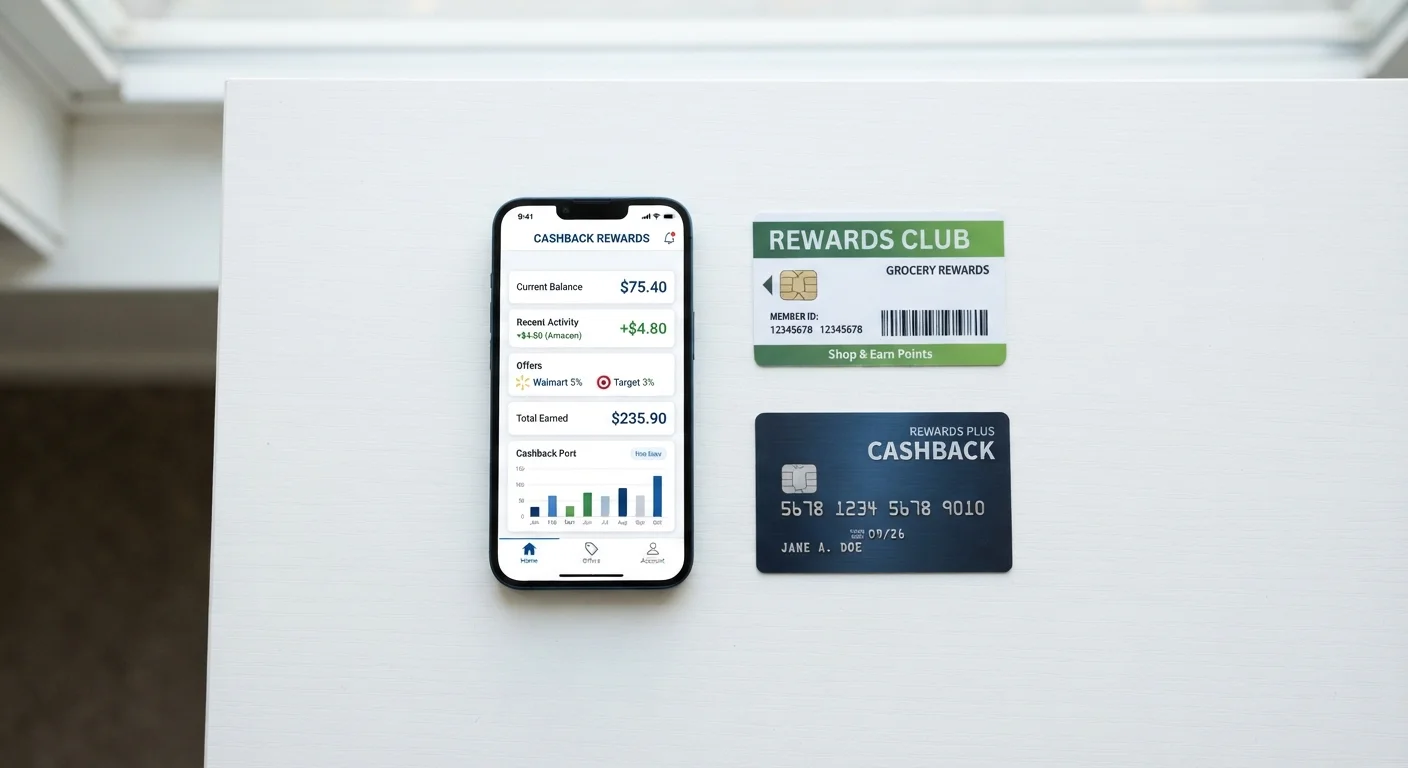
Before any significant purchase, run a quick audit to confirm all three layers are active. The pre-checkout coupon stacking audit is a reliable framework for ensuring you haven't missed a layer. For digital purchases specifically, stacking digital coupons across multiple savings tools adds a fourth layer that most shoppers leave on the table entirely.
The compounding effect of this approach is significant. A shopper earning 2% from a grocery loyalty program, 3% from a grocery-category credit card, and 1% from a cashback app effectively earns 6% on the same purchases - without changing what they buy or where they buy it. The full cashback programs landscape covers additional tools worth incorporating once the core stack is operational.
Activate Offers Before Every Shopping Trip
Grocery loyalty apps typically reset personalized digital offers weekly. Offers that aren't activated before scanning your loyalty card at checkout don't apply - the system doesn't retroactively credit them. Build a 90-second weekly habit of opening the app and tapping 'Add all offers' before you head to the store. This single action is responsible for the majority of the return rate difference between active and passive loyalty members.
Time Large Purchases Around Bonus Events
Big-box retail programs and brand programs routinely run 2x-5x bonus point events tied to seasonal sales or product launches. If you're planning a purchase of $200 or more, checking the loyalty calendar before committing to a purchase date can meaningfully increase your return. Best Buy, Target, and Sephora all publish upcoming bonus event schedules in their apps. A one-week delay on a large purchase can double the points earned on that transaction.
Stack Your Layers Before Final Checkout
Before completing any online purchase, confirm all three savings layers are active: loyalty offer is applied, your category-bonus credit card is selected for payment, and your cashback extension or portal is tracking the session. Missing one layer on a $300 purchase can cost $6-$15 in foregone rewards - a small amount per transaction that compounds significantly across a year of consistent shopping.
Practical Enrollment Decisions: Where to Focus First
With limited time and attention, prioritize enrollment decisions based on your existing spend distribution. Pull three months of bank and credit card statements and tally spending by category: groceries, general retail, and specific brands. Whichever category represents your largest consistent outlay is where a loyalty program earns the fastest ROI.
A household spending $800/month on groceries and $200/month at a big-box retailer should prioritize the grocery program first - even if the retail program's headline return rate is higher. Volume multiplied by return rate determines total earnings, not return rate alone.

For households that split spending more evenly, the practical priority order is:
- Free programs first: All free-to-join programs worth enrolling in should be activated immediately. There's no opportunity cost to holding a Kroger Plus card alongside a Target Circle account.
- Paid programs only when break-even is clear: Calculate the exact annual spend needed to recoup the membership fee before signing up. Costco Executive, Walmart+, and Amazon Prime all have calculable break-even thresholds based on your actual usage.
- Brand programs when concentration is confirmed: Only commit to a brand program if your historical purchase data shows genuine concentration in that brand. Joining to earn rewards and then buying the brand more than you otherwise would is a net loss.
Finally, audit your existing programs annually. Expiration policies, earn rates, and redemption structures change - sometimes significantly. A program that delivered strong returns 18 months ago may have restructured its point values or added restrictive redemption minimums. Loyalty program features you're not using often include bonus categories or partner redemptions that dramatically improve the effective return rate for shoppers who take the time to look.