

Key Takeaways
Coupon Stacking
Coupon stacking is the practice of applying more than one coupon or discount to a single item or transaction. Instead of choosing between a manufacturer coupon and a store promotion, stacking lets you use both - legally - when the store's policy permits it. The result is a compounding discount that can be dramatically larger than any single offer alone.
Stacking works because manufacturer coupons are funded by the product brand while store coupons are funded by the retailer - these are treated as separate discount sources and don't inherently conflict. Digital coupons and cashback apps add a third distinct layer.
What Coupon Stacking Actually Means
Most shoppers understand that coupons reduce prices. Fewer understand that multiple discounts can legally apply to the same product at the same time - and that this compounding effect is the actual engine behind extreme couponing savings stories.
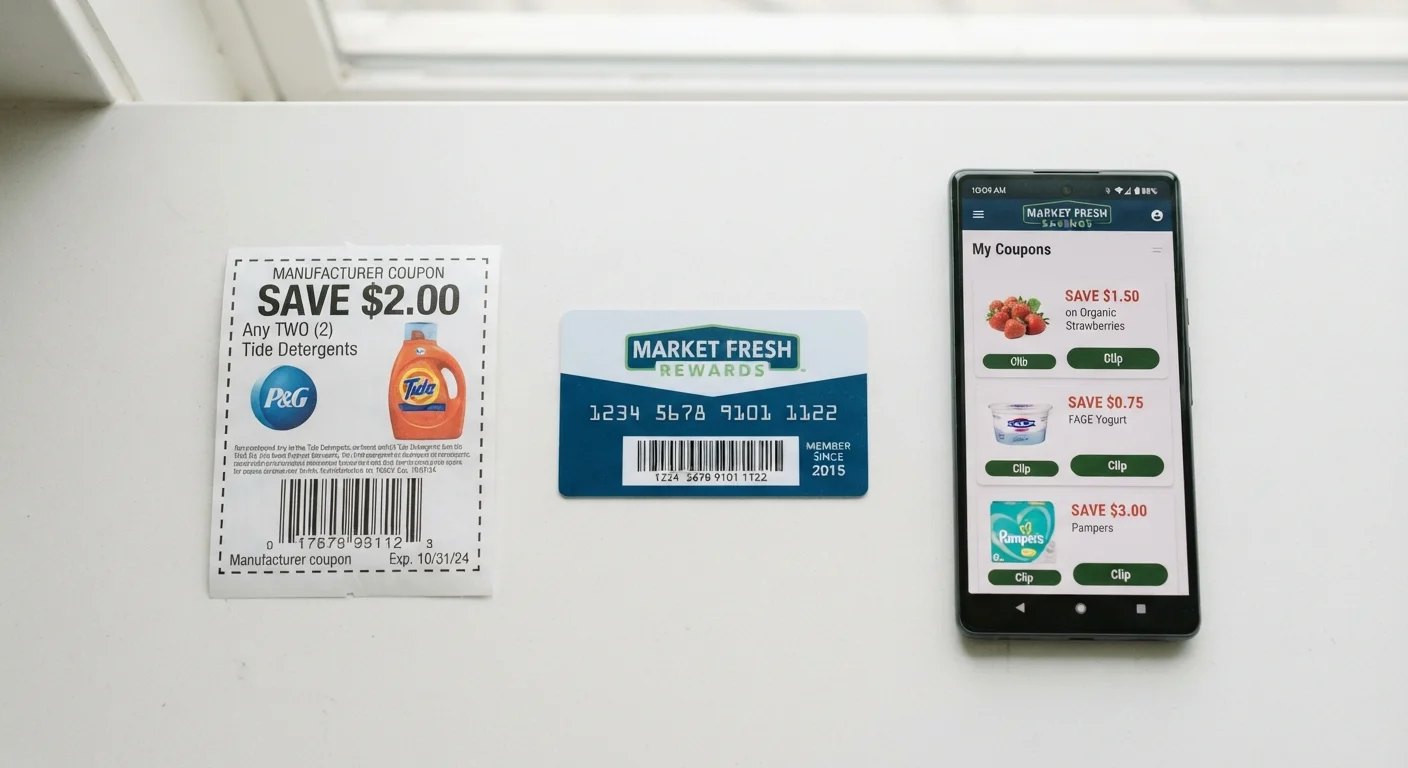
Coupon stacking isn't a loophole or a trick. It's a structured approach to combining discount sources that don't overlap in funding. When a brand like Procter & Gamble issues a $1.00 off coupon for Tide detergent, that dollar comes out of P&G's marketing budget. When Target issues a $0.50 off Tide coupon, that discount is funded by Target. Because these are two separate financial transactions from two separate parties, applying both to one purchase doesn't constitute double-dipping - it's exactly what both parties intended.
The confusion arises because not every store treats these layers the same way. Understanding which combinations are permitted - and why - is what separates shoppers who save 15% from those who save 50%.
For a broader foundation on how different coupon types interact, store vs. manufacturer coupon rules break down exactly when combining both is allowed.
The Three Layers of a Stacked Discount
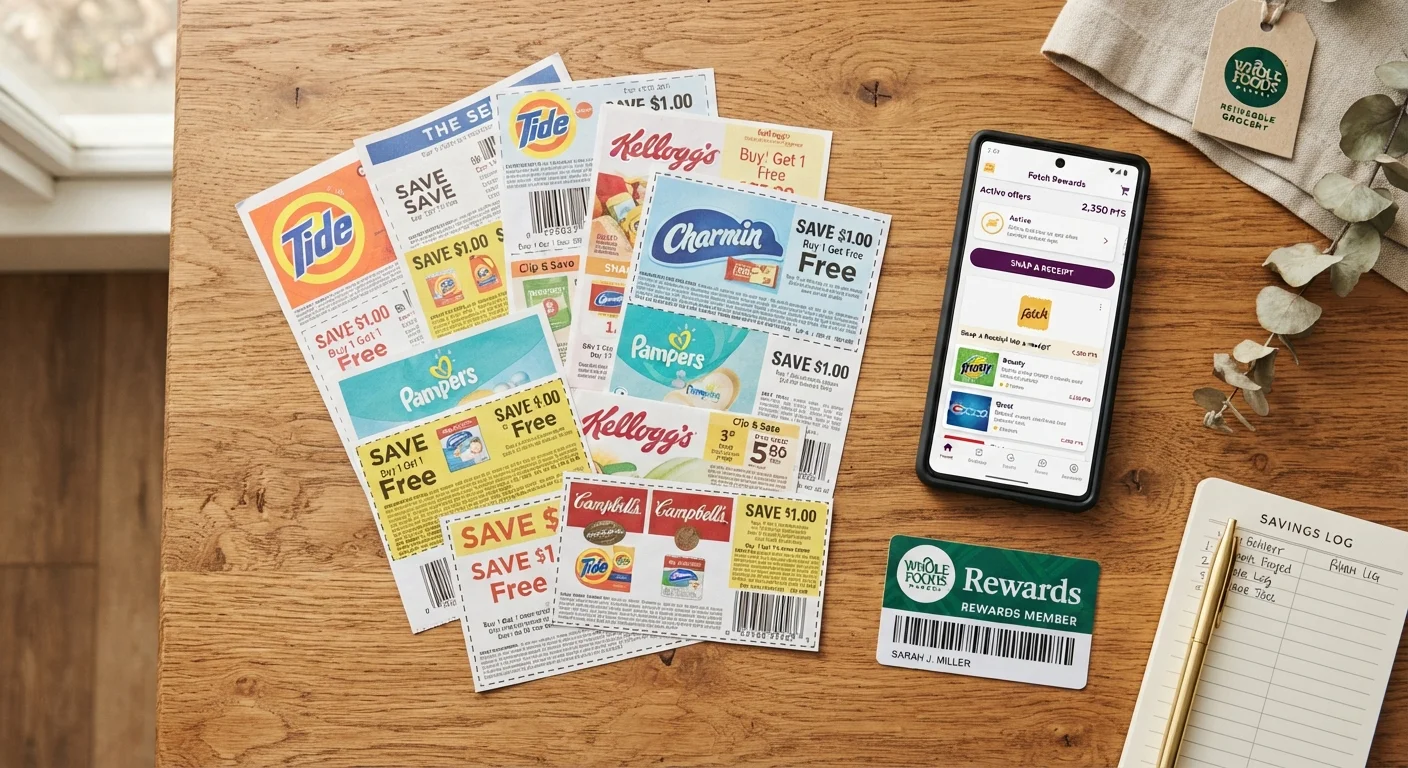
Think of coupon stacking as building a discount sandwich. Each layer is independent, funded separately, and adds to the total reduction in price. Here are the three primary layers most shoppers have access to:
Layer 1: Manufacturer Coupons
These are issued by the brand itself and can be used at any retailer that accepts them. They appear in Sunday newspaper inserts, brand websites, coupon databases like Coupons.com, and increasingly through apps. Manufacturer coupons typically specify the product, size, and quantity - and they reimburse the retailer after the transaction.
Layer 2: Store Coupons
Issued and funded by the retailer. These come through store apps, loyalty program mailers, weekly circulars, and checkout receipts (often called Catalina coupons). Because the store is absorbing the cost, they have full control over whether these can be combined with manufacturer coupons - most major chains allow it.
Layer 3: Cashback, Loyalty, and Digital Rewards
This is where the modern stacking game gets interesting. Apps like Ibotta, Rakuten, and Fetch Rewards operate entirely outside the in-store transaction. You submit a receipt or activate an offer, and the rebate is credited to your account separately. Because these platforms aren't technically coupons in the traditional sense, they almost never conflict with in-store coupon limits.
40%+
Average grocery savings through coupon stacking
Extreme Couponing Today reports that dedicated stackers routinely cut grocery bills by 40-60% per weekly shop.
$1,500
Average annual savings for active coupon users
The Coupon Information Corporation estimates regular coupon users save approximately $1,500 per year across all purchases.
3x
Greater savings when stacking vs. single coupon
RetailMeNot data shows shoppers who combine multiple offer types save roughly three times more per transaction than single-coupon users.
89%
Major retailers accepting manufacturer coupons
According to the Grocery Manufacturers Association, approximately 89% of major US grocery retailers accept and reimburse manufacturer coupons.
On top of all three layers, sale prices act as a baseline reduction before any coupon applies. A 30% off sale combined with a manufacturer coupon, a store digital offer, and an Ibotta rebate is a four-layer stack - and it's completely standard practice at stores like Kroger, Walgreens, and CVS.
For a detailed breakdown of which digital tools stack most reliably, layering cashback apps with store offers walks through the combinations that consistently pay off.
Store Coupon Policies: Where Stacking Is Allowed and Where It Isn't
No federal regulation governs coupon stacking. Retailers write their own rules, and those rules vary enormously. Before building any stacking strategy, confirm the policy at your specific store - in writing, on their website, not from a fellow shopper's secondhand account.

Generous Stacking Policies
- CVS: Accepts one manufacturer coupon plus one store coupon per item, plus ExtraCare loyalty rewards. Stacking sale prices with all three layers is routine and expected.
- Walgreens: Similar structure. Accepts manufacturer coupons alongside Walgreens store coupons and myWalgreens rewards. Digital coupons from the app count as store coupons.
- Kroger: Allows one manufacturer coupon plus one digital store coupon per item. Their digital coupons auto-apply at checkout when linked to your loyalty card - no scanning required.
- Target: One of the most flexible - allows a manufacturer coupon, a Target Circle offer, and a Target gift card offer to combine on a single item. The Target app is central to maximizing this.
Restrictive or No-Stack Policies
- Costco: Only accepts manufacturer coupons from their own coupon booklets. No external coupons accepted.
- Aldi: Does not accept any coupons. Their pricing model eliminates couponing entirely.
- Some regional chains: May prohibit combining any two coupons regardless of source.
Coupon Policies Change Frequently
Retailers update their coupon policies multiple times per year, especially around peak shopping seasons. A policy that allowed stacking in January may restrict it by March. Always verify the current policy on the retailer's website or app before your shopping trip - not from a cached blog post or fellow shopper's tip.
Digital Coupons and Store Coupons Are Usually the Same Thing
When a retailer's app offers a clippable discount, that coupon is funded by the store - making it a store coupon in every meaningful sense. This matters because it affects whether it can combine with a manufacturer coupon you bring in separately. The delivery mechanism (app vs. paper) doesn't change the coupon type.
Cashback Apps Are Not Coupons
Platforms like Ibotta, Rakuten, and Fetch Rewards are rebate services - not coupons. They don't interact with the point-of-sale system, don't require cashier involvement, and don't count toward a store's one-coupon-per-item limits. This makes them an always-available fourth layer on virtually any stacking combination.
The practical takeaway: grocery and drug store chains are where coupon stacking delivers the biggest returns. Big box stores and warehouse clubs have much stricter policies that limit your options significantly. Knowing this before you walk in saves time and avoids friction at checkout.
To understand the fine print on what can legally combine, which coupon types stores actually allow to combine covers the policy language in detail.
Reading Coupon Fine Print Like a Strategist
Every coupon has terms. Ignoring them is the most common reason stacked savings fall apart at the register. Here's what to look for before building any stack:
- "One coupon per purchase"
- Means one per item purchased, not one per transaction. You can usually use this coupon on each qualifying item in your cart.
- "One coupon per transaction"
- Much more restrictive. This means one coupon for the entire checkout, regardless of how many items you're buying. Doing two separate transactions is a legitimate workaround where store policy permits it.
- "Do not double"
- Instructs the cashier not to double the coupon's value at stores with doubling policies. It does not prohibit stacking with other coupon types.
- Exclusion lists
- Many store coupons list excluded brands or sizes. A $1.00 off any shampoo coupon might exclude trial sizes. Always verify the item in your cart qualifies before checkout.
- Expiration dates
- Digital coupons in loyalty apps often expire without notification. Clip and use them the same week you plan to shop.
“Coupons are a form of currency, and like any currency, the rules around them are set by the institutions that issue them. Understanding who issued the coupon - the brand or the store - tells you almost everything you need to know about whether you can combine it.”
— Jill Cataldo, Nationally Syndicated Coupon Columnist and Author
Understanding this language turns a stack from a guess into a plan. When you know exactly what each coupon permits, you can engineer combinations with confidence rather than hoping the register accepts them.
Practical Stacking Strategies That Work Right Now
Strategy beats luck every time. Here are the stacking methods with the highest and most consistent payoff:
The Classic Two-Layer Stack
Manufacturer coupon + store coupon on a sale item. This works at most major grocery and drug chains, requires no apps, and produces reliable 40-60% savings on brand-name products. Plan around weekly circulars and match items on sale with available manufacturer coupons.
The Triple Stack (Drug Store Edition)
Manufacturer coupon + store digital coupon + loyalty rewards (ExtraBucks or Register Rewards) + sale price. CVS and Walgreens are built for this. Their rewards programs generate store currency that spends like cash on your next visit - effectively extending the stack across multiple trips.
The Receipt Rebate Layer
After checking out with stacked in-store coupons, submit your receipt to Ibotta, Fetch, or a similar cashback app. These platforms run offers on specific products independent of what happened at the register. There is no conflict - you're submitting proof of purchase, not applying a coupon at the point of sale.
Activate Ibotta Offers Before You Shop
Ibotta requires you to "unlock" offers in the app before making your purchase - not after. Many shoppers miss rebates because they upload receipts for items they never pre-activated. Spend two minutes in the app before leaving for the store to ensure every eligible purchase triggers a rebate.
Prepare Your Stack Before You Get to the Register
Organize coupons by item in the order you'll buy them, double-check expiration dates, and confirm every product in your cart matches the coupon terms exactly. A 10-minute prep session at home eliminates 90% of checkout problems and makes the process faster and less stressful for everyone in line.
The Category Stack
Buy-one-get-one (BOGO) sales combined with a coupon applied to each item. If the coupon says "one per purchase" and you're buying two items in a BOGO, you can often apply the coupon to each item separately. At stores that allow this, the math is significant: 50% off from the BOGO plus coupon value off each item.
These aren't theoretical - couponing basics for grocery savings covers the foundational techniques that make strategies like these executable week over week.
Where Stacking Goes Wrong and How to Avoid It
Even experienced couponers run into problems. The most common failure modes are avoidable with preparation:
Mismatched Products
A coupon for "Tide Original 64oz" won't work on Tide Free & Gentle 100oz. Registers scan barcodes and match them against the coupon's encoded product data. If the product doesn't match exactly, the coupon beeps and declines. Read size, scent, and variant requirements before adding items to your cart.
Stacking Violations
Attempting to use two manufacturer coupons on one item - even if the cashier doesn't catch it - is a policy violation and can flag your account for coupon fraud. The rule is firm: one manufacturer coupon per item, full stop.
Digital Coupon Overlap
Some store apps prevent two digital offers from stacking on the same item even if they appear to be from different sources. Check the app's terms before clipping competing offers on one product.
Unprepared at Checkout
The register line is not the time to sort out your stack. Organize coupons by item, verify expiration dates, and confirm offer requirements before you start shopping. A declined coupon with a line behind you isn't just inconvenient - it's a momentum killer that leads to poor decisions under pressure.
Activate Ibotta Offers Before You Shop
Ibotta requires you to "unlock" offers in the app before making your purchase - not after. Many shoppers miss rebates because they upload receipts for items they never pre-activated. Spend two minutes in the app before leaving for the store to ensure every eligible purchase triggers a rebate.
Prepare Your Stack Before You Get to the Register
Organize coupons by item in the order you'll buy them, double-check expiration dates, and confirm every product in your cart matches the coupon terms exactly. A 10-minute prep session at home eliminates 90% of checkout problems and makes the process faster and less stressful for everyone in line.
For a comprehensive list of mistakes and exactly how to sidestep them, stacking coupons without problems at the register covers the full prevention checklist.
Coupon Policies Change Frequently
Retailers update their coupon policies multiple times per year, especially around peak shopping seasons. A policy that allowed stacking in January may restrict it by March. Always verify the current policy on the retailer's website or app before your shopping trip - not from a cached blog post or fellow shopper's tip.
Digital Coupons and Store Coupons Are Usually the Same Thing
When a retailer's app offers a clippable discount, that coupon is funded by the store - making it a store coupon in every meaningful sense. This matters because it affects whether it can combine with a manufacturer coupon you bring in separately. The delivery mechanism (app vs. paper) doesn't change the coupon type.
Cashback Apps Are Not Coupons
Platforms like Ibotta, Rakuten, and Fetch Rewards are rebate services - not coupons. They don't interact with the point-of-sale system, don't require cashier involvement, and don't count toward a store's one-coupon-per-item limits. This makes them an always-available fourth layer on virtually any stacking combination.
Building a Repeatable Stacking System
The shoppers who save the most consistently aren't lucky - they have a system. Here's how to build one that scales:
- Pick two or three stores with known stacking policies. Depth beats breadth. Mastering CVS and Kroger beats casually couponing at ten different chains.
- Set up all loyalty accounts and link them to your phone number. This ensures digital coupons auto-apply at checkout without scanning anything manually.
- Subscribe to one or two coupon databases. Coupons.com and the Sunday paper inserts (even digitally via apps like Flipp) surface available manufacturer coupons. Cross-reference weekly sales before your shopping trip.
- Activate cashback app offers before you shop, not after. Ibotta and similar apps require you to unlock the offer before purchase - not just upload the receipt. This single mistake costs shoppers rebates every week.
- Track your savings for one month. A simple spreadsheet showing original price vs. final price makes the system's ROI concrete. It also reveals which stores and product categories deliver the best stack opportunities consistently.
Stacking isn't about extreme couponing TV drama. It's about applying a disciplined process each week that compounds over time. The mechanics are learnable, the policies are public, and the savings are real - you just need to treat it like the system it is.
For the next level, getting the most out of multiple digital savings tools shows how to layer cashback apps and store offers without running into terms-of-service problems.