

Key Takeaways
Option A
Store Coupons
The retailer's own discount - yours to layer strategically.
Best for: Shoppers who want to maximize savings at a specific chain by combining store discounts with other coupon types.
Option B
Manufacturer Coupons
Brand-funded savings redeemable across many retailers.
Best for: Brand-loyal shoppers looking for product-level discounts redeemable almost anywhere that carries the item.
If you shop primarily at one grocery chain and want the deepest discounts
Store Coupons stacked with Manufacturer Coupons
Combining both types on the same item is the most reliable way to cut costs significantly, and most major chains explicitly allow it.
If you want savings that travel with you across multiple retailers
Manufacturer Coupons
Manufacturer coupons are accepted at virtually any store carrying the product, giving you price flexibility without being locked into one chain.
If you're shopping a clearance or sale event and want to maximize the markdown
Store Coupons
Store coupons apply on top of the retailer's own sale pricing, while some manufacturer coupons restrict use on already-discounted items.
If you clip digital coupons through a store's loyalty app
Store Coupons stacked with Manufacturer Coupons
Digital store coupons loaded to your loyalty card follow the same stacking rules as paper store coupons - pair them with a manufacturer coupon to double up legally.
If you're couponing for the first time and want a simple starting point
Manufacturer Coupons
Manufacturer coupons are easy to find in newspaper inserts, brand apps, and coupon sites, and their terms are more standardized across stores.
What Makes These Two Coupon Types Actually Different
Most shoppers treat a coupon like a coupon - a piece of paper (or a barcode on a phone) that lowers the price. But the distinction between a store coupon and a manufacturer coupon isn't just semantic. It determines who absorbs the discount, where you can use it, and critically, whether you can combine it with another offer.
Store coupons are issued and funded by the retailer. When you use a Kroger coupon at Kroger, Kroger eats that cost - it's a marketing expense on their books. These coupons only work at the issuing chain and are typically found in weekly circulars, the store's own app, or loyalty program clippings.
Manufacturer coupons are issued and funded by the brand that makes the product. When you hand a Procter & Gamble coupon to the cashier, the store redeems it with P&G through a clearinghouse and gets reimbursed - usually the face value plus a small handling fee. Because the cost doesn't come from the store's pocket, manufacturer coupons are accepted at most retailers that carry the product.
This funding difference is the entire reason stacking is possible. You're not asking the same entity to discount you twice - you're asking the store to absorb one discount and then passing a separate bill to the manufacturer for another. The math works out because two different parties are paying.
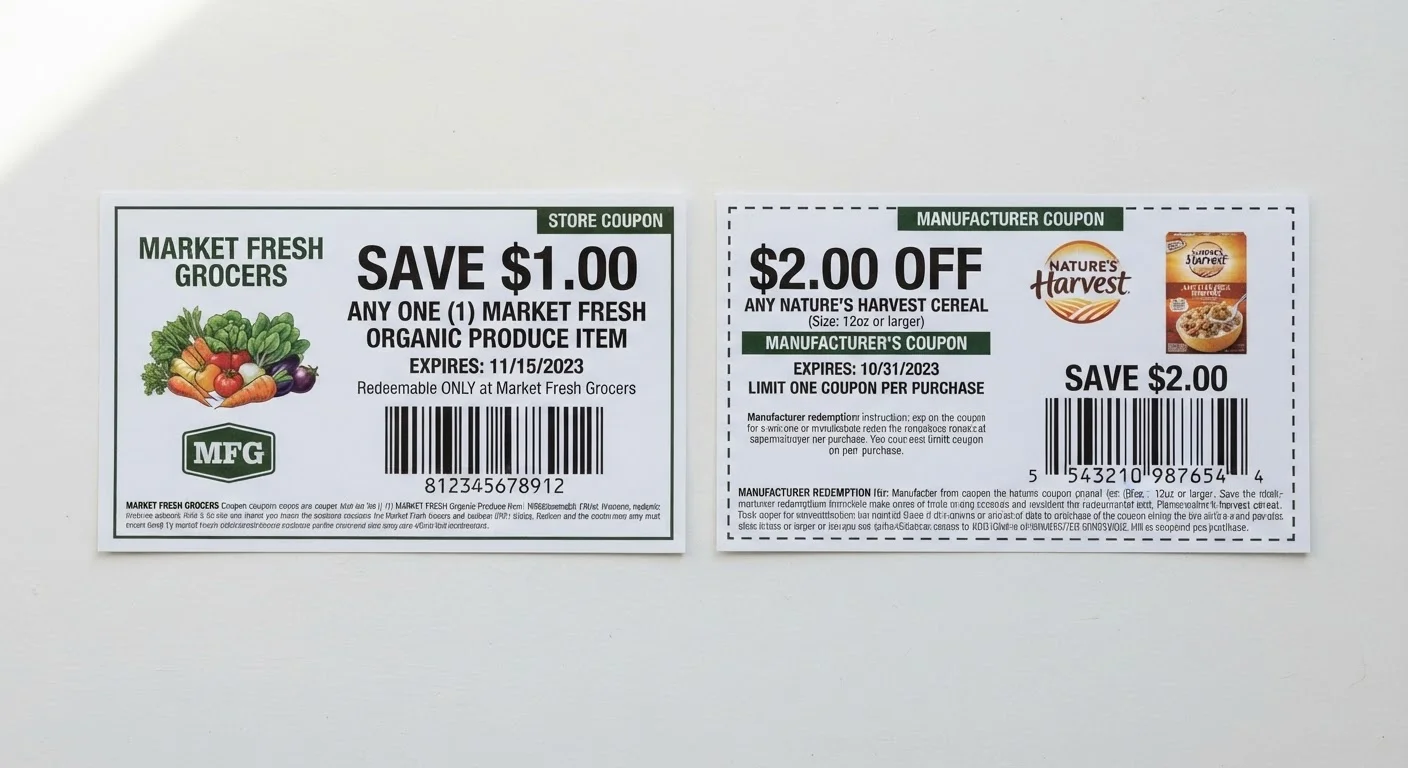
Understanding this structure also helps you read fine print accurately. When a store coupon says "not valid with any other store offer," it's restricting combination with other store-funded discounts. A manufacturer coupon is a separate category - the restriction usually doesn't apply to it. The fine print breakdown of what actually stacks digs deeper into specific exclusion language worth recognizing.
The Standard Stacking Rule - and Why It Holds
The widely accepted baseline across most major retailers in the U.S. is this: one store coupon plus one manufacturer coupon per item, per transaction. This isn't a formal law - it's a near-universal industry norm driven by the economics described above.
Here's the practical breakdown of how that looks at checkout:
- You're buying a bottle of shampoo priced at $6.99.
- You have a manufacturer coupon for $1.50 off that brand.
- You've clipped a store digital coupon for $1.00 off the same item.
- At the register, both apply. You pay $4.49.
That combination is completely legitimate and happens millions of times daily. The store gets reimbursed $1.50 by the manufacturer and accepts its own $1.00 cost as a planned promotion. No rules are bent.
| Criterion | Store Coupons | Manufacturer Coupons |
|---|---|---|
| Funded by | The retailer | The product brand |
| Where accepted | Issuing store only | Most retailers carrying the product |
| Common sources | Store app, weekly circular, loyalty account | Sunday inserts, brand apps, coupon sites |
| Can stack with the other type? | Yes - standard practice | Yes - standard practice |
| Can stack with same type? | Rarely - most stores prohibit it | Almost never permitted |
| Digital equivalents | Store loyalty app clips, in-app store offers | Brand-funded digital coupons in store apps |
| BOGO compatibility | Varies by retailer - often allowed | Often restricted - check coupon terms |
| Barcode identifier | No universal standard - varies by chain | GS1 barcode beginning with 5 |
Where people run into trouble is when they try to apply two manufacturer coupons to a single item (almost never permitted), or when they assume all digital offers fall into the manufacturer category without verifying. The mechanics behind coupon stacking explains exactly where the limits kick in and why overage policies vary by store.
40%+
Average weekly grocery savings via coupon stacking
Experienced couponers who combine store and manufacturer coupons with sale pricing routinely report cutting grocery bills by 40% or more, according to community tracking data from coupon forums.
$1,500
Estimated annual savings for consistent stackers
The Coupon Information Corporation estimates that strategic coupon users who stack store and manufacturer offers save an average of $1,000-$1,500 annually on household staples.
90%+
Manufacturer coupons redeemed through grocery stores
The Association of Coupon Professionals reports that the vast majority of manufacturer coupon redemptions occur at grocery chains, underscoring the importance of understanding retailer stacking policies.
Where Digital Coupons Fit Into the Stack
Digital coupons have complicated what used to be a straightforward two-column system. When you open your store's app and clip a digital coupon, that offer is almost always a store coupon - it's funded by the retailer and tracked through your loyalty account. The same stacking rules apply: you can pair it with a manufacturer coupon for the same item.
But some digital coupons are manufacturer-funded and simply distributed through the store's platform. Brands pay retailers to feature their offers in the app. These are manufacturer coupons in digital form, which means they count as the manufacturer coupon in your stack - not an additional layer.
How do you tell the difference? Look at the coupon's barcode structure if you're using a physical printout, or read the offer terms in the app. Phrases like "manufacturer's coupon" or a barcode beginning with the number 5 indicate manufacturer origin. Store-originated digital coupons usually just say "store offer" or reference the store's loyalty program specifically.
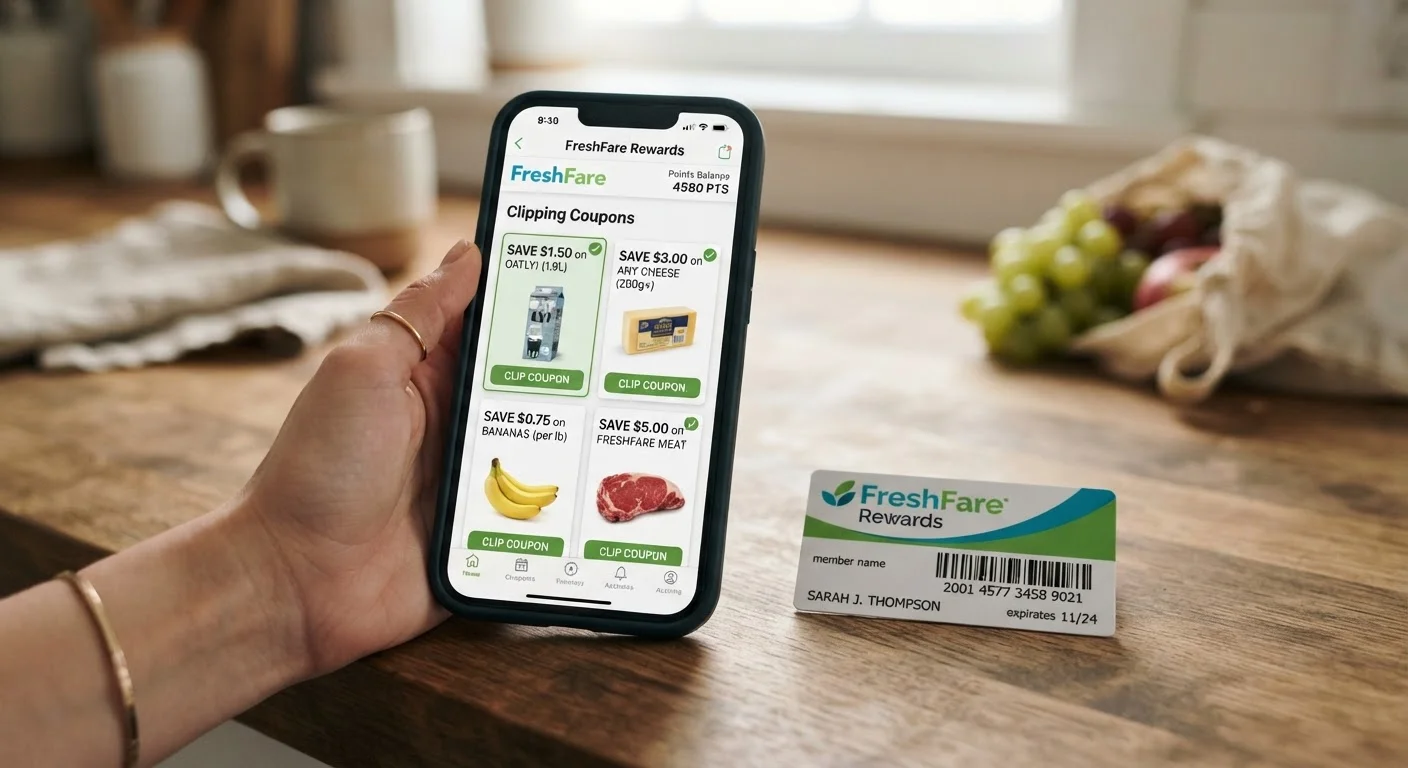
For a full breakdown of how apps like Ibotta, Fetch, and store-specific loyalty programs interact with both coupon types, the guide to stacking digital coupons across multiple savings tools covers the combinations that consistently pay off without triggering policy violations.
Cashback Apps Aren't Coupons
Apps like Ibotta and Fetch Rewards operate as post-purchase rebate platforms, not coupons. Because they're not applied at the point of sale, they don't interact with coupon stacking rules at all. This means you can use a store coupon, a manufacturer coupon, and a cashback offer on the same item without any conflict - they operate in completely separate systems. Always submit your receipt before the offer expires, typically within 7-14 days of purchase.
Restrictions That Can Kill a Stack
Stacking is allowed in most situations - but not all. Knowing the common exceptions saves you from wasted prep and register-line embarrassment.
Sale and BOGO Restrictions
Some manufacturer coupons include language like "not valid on BOGO offers" or "not combinable with any other offer." This is the brand limiting its liability, and the restriction is printed on the coupon itself. If you see it, it applies. Store coupons, on the other hand, can often still be applied to BOGO items at many chains - Publix being a well-known example.
Doubling Policies
Coupon doubling - where a store doubles the face value of a manufacturer coupon up to a certain threshold - has mostly disappeared from major chains, but some regional grocers still offer it. When doubling is active, it typically applies only to manufacturer coupons, not store coupons, and may exclude coupons over a specific value (commonly $0.99 or more).
Limit Clauses
Both coupon types frequently include limits: "one coupon per purchase," "limit 4 like coupons per shopping trip," or "one per household per day." These aren't soft suggestions - barcode systems often enforce them automatically. Buying five of the same item doesn't mean you can use five of a coupon limited to one per transaction.
Exclusion Lists
Manufacturer coupons sometimes specify excluded sizes, flavors, or varieties. A coupon for "any Tide product" may exclude trial sizes or specific multi-packs. Store coupons can exclude sale or clearance items entirely. Reading the fine print before you shop - not at the register - is non-negotiable.
The common stacking mistakes to avoid at checkout is required reading if you've ever had a coupon rejected unexpectedly - it maps the exact misreads that trigger denials.
Retailer-by-Retailer Stacking Policies
Policy varies enough between retailers that assuming uniform rules is a mistake. Here's how the major chains generally operate - though you should always verify current policy on each store's website, since these rules change.
Grocery Chains
Kroger and its banner stores (Fred Meyer, Ralphs, etc.) allow one store coupon and one manufacturer coupon per item. Digital coupons clipped to your loyalty card count as store coupons. Manufacturer coupons can stack on top.
Publix is one of the most coupon-friendly chains in the U.S. It allows store coupons to stack with manufacturer coupons and is one of the few major chains that accepts competitor coupons in many markets. BOGO sales can also be combined with manufacturer coupons on the purchased item.
Walmart does not have its own store coupons (it doesn't run a loyalty points program in the traditional sense), so manufacturer coupons are your primary lever. However, Walmart does accept competitor store coupons at some locations via its price match philosophy.
Drug Stores
CVS and Walgreens both have robust loyalty currency systems (ExtraBucks and Cash Rewards, respectively) that function like store coupons but are technically loyalty rewards - not coupons. Both chains allow manufacturer coupons to stack with their in-ad store coupons. Manufacturer coupons can often stack on top of sale prices plus loyalty earn events.
Mass Retailers
Target has one of the most explicitly stacker-friendly policies: Target Circle offers (store coupons) can combine with manufacturer coupons and sale pricing on the same item. This triple-layer stack - sale price + Target Circle deal + manufacturer coupon - is legal and heavily used by strategic shoppers.

For a broader look at how this plays out across coupon categories, the complete guide to coupon stacking across store, manufacturer, and digital deals covers weekly grocery stacking in depth, including how to routinely cut 40% or more from a grocery bill.
Building a Practical Stacking System
Knowing the rules is half the work. The other half is building a repeatable process so you consistently capture the stack rather than leaving savings on the table.
Step 1: Start With the Store Sale Ad
The highest-value stacks happen when a product is already on sale. A 30%-off sale price combined with a store coupon and a manufacturer coupon can drive the final price well below what any single coupon achieves alone. Scan the weekly circular before you clip anything else.
Step 2: Match Manufacturer Coupons to Sale Items
Use a coupon matchup site or do it manually: find manufacturer coupons (Sunday inserts, brand websites, coupon apps like Coupons.com) for the items already on sale. The coupon doesn't need to be used the week you clip it - most manufacturer coupons have 4-8 week windows, so you can stockpile and wait for the right sale cycle.
Step 3: Layer the Store Coupon
Check the store's app or weekly ad for a store coupon on the same item. If one exists, clip it to your loyalty account. At checkout, both the store coupon and the manufacturer coupon should apply automatically if you've loaded the digital ones and presented the paper ones.
Step 4: Add Cashback as a Final Layer
After all coupons apply, cashback apps like Ibotta, Fetch, or store-specific rebate programs can add another layer. These aren't coupons - they're post-purchase rebates - so they don't conflict with coupon stacking rules at all. This is the cleanest legal way to go four layers deep: sale price + store coupon + manufacturer coupon + cashback rebate.
The couponing basics hub and the stacking coupons strategy hub are both worth bookmarking as reference points when you're building out your clipping and matching workflow.
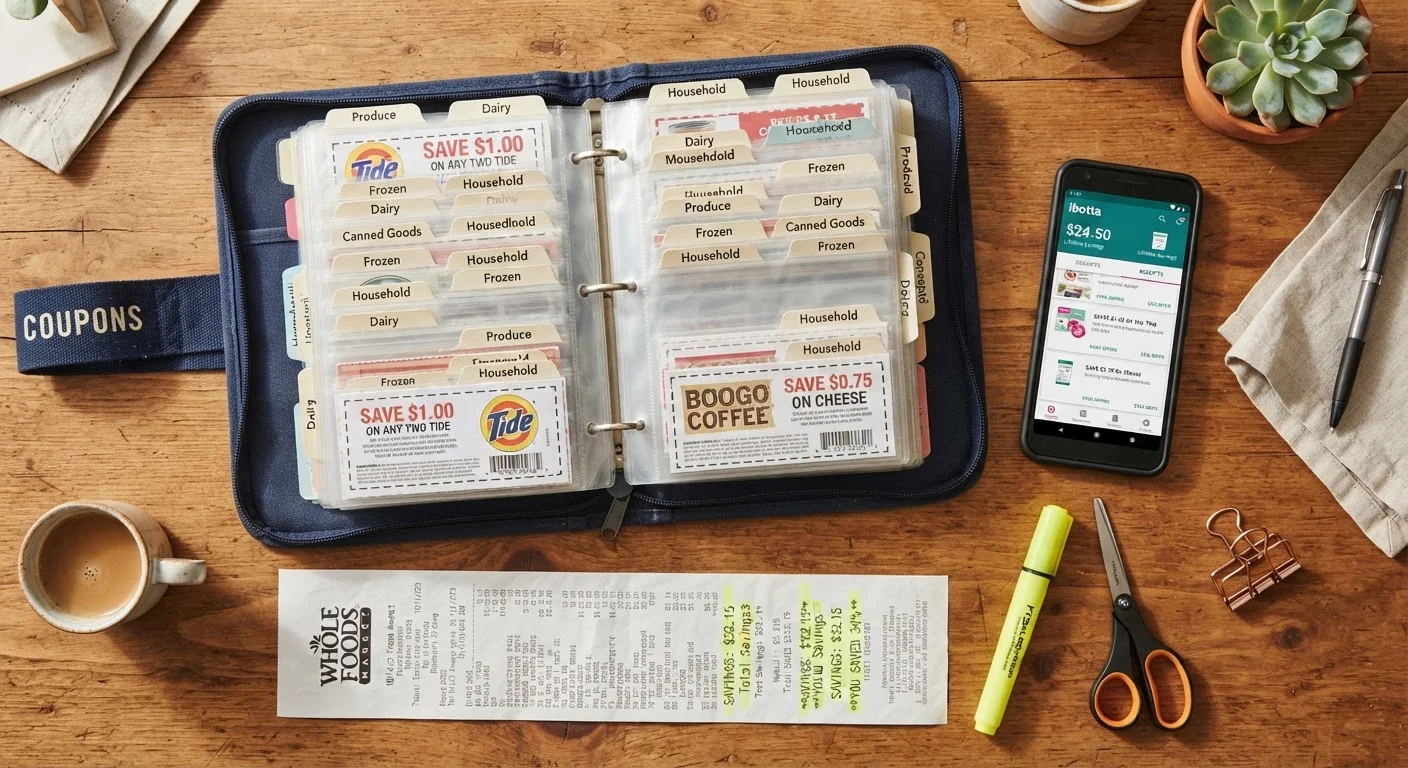
One practical note: keep a screenshot of the store's current coupon policy on your phone. If a cashier questions your stack, showing the policy directly from the store's website resolves most disputes on the spot without confrontation or delay.