
Clothing Condition Labels Explained: A Reference Guide for Secondhand Shoppers
NWT, NWOT, EUC, GUC — secondhand listings use shorthand that can confuse new buyers. This glossary explains what each term means.
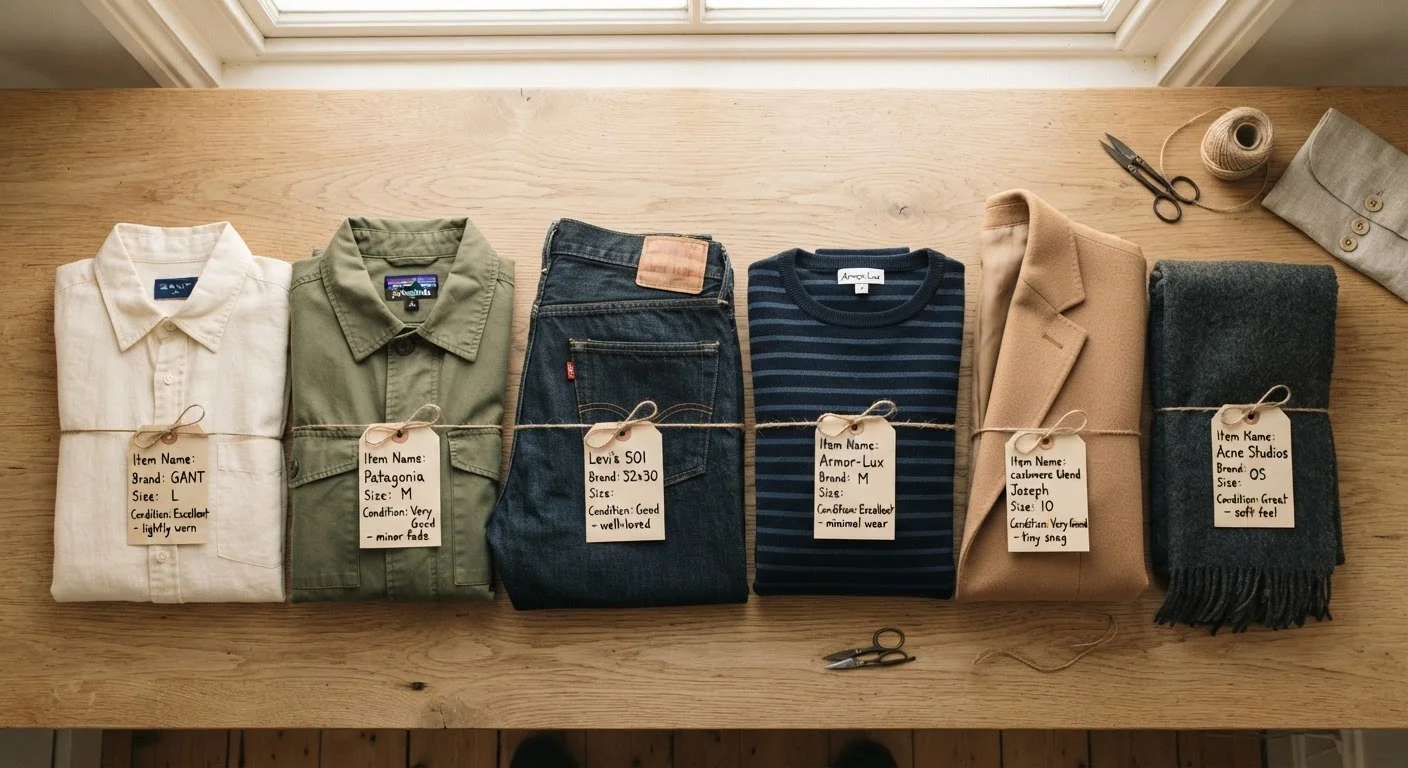
Photo: SaverSteals.com | Explore More. Shop Smarter. editorial
—— In This Article
Why Condition Labels Matter in Secondhand Shopping
Resale platforms rely heavily on shorthand condition labels to communicate a garment's state quickly. For buyers, these labels are often the first — and sometimes only — indicator of what to expect before photos and measurements. Misreading one can mean paying a near-new price for something with visible wear, or passing on a genuinely unused piece out of unnecessary caution.
The problem is that no industry body governs how these terms are used. A seller's 'GUC' might be another seller's 'FUC.' That's why understanding both what these labels mean conventionally and their limitations is essential before spending money in any resale channel.
| Most common condition abbreviation | EUC (Excellent Used Condition) |
| Highest condition grade | NWT (New With Tags) |
| Terms with no platform standard | All — usage varies by seller |
| Abbreviations in common use | NWT, NWOT, EUC, VGUC, GUC, FUC |
| Platforms where labels appear | Peer-to-peer resale apps, consignment sites, thrift stores |
| Risk with 'As-Is' listings | Returns typically not accepted |
This guide defines the most widely used condition labels from highest to lowest quality grade, explains related terminology, and flags the phrases that require extra scrutiny. For a broader look at how secondhand deals compare to retail discount terminology, see clothing discount terminology explained.
The Standard Condition Label Hierarchy
Most secondhand clothing listings fall into one of several recognized condition tiers. Here they are in order from highest to lowest:
- NWT — New With Tags: The item is unworn with original retail tags intact. It should look and smell like a brand-new garment. This label carries the most credibility because the tags provide objective confirmation.
- NWOT — New Without Tags: Unworn but tags removed. Sellers may remove tags for personal comfort or because they were gifted the item. Inspect photos carefully — without tags, the 'new' claim rests entirely on seller honesty.
- EUC — Excellent Used Condition: Worn but showing negligible signs of use. No staining, fading, or pilling should be present. This is the most common high-tier label and is used loosely by some sellers.
- VGUC — Very Good Used Condition: Lightly worn with only minimal evidence of use. A step below EUC — small signs of laundering or light wear may be present but should not affect appearance significantly.
- GUC — Good Used Condition: Noticeably worn but still presentable and functional. Buyers should expect some visible use — slight fading, minor pilling, or small imperfections. Sellers should disclose any specific flaws.
- FUC — Fair Used Condition: Worn with clear signs of heavy use. Suitable for casual wear or upcycling projects where cosmetic condition is less important than function.
Condition Labels Are Not Standardized
Unlike product grading in some industries, secondhand clothing condition terms have no universal definition enforced by resale platforms. What one seller calls 'EUC' another may call 'GUC' for identical wear. Always read the full listing description, examine all photos closely, and ask the seller direct questions about specific flaws before purchasing. For a deeper look at how to interpret listings accurately, see how to read a secondhand listing without getting burned.
Use a pre-purchase condition checklist to verify any listing's stated grade against the actual photos provided.
Terms That Require Extra Scrutiny
Several phrases appear frequently in secondhand listings but carry more risk than standard condition labels:
- 'Preloved' tells you nothing about actual condition. Treat any listing using only this word as ungraded and ask for specifics.
- 'Some wear' is deliberately vague. Ask the seller to describe or photograph the specific areas of concern.
- 'As-is' is a red flag for buyers expecting returns. Read this as: the seller knows there's a flaw and is preemptively closing the door on disputes.
- 'Distressed' can mean intentional manufacturing detail or actual damage. Confirm which is the case, especially on denim or knitwear.
Condition grading challenges aren't unique to clothing. Similar interpretation issues arise in secondhand tool condition labels and used sports equipment grading, where 'good condition' is equally inconsistent across sellers.
When in doubt, contact the seller directly before purchasing. A straightforward question — 'Are there any stains, odors, or damage not visible in the photos?' — filters out most unpleasant surprises.

Clothing Editorial Team
Clothing Editorial Team is the collective byline for our editorial team and contributor network. Articles published under this byline or an editorial pen name are researched, written, and reviewed according to our editorial standards for clarity, consistency, and independence before publication.
View author profile