
Clothing Discount Terminology You Should Recognise Before You Shop
From 'was/now' pricing to 'end of line' labels — a plain-language glossary of the terms clothing retailers use during sales events.
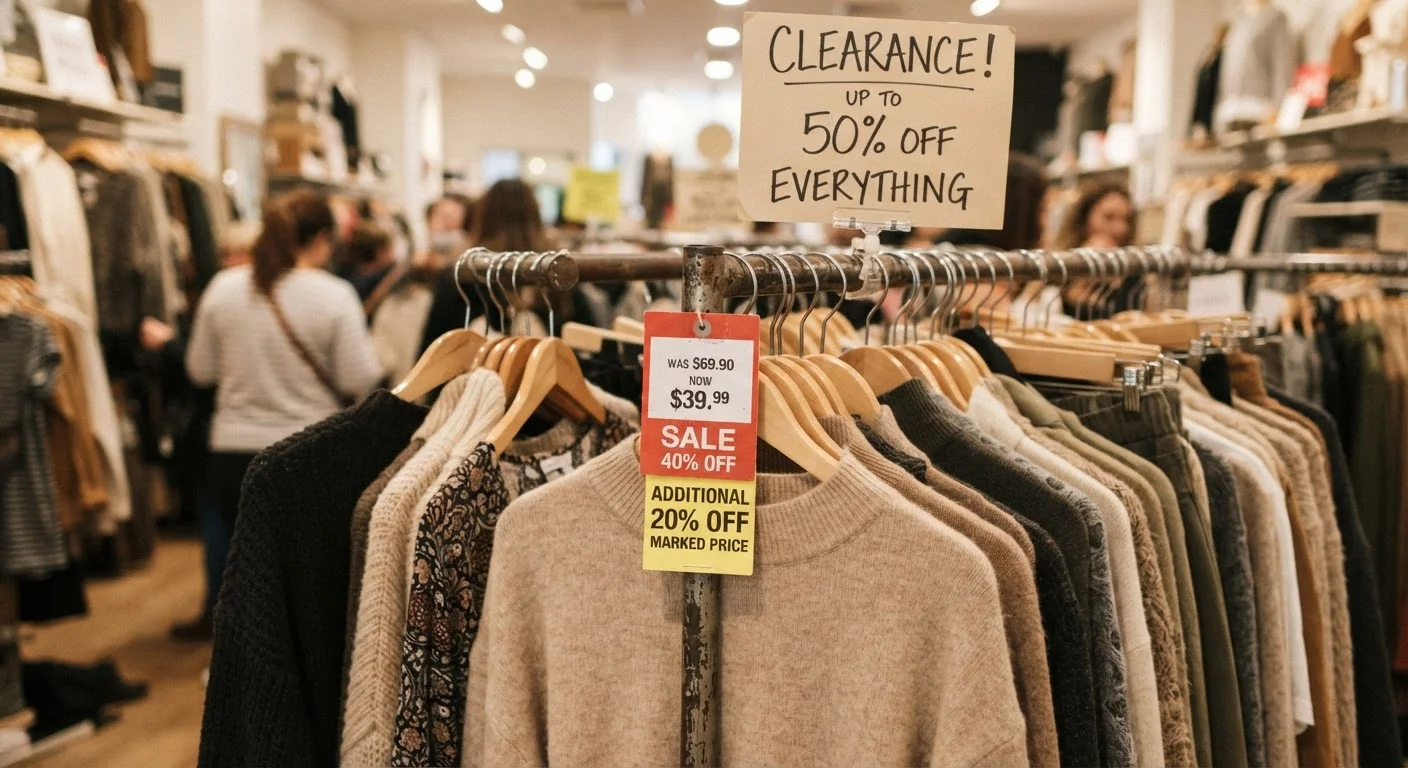
Photo: SaverSteals.com | Explore More. Shop Smarter. editorial
—— In This Article
Why the Language of Sales Matters
Retail pricing language is not neutral. Terms like was/now, compare at, and clearance each carry specific - and sometimes misleading - implications. Knowing what these labels actually mean puts you in a better position to evaluate whether a price is genuinely reduced or simply presented to look that way.
This glossary focuses on clothing retail specifically, where promotional cycles are frequent and terminology can shift in meaning depending on the retailer. If you shop across categories, the beauty coupon glossary and the sports gear price tag guide cover overlapping terms in those verticals.
Pricing Transparency Varies by Retailer
Federal and state guidelines require that reference prices reflect genuine prior selling prices, but enforcement is inconsistent. Some retailers have faced legal challenges over inflated 'original' prices that were rarely, if ever, charged. When a discount looks unusually large, it is worth checking whether the reference price appears credible based on comparable items at other stores.
Price Tag and Promotional Terms Defined
The terms below appear regularly on price tags, sale banners, and retailer websites. Each one signals something specific about how a price was set - or how it compares to a reference point.
Was/Now Pricing
A format showing a crossed-out original price alongside a reduced current price. The 'was' price should reflect a genuine prior selling price, though regulations on this vary by state.
Compare At
A reference price meant to indicate what a comparable item sells for elsewhere or at full retail. This is not necessarily the price the specific retailer ever charged.
End of Line
Stock that a retailer will not reorder - usually clearance-priced to move remaining inventory. Selection is limited and sizes may be incomplete.
Final Sale
Items sold without the option to return or exchange. If a garment does not fit or has a defect, you generally have no recourse.
Clearance
Merchandise being discontinued or rotated out, typically marked down significantly. Clearance does not always mean the lowest possible price - check the markdown history when available.
Markdown
A permanent price reduction applied directly to the tag or shelf price, as distinct from a temporary promotional price that reverts after a sale period ends.
Promotional Price
A temporary discounted price tied to a specific sale event or code. Once the promotion ends, the price returns to its standard level.
Threshold Discount
A discount that activates only when a spending minimum is met - for example, 20% off when you spend $75 or more.
Stack / Stackable
The ability to combine multiple discounts - such as a site-wide sale plus a coupon code - on a single purchase. Many retailers explicitly prohibit stacking.
Price Adjustment
A retailer policy that refunds the difference if an item you recently purchased goes on sale within a set window, typically 7-14 days.
Outlet Pricing
Prices applied to merchandise sold at outlet stores, which may include overstock, slightly irregular items, or goods manufactured specifically for the outlet channel.
Irregular / Seconds
Garments with minor manufacturing flaws - a slightly off-centre seam or small print inconsistency - sold at a lower price. The flaw is usually cosmetic, not structural.
For a deeper look at how these pricing structures are constructed from the retailer's perspective, see how retailers actually price garments during sales.
Terms That Affect What You Can Do After You Buy
Several discount terms affect your options after checkout - not just what you pay upfront. These are worth understanding before you complete any transaction.
| Common price adjustment window | 7-14 days after purchase |
| Final sale items | Typically non-returnable and non-exchangeable |
| Outlet merchandise origin | May be overstock, irregular, or outlet-exclusive production |
| Threshold discount trigger | Spending minimum required (e.g. $50, $75, $100) |
| Stackable discounts | Often restricted - check retailer terms before assuming |
Final sale is the most consequential label. Once you accept those terms, you typically have no path to a refund or exchange - even if the item does not fit. Always confirm sizing before purchasing final-sale clothing online, where you cannot try items on.
Price adjustments work in your favour when items drop shortly after purchase, but most retailers impose strict time windows and some exclude sale items altogether. Confirm the policy before buying anything you suspect may drop further in price soon.
If you shop the secondhand clothing market, many standard retail terms do not apply. That channel has its own labelling conventions - the clothing condition labels guide covers that terminology in detail.

Clothing Editorial Team
Clothing Editorial Team is the collective byline for our editorial team and contributor network. Articles published under this byline or an editorial pen name are researched, written, and reviewed according to our editorial standards for clarity, consistency, and independence before publication.
View author profile