
Secondhand Tool Grades and Condition Labels Decoded
A quick-reference guide to common condition terms — "fair," "good," "refurbished" — and what they actually mean for used tools.
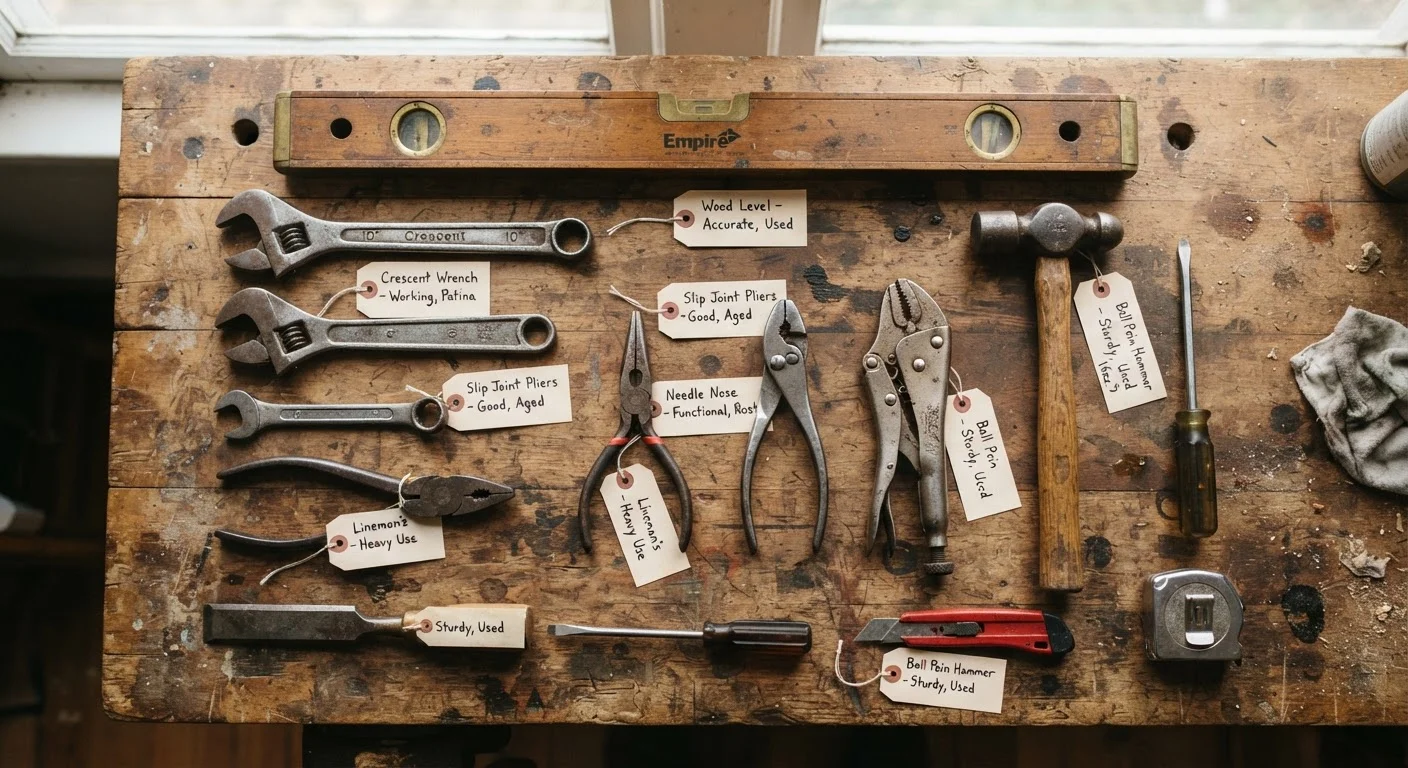
Photo: SaverSteals.com | Explore More. Shop Smarter. editorial
—— In This Article
Why Condition Labels Are Inconsistent
Unlike graded collectibles or certified pre-owned vehicles, the secondhand tool market has no single governing standard for condition labels. A seller on a peer-to-peer platform uses "good" by personal judgment; a retailer selling reconditioned inventory uses an internal rubric that may or may not be published. The same word can mean something meaningfully different depending on the channel — auction house, online marketplace, or hardware store liquidation.
That inconsistency is the central problem. Before you can evaluate whether a price is reasonable, you need to translate the label. This reference guide maps the most common terms to what they typically signal in practice, so you can compare listings on equal footing. For a parallel look at how these dynamics play out with electronics, see how listing language can obscure tool condition — many of the same principles apply.
| Standard-setting body for used tools | None — no industry-wide grading standard exists |
| Highest-reliability refurb source | Manufacturer-certified refurbished |
| Riskiest condition label | "For Parts / As-Is" — no functional guarantee |
| Most variable label by seller | "Good" — no universal definition |
| Common missing items in open-box tools | Batteries, chargers, blades, manuals |
| Inspection priority for power tools | Chuck, cord integrity, battery terminals, trigger response |
Common Condition Terms Decoded
The terms below appear most frequently in online listings, auction catalogs, and retailer clearance sections. Treat these as working definitions, not guarantees.
- New / Unused: Never used, typically in original packaging. Verify that the seal is intact; "new" tools sold loose may have been returned or demo'd.
- Open Box: Packaging opened but tool reportedly unused. Check for missing accessories — manuals, blades, bits, or chargers — since open-box returns often come incomplete. See the open-box and reconditioned tools framework for a deeper breakdown.
- Like New / Excellent: Minimal or no visible wear. Should function as new. Inspect photos for evidence of cleaning that could be masking prior damage.
- Very Good: Light cosmetic wear — scuffs, minor scratches — with no functional impairment. All mechanical and electrical components should be fully operational.
- Good: Moderate visible wear consistent with regular use. May include surface rust on non-critical areas, worn grip texture, or fading. Mechanically sound is the implied standard, but verify this explicitly with private sellers.
- Fair / Acceptable: Significant cosmetic wear or minor functional issues that the seller considers non-critical. For hand tools, this can still be workable. For power tools, scrutinize what "minor" means — a chuck that slips or a trigger with intermittent response is a real problem.
- For Parts / As-Is: The tool has a known defect or the seller cannot confirm function. Price should reflect that. Useful for experienced buyers who can diagnose and repair.
- Refurbished / Reconditioned: Tested, repaired to a functional standard, and often cleaned. Manufacturer-refurbished carries more weight than seller-refurbished — look for who performed the work and whether a warranty is included.
Refurbished
A tool that has been inspected, repaired as needed, and tested to a functional standard before resale. Manufacturer-refurbished units typically come with a limited warranty; seller-refurbished units may not.
Open Box
A product whose original packaging has been opened, usually due to a return, but which may have seen little or no actual use. Accessories are often missing.
As-Is
Sold with no warranty or functional guarantee. The seller is disclosing a known or suspected defect and pricing accordingly. Buyer assumes all risk.
Reconditioned
Used interchangeably with refurbished in many listings, but sometimes indicates a more thorough restoration process including part replacement. Always confirm what work was actually performed.
Lot / Bulk Listing
A group of tools sold together under a single condition description. Individual items within the lot may vary significantly from the stated grade.
Grade A / B / C
An internal grading scale used by some auction houses and liquidators. Definitions differ by seller; always request the seller's specific grade key before bidding.
Auction and Resale Platform Nuances
Auction listings frequently use grading scales (A, B, C or Grade 1–3) without defining them. When bidding on lots from liquidation auctions, assume the condition grade is optimistic unless you have access to inspection photos or a preview. "Grade B" at one industrial auction house may correspond to "Fair" on a consumer platform.
Peer-to-peer listings carry the highest variability. A private seller describing a drill as "good condition" has no obligation to match any standard. Request additional photos of the chuck, cord (if corded), battery terminals, and any moving parts before committing. Condition grading varies across product categories as well — the secondhand sports market uses similar terms with different thresholds, which illustrates why context always matters.
Age and manufacturing era also affect how you should interpret a condition label. A well-maintained older tool from a period of higher-quality casting may outperform a newer tool in "very good" condition. Understanding how tool age and brand history affect value helps contextualize condition within a broader evaluation framework. For a broader look at available deals, visit the Tool Deals hub.
When Seller Photos Are Your Best Evidence
Written condition labels are self-reported. Request actual photos of the tool's working surfaces, power cord or battery compartment, and any adjustable mechanisms before purchasing. Photos taken in good lighting, showing wear patterns directly, are more reliable than any label. If a seller cannot or will not provide them, treat the listing grade as unverified.

Tools Editorial Team
Tools Editorial Team is the collective byline for our editorial team and contributor network. Articles published under this byline or an editorial pen name are researched, written, and reviewed according to our editorial standards for clarity, consistency, and independence before publication.
View author profile