
Tire Wear, Pressure, and Rotation: What Every Driver Should Understand
Tires affect safety, fuel efficiency, and handling. Learn how to read wear patterns, maintain proper pressure, and know when replacement is due.
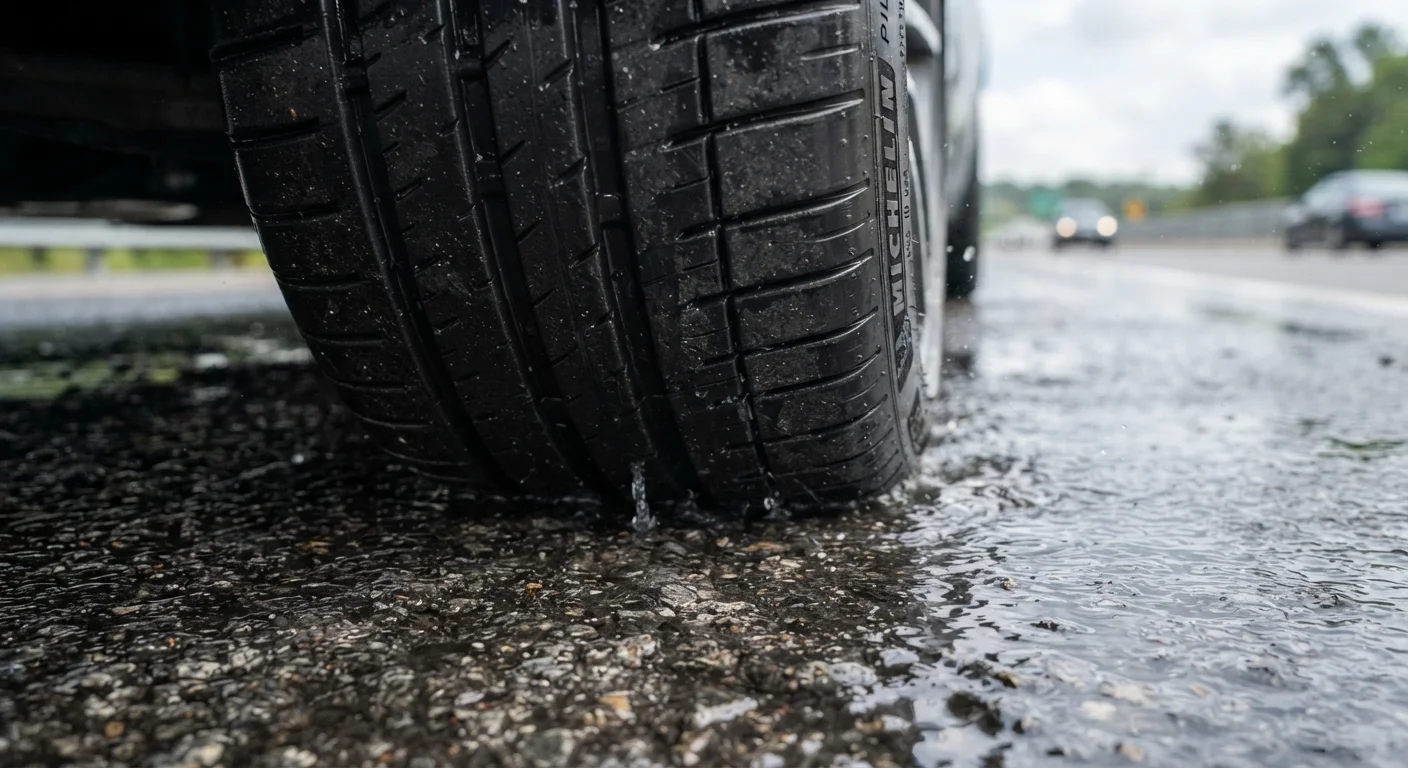
Photo: SaverSteals.com editorial
—— In This Article
Key Takeaways
- Tire wear patterns reveal problems with pressure, alignment, or suspension before they become expensive.
- Correct tire pressure — found on the door jamb, not the tire sidewall — should be checked monthly.
- Rotating tires every 5,000–7,500 miles evens out wear and extends overall tire life.
- Tires with 2/32" of remaining tread depth are legally worn out; many safety experts recommend replacing at 4/32".
- Tires older than six years should be inspected even if tread looks adequate; rubber degrades with age.
Why Tires Matter More Than Most Drivers Realize
Your tires are the only part of your vehicle in contact with the road. Every braking, steering, and acceleration input passes through four patches of rubber roughly the size of your hand. That physical reality makes tire condition a direct safety concern — not a maintenance afterthought.
Worn or underinflated tires increase stopping distances, reduce handling precision in emergencies, and raise the risk of a blowout at highway speeds. They also quietly drain fuel economy; the U.S. Department of Energy notes that underinflation can reduce fuel efficiency by up to 0.2% for every 1 PSI drop across all four tires. As part of a broader approach to keeping your vehicle reliable long-term, tire awareness pays dividends in both safety and cost.
Up to 0.2%
Fuel efficiency lost per 1 PSI underinflation
According to the U.S. Department of Energy, underinflation compounds across all four tires to reduce miles per gallon measurably.
4/32"
Tread depth at which wet-road safety declines noticeably
Independent safety research indicates wet stopping distances increase substantially before the legal 2/32" minimum is reached.
6 years
Age at which tire inspection is recommended regardless of appearance
Most tire manufacturers and automakers advise professional inspection at six years due to rubber compound degradation over time.
Reading Tire Wear Patterns
Tire wear is rarely uniform, and the pattern it leaves behind tells a diagnostic story. Learning to read it can save you from repeating the same problem on a new set of tires.
- Center wear: Wear concentrated in the middle of the tread indicates chronic overinflation. The tire bulges in the center, putting extra contact pressure there.
- Edge wear (both shoulders): Wear on both outer edges with a healthy center typically signals underinflation. The tire sags and rides on its shoulders instead of its full tread face.
- One-sided shoulder wear: Wear concentrated on only one edge usually points to a camber alignment problem — the wheel is tilted, loading one side unevenly.
- Cupping or scalloping: Wavy, uneven wear around the circumference often indicates worn shock absorbers or struts that allow the tire to bounce rather than roll smoothly.
- Feathering: Tread blocks that are rounded on one side and sharp on the other usually result from a toe alignment issue.
If you notice any of these patterns, address the underlying cause — not just the tire. Replacing a tire without fixing an alignment or suspension problem means you'll wear through the new one the same way. For related warning signs, see our guide on decoding dashboard warning lights.
When evaluating used tire wear, run your hand across the tread surface from the inside edge to the outside. Feathering — where blocks feel sharp in one direction — is easier to detect by touch than by sight.
Toe misalignment causes feathering that can be subtle visually but is immediately apparent to the touch, allowing earlier diagnosis before tread loss accelerates.
Store a quality dial gauge in your glove compartment and check pressure on the same morning each month before driving — cold readings are the only consistent benchmark.
Tire pressure readings vary by several PSI depending on temperature and recent driving; a consistent cold-check routine eliminates that variable and gives you reliable data.
Tire Pressure: The Basics You Need to Know
The correct inflation pressure for your tires is printed on a sticker inside the driver's door jamb — not on the tire sidewall. The number on the sidewall is the maximum pressure the tire can hold, which is different from the manufacturer's recommended operating pressure for your specific vehicle.
Check pressure monthly and always when tires are cold (driven less than a mile). Heat from driving temporarily raises pressure by several PSI, skewing the reading. A quality dial or digital gauge costs a few dollars and gives far more reliable readings than gas-station air pumps.
Seasonal Pressure Shifts Are Normal
Tire pressure drops roughly 1 PSI for every 10°F decrease in ambient temperature. This means tires that were correctly inflated in summer may be underinflated by several PSI come winter — without any air loss at all. Check and adjust pressure at the start of each season, not just once a year.
Modern vehicles sold after September 2007 in the U.S. are equipped with a Tire Pressure Monitoring System (TPMS) that alerts you when pressure drops roughly 25% below recommended levels. However, a tire can be meaningfully underinflated — and affecting fuel economy and handling — well before the TPMS light activates. Don't rely on the dashboard light as your primary pressure check. See how the TPMS warning fits into the larger picture in our dashboard warning lights guide.
Tire Rotation: When, Why, and How Often
Front and rear tires wear at different rates because they perform different tasks. On a front-wheel-drive vehicle, the front tires handle acceleration, steering, and a disproportionate share of braking force — they wear significantly faster than rears. On rear-wheel-drive vehicles, the pattern differs but uneven wear still occurs. Rotation moves each tire to a different position on the vehicle, evening out wear across all four and extending the life of the full set.
Most manufacturers recommend rotating tires every 5,000 to 7,500 miles, though your owner's manual is the authoritative source for your vehicle. Many drivers find it convenient to rotate at every other oil change. Skipping rotations is a common example of deferred maintenance that compounds costs over time — a topic explored further in why skipping routine maintenance ends up costing more.
Common rotation patterns include forward cross (front tires move straight back, rears cross to the opposite front), rearward cross, and X-pattern. The correct pattern depends on whether your tires are directional (designed to rotate in one direction only) or non-directional, and whether all four tires are the same size. A shop or your owner's manual can confirm the right pattern for your setup.
When to Replace Your Tires
U.S. law requires tires to be replaced when tread depth reaches 2/32 of an inch — the point at which most tires have wear indicator bars flush with the tread surface. However, independent safety research has consistently found that wet-weather stopping distance degrades significantly before that legal minimum is reached. Many safety organizations recommend replacing tires at 4/32" to maintain adequate wet-road performance.
The simplest tread-depth check: insert a quarter into a tread groove with Washington's head pointing down. If you can see the top of his head, you're near or below 4/32" and should plan for replacement soon. The classic penny test (Lincoln's head) corresponds closer to the 2/32" legal limit.
The Legal Minimum Is Not a Safety Benchmark
A tire at 2/32" of tread depth is legally street-legal but has meaningfully reduced wet-weather grip. In heavy rain or on standing water, stopping distances at 2/32" can be significantly longer than at 4/32". Plan for replacement before you reach the legal floor, not after.
Age matters independently of tread depth. Rubber compounds degrade over time even on tires that look fine. Most tire manufacturers and automakers recommend having tires older than six years inspected by a professional, and replacing them by ten years regardless of appearance. Check the four-digit DOT date code on the sidewall: the first two digits are the week of manufacture, the last two are the year (e.g., 2419 = 24th week of 2019).
Before any extended drive, tire condition should be part of your pre-departure routine. Our pre-road-trip vehicle check covers tires alongside brakes, fluids, and lights in one practical checklist.
Never Mix Tire Types on the Same Axle
Mixing all-season and summer tires, or radial and bias-ply tires, on the same axle creates uneven grip and handling characteristics that can be dangerous, especially in emergency maneuvers or wet conditions. Always replace tires in axle pairs at minimum, and confirm compatibility with your vehicle's specifications before purchasing.
Putting It All Together
Tire maintenance doesn't require specialized knowledge — it requires consistent habits. Check pressure once a month and before long trips. Inspect tread depth and look for wear patterns every time you wash the car or stop for fuel. Rotate on schedule. Know the age of your tires, not just their appearance.
These small habits reduce the likelihood of a preventable blowout, keep your vehicle handling predictably, and stretch the life of a set of tires that represents a meaningful investment. They also support everything else your vehicle does: braking, fuel economy, and stability. For a broader view of what consistent maintenance achieves, see keeping a car in good shape for the long haul.
If you're ever uncertain about a wear pattern, a vibration, or how a tire looks, have a qualified mechanic inspect it. A professional assessment is always worth more than a guess when safety is involved.
Pre-Road-Trip Vehicle Check Guide
A practical pre-departure checklist covering tires, fluids, brakes, and lights to reduce breakdown risk before long drives.
Dashboard Warning Lights Explained
Understand what the TPMS symbol and other dashboard warnings actually mean and when to act on them immediately.
Why Skipping Maintenance Costs More
Explore how deferred tire rotations and other skipped services compound into larger, more expensive repairs over time.

Travel Editorial Team
Travel Editorial Team is the collective byline for our editorial team and contributor network. Articles published under this byline or an editorial pen name are researched, written, and reviewed according to our editorial standards for clarity, consistency, and independence before publication.
View author profile