
Decoding Your Dashboard Warning Lights
From the check engine light to the tire pressure symbol, learn what each dashboard warning means and when you should pull over immediately.
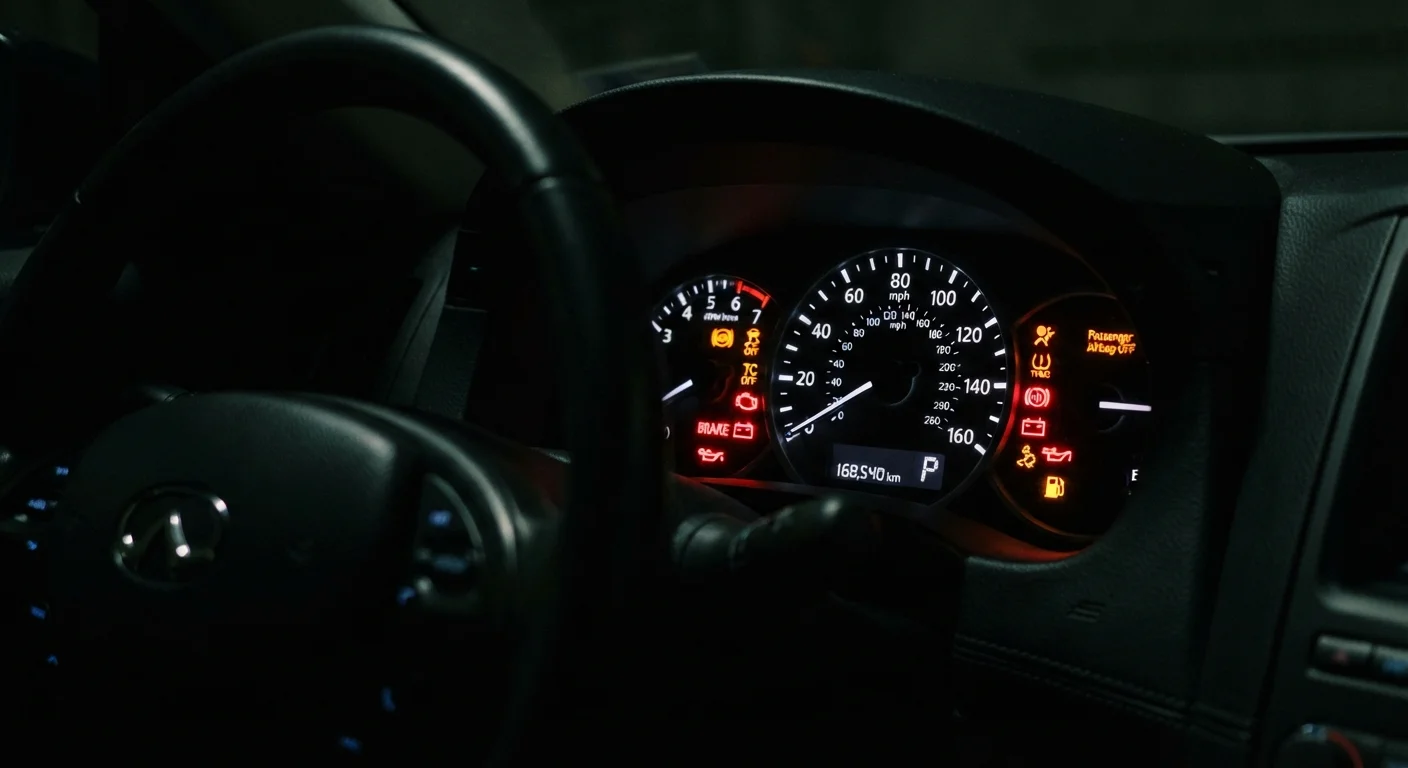
Photo: SaverSteals.com editorial
—— In This Article
Why Dashboard Lights Exist — and Why They Matter
Modern vehicles are equipped with an onboard diagnostics system (OBD) that continuously monitors dozens of sensors. When something falls outside normal operating range, the system triggers a dashboard warning light to alert you. Ignoring these signals can turn a minor issue into an expensive repair — or worse, a dangerous situation on the road.
Warning lights generally fall into three categories by color: red means stop and act immediately, amber/yellow means attention required soon, and green or blue signals an active system (like headlights or cruise control) rather than a problem. Understanding that color distinction alone helps you prioritize your response.
Before a long drive, it's worth knowing your vehicle's status. See our practical pre-trip vehicle checklist for a full rundown of what to inspect.
| Warning light colors | Red = urgent; Amber/Yellow = attention needed; Green/Blue = active system |
| OBD-II standard introduced | Required on all US passenger vehicles sold from 1996 onward (U.S. Environmental Protection Agency) |
| Check engine causes | Hundreds of possible fault codes — always scan with an OBD-II reader to identify the specific cause |
| TPMS requirement | Mandated on all new US passenger vehicles since September 2007 (National Highway Traffic Safety Administration (NHTSA)) |
| Owner's manual role | Contains the definitive meaning of every warning light for your specific make, model, and year |
The Most Common Warning Lights Decoded
Here's what drivers most frequently encounter, and how seriously to treat each one:
Check Engine Light (CEL)
An amber light shaped like an engine that signals the OBD system has detected a fault in the engine, emissions, or related systems. A steady CEL typically warrants a diagnostic scan; a flashing CEL indicates an urgent issue requiring prompt attention.
Oil Pressure Warning
A red oil-can symbol indicating dangerously low oil pressure. Stop the engine as soon as safely possible — running an engine without adequate oil pressure can cause irreversible damage within minutes.
Tire Pressure Monitoring System (TPMS)
An amber light (often an exclamation mark inside a tire cross-section) that activates when one or more tires fall significantly below the recommended PSI. Check all four tires with a gauge before assuming which one is low.
Battery Warning Light
A red battery symbol indicating the charging system is not supplying adequate voltage. This could point to a failing alternator, a weak battery, or a broken drive belt. If it illuminates while driving, limit electrical use and seek service promptly.
Coolant Temperature Warning
A red thermometer-in-water symbol signaling the engine is overheating. Pull over safely, turn off the engine, and allow it to cool before investigating — never open a hot radiator cap.
Brake System Warning
An exclamation mark inside a circle (or the word BRAKE) that can indicate low brake fluid, a brake system fault, or that the parking brake is engaged. If the parking brake is off and the light remains, treat it as urgent.
ABS Warning Light
An amber light labeled ABS (Anti-lock Braking System) indicating a fault in the system that prevents wheels from locking during hard braking. Standard braking still works, but the safety assist is compromised — schedule service soon.
Transmission Temperature Warning
An amber or red thermometer symbol indicating the transmission fluid is overheating. Ease off the throttle, reduce towing load if applicable, and allow the vehicle to cool before continuing.
For lights connected to fluid systems — oil pressure, coolant temperature, or brake fluid — it's worth building a basic understanding of how these fluids work together. Our guide on fluid checks every car owner should know covers what normal looks like and when to take action.
When to Pull Over Immediately vs. When to Schedule Service
Not every light demands you stop the car on the spot — but some absolutely do. Use this general framework:
- Pull over immediately (red lights): Oil pressure warning, engine temperature warning (overheating), brake system warning, or battery warning while driving. Continuing to drive can cause severe engine or brake damage.
- Drive cautiously to a shop (amber lights): Check engine light (steady, not flashing), low tire pressure, transmission temperature. Monitor the situation and get a diagnostic soon.
- Flashing check engine light: This indicates an active misfire that can damage the catalytic converter. Reduce speed and seek service promptly — don't treat it like a steady light.
- Schedule service (amber, no other symptoms): Maintenance reminders, low washer fluid, or service interval indicators can wait for a planned appointment.
When in doubt, consult your owner's manual — it contains the exact meaning of every light on your specific vehicle's dashboard. A qualified mechanic can also run an OBD-II scan to retrieve the fault code and pinpoint the cause.
OBD-II Scanners Are Widely Available
Inexpensive OBD-II scanners can plug into your vehicle's diagnostic port (usually located under the dashboard near the steering column) and read fault codes. Many auto parts retailers also offer free code-reading services. A code alone doesn't always tell you the root cause — a qualified mechanic should interpret the results and recommend repairs.
Tire pressure warnings deserve particular attention because underinflated tires affect handling and fuel economy even before they feel noticeably flat. See our article on tire wear, pressure, and rotation to understand how to maintain safe tire condition year-round.

Travel Editorial Team
Travel Editorial Team is the collective byline for our editorial team and contributor network. Articles published under this byline or an editorial pen name are researched, written, and reviewed according to our editorial standards for clarity, consistency, and independence before publication.
View author profile