
Liability vs. Comprehensive vs. Collision: How Car Insurance Coverage Differs
Not all auto insurance coverage protects you the same way. This breakdown explains what each type covers and the gaps you should know about.
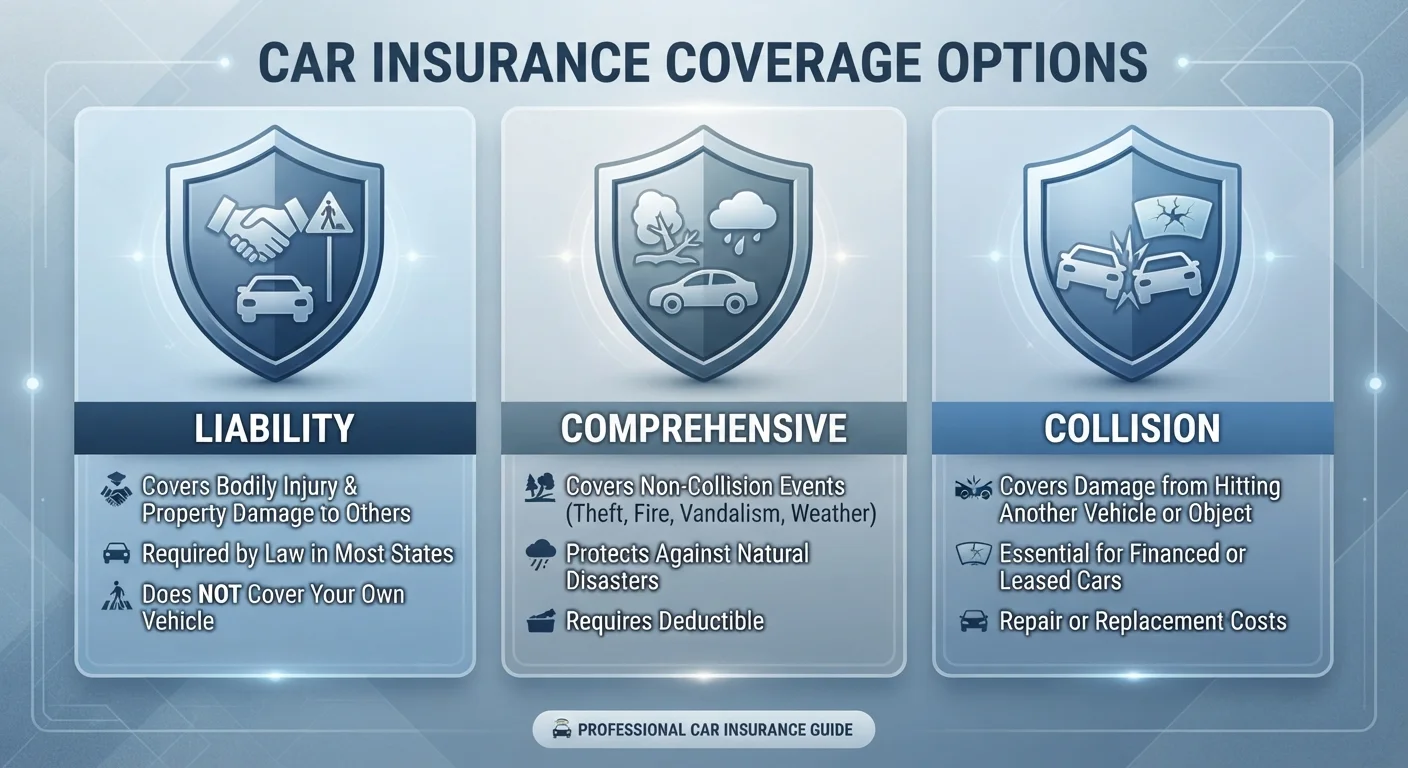
Photo: SaverSteals.com editorial
—— In This Article
Key Takeaways
- Liability coverage pays for damage and injuries you cause to others — not your own vehicle.
- Collision coverage pays to repair or replace your car after an accident, regardless of fault.
- Comprehensive coverage handles non-collision events like theft, weather damage, and animal strikes.
- Most states legally require liability insurance; collision and comprehensive are typically optional.
- Lenders and lessors commonly require both collision and comprehensive on financed or leased vehicles.
What Liability Coverage Actually Does
Liability insurance is the foundation of any auto policy and the only coverage type required by law in most U.S. states. But it's commonly misunderstood: liability protects other people from you, not the other way around.
There are two components to liability coverage:
- Bodily injury liability — Pays for medical expenses, lost wages, and legal costs if you injure someone else in an at-fault accident.
- Property damage liability — Covers repair or replacement of another person's vehicle or property when you're at fault.
What liability does not cover: your own injuries, your own vehicle's damage, or any losses you personally sustain in the crash. If another driver causes the accident, you'd look to their liability coverage — or your own uninsured/underinsured motorist coverage if they lack sufficient insurance.
Every state sets its own minimum liability limits. To understand what those floors actually mean in practice, see state minimum auto insurance requirements across the U.S.. Minimums are a legal threshold, not a recommendation — serious accidents can easily exceed them, leaving you personally responsible for the difference.
Consider Limits Above the State Minimum
State-required liability minimums are often quite low — sometimes $25,000 or less for bodily injury per person. A serious accident can quickly produce medical bills, lost wages, and legal costs that far exceed those limits. Carrying higher liability limits reduces the risk that you'll owe out-of-pocket after a major at-fault crash. Talk with a licensed insurance professional to evaluate what limits make sense for your financial situation.
Collision Coverage: When Your Car Hits Something
Collision coverage pays to repair or replace your own vehicle after it's damaged in a collision — whether that's a crash with another car, hitting a guardrail, or rolling over. Fault generally doesn't affect whether you can file a collision claim, though it may affect your premium over time.
Key characteristics of collision coverage:
- Applies to your vehicle regardless of who caused the accident
- Requires you to pay a deductible (commonly $250–$1,000) before the insurer covers the rest
- Pays up to the ACV of your car, not necessarily what you paid for it
Collision is optional under state law but is typically required by lenders if you have an auto loan or lease. For a direct side-by-side breakdown, see how collision compares to comprehensive.
Whether collision makes financial sense on an older vehicle depends on how the coverage cost stacks up against the car's current market value. If annual premiums plus your deductible approach or exceed what the insurer would pay out, you may be over-insuring a vehicle that's past its prime.
| Liability | Collision | Comprehensive | |
|---|---|---|---|
| What it covers | Damage/injuries you cause others | Your vehicle after a collision | Your vehicle from non-collision events |
| Covers your own vehicle? | No | Yes | Yes |
| Legally required? | Yes, in most states | No (lender may require) | No (lender may require) |
| Deductible applies? | No | Yes | Yes |
| Fault-dependent? | Yes — you must be at fault | No — applies regardless of fault | No — fault is not relevant |
| Common triggering event | At-fault crash injuring others | Crash with another car or object | Theft, hail, flood, animal strike |
| Payout ceiling | Your policy limits | Actual cash value of vehicle | Actual cash value of vehicle |
Comprehensive Coverage: Non-Collision Events
Despite its name, comprehensive coverage doesn't cover everything — it covers a specific category of events: damage to your vehicle from causes other than a collision. Common scenarios include:
- Theft or attempted theft
- Vandalism
- Weather events: hail, floods, falling trees, ice
- Fire
- Animal strikes (hitting a deer is the classic example)
- Falling objects
Like collision, comprehensive carries a deductible and pays up to your vehicle's ACV. It's optional under state law unless required by a lender. Drivers in regions with severe weather, high vehicle theft rates, or large deer populations often find comprehensive particularly worth carrying.
A frequent point of confusion: many drivers assume a "full coverage" policy means all possible losses are covered. That's rarely accurate. To understand where the gaps are, review what drivers commonly get wrong about auto insurance coverage. Things like personal belongings stolen from your car or mechanical failures typically fall outside both collision and comprehensive.
Side-by-Side: How the Three Types Stack Up
Choosing the right combination of coverages requires understanding exactly what each one does and doesn't protect. The comparison below shows how liability, collision, and comprehensive differ across the factors that matter most to most drivers.
~13%
Uninsured drivers on U.S. roads
According to the Insurance Research Council, roughly 1 in 8 U.S. drivers carries no auto insurance, underscoring why relying solely on others' liability coverage is risky.
$5,000+
Average collision claim cost
The Insurance Institute for Highway Safety reports that the average collision claim has risen significantly over recent years due to higher repair and parts costs.
Top cause
Deer strikes in comprehensive claims
Animal collisions — most commonly deer — consistently rank among the leading causes of comprehensive insurance claims in rural and suburban U.S. states.
For a broader look at how these coverages fit into a complete auto policy, the auto insurance hub covers additional coverage types — including uninsured motorist, medical payments, and gap insurance — that fill in the remaining gaps.
One common mistake is treating the three coverage types as interchangeable alternatives rather than layered protections that serve different purposes. Several widespread car insurance misconceptions — like assuming liability covers your own repairs — stem directly from not understanding these distinctions.
If you're weighing whether to drop down to liability only, the trade-offs between liability-only and fuller coverage are worth thinking through carefully before making a change.
This article is for general informational purposes only and does not constitute insurance, legal, or financial advice. Coverage terms, availability, and requirements vary by state and insurer. Consult a licensed insurance professional and review your policy documents for guidance specific to your situation.

Travel Editorial Team
Travel Editorial Team is the collective byline for our editorial team and contributor network. Articles published under this byline or an editorial pen name are researched, written, and reviewed according to our editorial standards for clarity, consistency, and independence before publication.
View author profile