
Liability-Only vs. Full Coverage: Weighing the Trade-Offs
Dropping to liability-only can lower your premium, but it leaves your own vehicle unprotected. Here's how to think through the decision.
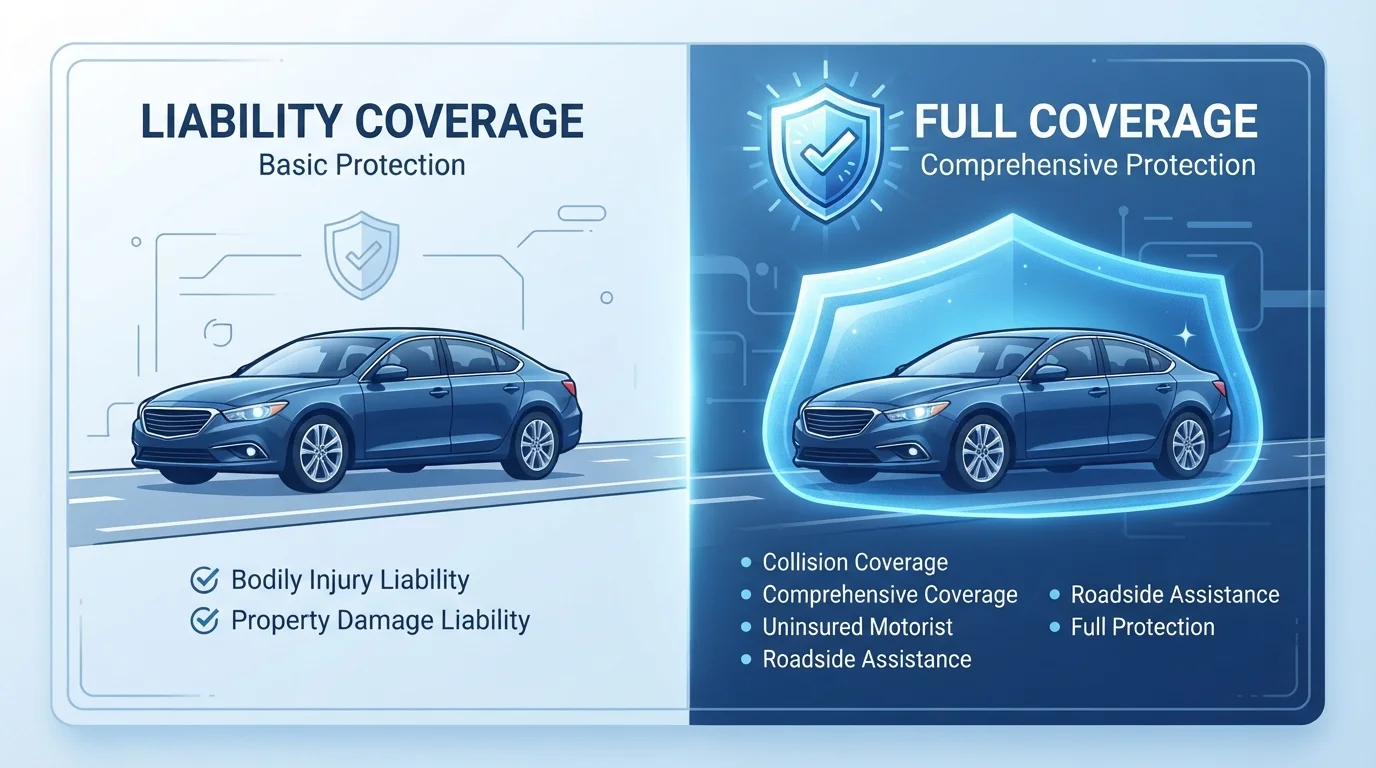
Photo: SaverSteals.com editorial
—— In This Article
Key Takeaways
- Liability-only coverage pays for damage you cause to others but never repairs your own vehicle.
- Full coverage adds collision and comprehensive protection, which matters most for newer or higher-value cars.
- Your vehicle's age, market value, and loan status are the primary factors in this decision.
- Dropping to liability-only on a financed vehicle typically violates your lender's contract.
- Neither option is universally right — the correct choice depends on your specific financial situation.
Lower monthly or annual premium cost
Removing collision and comprehensive from a policy can reduce premiums substantially, freeing up cash for other financial priorities — though the actual savings vary widely by driver, vehicle, and location.
Appropriate for low-value, fully paid-off vehicles
When a vehicle's market value is modest, the combined cost of premiums and a deductible may rival or exceed what an insurer would pay in a claim, making full coverage a poor financial trade.
Simplifies coverage for infrequent drivers
Drivers who rarely use their vehicle face lower accident exposure, which can shift the risk-reward calculation toward a leaner, liability-only policy.
Your vehicle is entirely unprotected after a loss
If your car is totaled, stolen, or damaged by a weather event, liability-only leaves you with no insurance payout toward repair or replacement — those costs come directly out of pocket.
Incompatible with most auto loan or lease agreements
Lenders require full coverage to protect their collateral. Dropping to liability-only on a financed vehicle is a contract violation and can trigger forced-placed insurance at your expense.
Financial exposure can be severe in the wrong scenario
A single at-fault accident, a hailstorm, or a theft can produce thousands of dollars in losses that liability-only coverage will never address, creating real financial strain if reserves are limited.
What These Terms Actually Mean
Before weighing trade-offs, it helps to be precise about what each option includes. "Liability-only" means your policy carries the state-mandated minimum coverage: bodily injury liability and property damage liability. These pay for injuries and property damage you cause to other people in an at-fault accident — they do not pay a cent toward repairing or replacing your own vehicle.
"Full coverage" is an informal term (insurers don't use it as an official policy category) that typically refers to a policy combining liability, collision, and comprehensive coverage. Collision pays to repair or replace your vehicle after an accident, regardless of fault. Comprehensive covers non-collision events — theft, hail, flooding, fire, or a deer strike. For a clear breakdown of how each of these layers works, see Auto Insurance Coverage Types, Decoded.
This article provides general insurance education and is not personalized advice. Coverage terms, costs, and requirements vary by state and insurer. Consult a licensed insurance professional about your specific situation.
Pros and Cons of Liability-Only Coverage
Liability-only policies carry a lower premium — sometimes significantly so — because insurers are taking on less risk. That cost difference is real, but it comes with a meaningful exposure: if your car is totaled, stolen, or damaged by a storm, you absorb those costs entirely.
Lower monthly or annual premium cost
Removing collision and comprehensive from a policy can reduce premiums substantially, freeing up cash for other financial priorities — though the actual savings vary widely by driver, vehicle, and location.
Appropriate for low-value, fully paid-off vehicles
When a vehicle's market value is modest, the combined cost of premiums and a deductible may rival or exceed what an insurer would pay in a claim, making full coverage a poor financial trade.
Simplifies coverage for infrequent drivers
Drivers who rarely use their vehicle face lower accident exposure, which can shift the risk-reward calculation toward a leaner, liability-only policy.
Your vehicle is entirely unprotected after a loss
If your car is totaled, stolen, or damaged by a weather event, liability-only leaves you with no insurance payout toward repair or replacement — those costs come directly out of pocket.
Incompatible with most auto loan or lease agreements
Lenders require full coverage to protect their collateral. Dropping to liability-only on a financed vehicle is a contract violation and can trigger forced-placed insurance at your expense.
Financial exposure can be severe in the wrong scenario
A single at-fault accident, a hailstorm, or a theft can produce thousands of dollars in losses that liability-only coverage will never address, creating real financial strain if reserves are limited.
The math that often tips drivers toward liability-only is simple: if your vehicle's current market value is low enough that comprehensive and collision premiums — plus your deductible — would approach or exceed a potential payout, the added coverage may not deliver proportionate value. A general rule of thumb many financial planners reference is to reconsider full coverage when annual collision and comprehensive premiums exceed 10% of the vehicle's cash value, though this is a guideline, not a guarantee of the right answer for every driver.
When Full Coverage Is Worth the Higher Premium
For drivers with financed or leased vehicles, full coverage isn't optional — lenders contractually require it to protect their financial interest in the vehicle. Dropping to liability-only on a car with an active loan would put you in breach of your financing agreement and could trigger force-placed insurance, which is typically more expensive and protects only the lender, not you.
~$700+
Estimated annual savings switching to liability-only
Industry data and consumer surveys suggest drivers can save several hundred dollars or more annually by dropping collision and comprehensive, though savings vary significantly by state, vehicle, and driving profile.
~1 in 8
U.S. drivers estimated to be uninsured
According to the Insurance Research Council, roughly one in eight drivers on U.S. roads carries no insurance, underscoring why adequate liability coverage matters for protecting yourself financially.
Beyond loan requirements, full coverage becomes especially valuable when a vehicle loss would create genuine financial hardship. If you don't have savings readily available to replace or significantly repair a vehicle out of pocket, the peace of mind from collision and comprehensive coverage has concrete monetary backing. You can also influence your full-coverage premium meaningfully by adjusting your deductible — How Deductibles Shape Your Auto Insurance Premium explains how that trade-off works in practice.
It's also worth noting that comprehensive and collision cover very different scenarios. Understanding the distinction is useful before deciding which — if either — you might drop. Collision vs. Comprehensive Coverage: What's the Difference? for details.
Key Factors to Evaluate Before Deciding
Your State's Minimum Requirements Still Apply
Every U.S. state (and Washington, D.C.) mandates at least a minimum level of liability insurance. Even with liability-only coverage, your policy must meet your state's specific bodily injury and property damage limits. These minimums vary considerably by state and may be insufficient to cover serious accident costs — some drivers opt for higher liability limits regardless of what they choose for vehicle coverage. Check your state's requirements and speak with a licensed agent to understand your exposure.
Several variables should inform your decision, and no single factor is decisive on its own:
- Vehicle market value: Look up your car's current value using a recognized vehicle valuation source. The lower the value, the weaker the case for collision and comprehensive premiums.
- Loan or lease status: If you still owe money on the vehicle, full coverage is almost certainly required by your lender.
- Your financial reserves: Could you cover a $5,000–$15,000 repair or replacement without serious hardship? If not, that's an argument for keeping full coverage.
- Driving environment: Frequent highway driving, high-theft areas, or regions prone to severe weather (hail, flooding) increase the probability of a comprehensive or collision claim.
- Optional add-ons: Even with liability-only, some drivers add gap insurance or roadside assistance. Auto Insurance Add-Ons Worth Understanding to see what's available separately.
Once you've worked through these factors, comparing quotes across coverage levels will make the premium difference concrete. Shopping for Auto Insurance Without Leaving Money on the Table walks through how to compare policies accurately.

Insurance Editorial Team
Insurance Editorial Team is the collective byline for our editorial team and contributor network. Articles published under this byline or an editorial pen name are researched, written, and reviewed according to our editorial standards for clarity, consistency, and independence before publication.
View author profile