
Reading a Hair Product Label Without Getting Lost in the Ingredient List
Silicones, humectants, proteins, alcohols — this guide decodes common hair product ingredients so you can make sense of what's in the bottle.
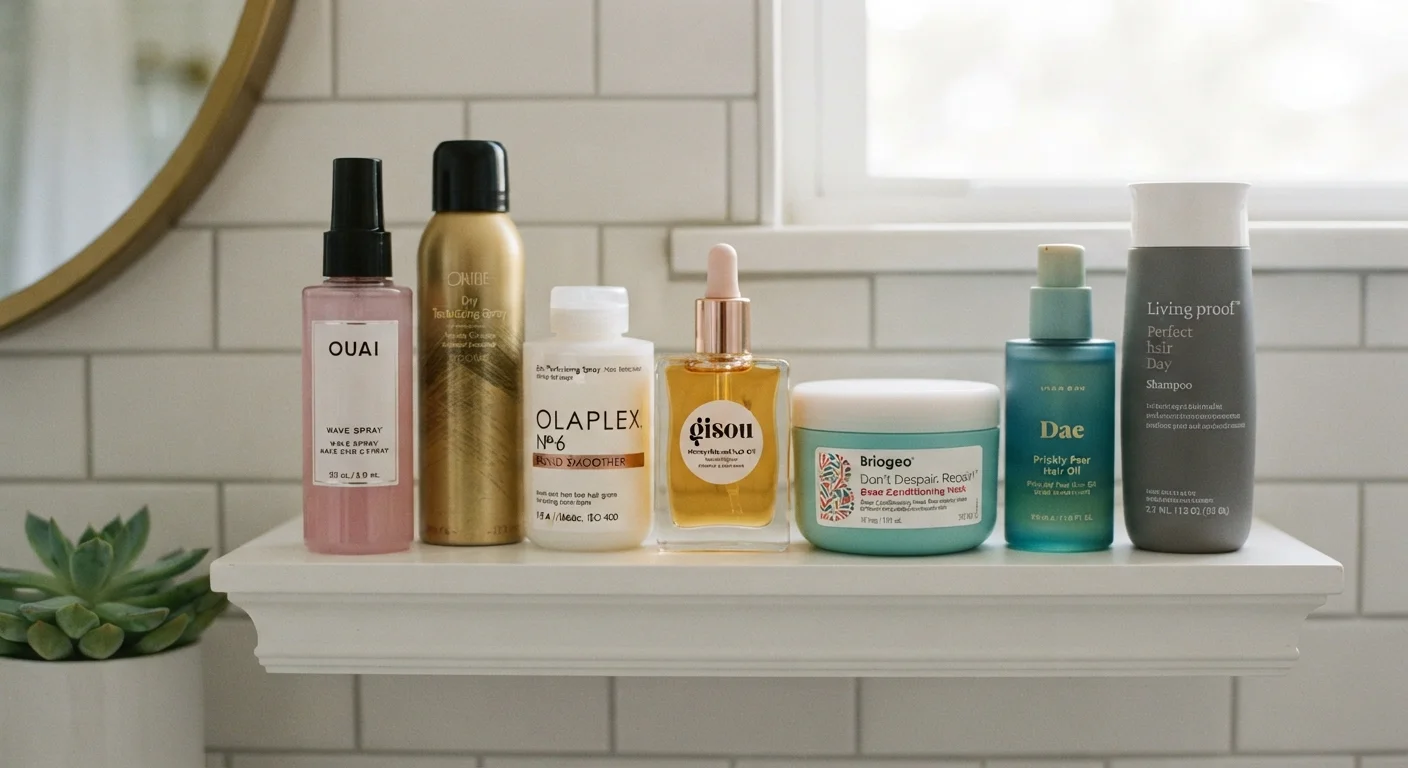
Photo: SaverSteals.com editorial
—— In This Article
Key Takeaways
- Ingredients are listed in descending order by concentration — the first five matter most.
- Not all alcohols dry out hair; some, like cetyl alcohol, are conditioning agents.
- Silicones coat the hair shaft and may cause buildup over time without clarifying washes.
- Humectants draw moisture into hair but can backfire in very humid or arid conditions.
- Protein treatments strengthen strands but can cause stiffness if overused on fine hair.
- Understanding a few key ingredient categories is enough to shop more confidently.
Why the Ingredient List Feels So Overwhelming
Pick up almost any shampoo, conditioner, or styling cream and flip it over. What greets you is a wall of multisyllabic names — behentrimonium methosulfate, polyquaternium-10, dimethicone — that reads more like a chemistry exam than a shopping guide. It's no wonder most people skip straight to the front label and trust the marketing copy instead.
Here's the reassuring truth: you don't need a science degree to decode this list. You only need to understand a handful of categories and one universal rule. Once you have those tools, labels stop being intimidating and start being genuinely useful.
If you've already worked through skincare labels, you'll recognize some overlap — the skincare ingredient guide covers INCI naming conventions that also apply here. Hair products follow the same global INCI (International Nomenclature of Cosmetic Ingredients) system, so the logic translates.
What you will need
The Core Categories You Actually Need to Know
Rather than memorizing individual ingredients, learn to recognize ingredient families. Most of what's in a hair product falls into one of five groups:
- Surfactants — the cleansing agents in shampoos. Sulfates (like sodium lauryl sulfate) are strong and strip sebum efficiently; gentler alternatives include sodium lauroyl methyl isethionate or cocamidopropyl betaine. Neither is universally good or bad — it depends on your hair type and scalp.
- Conditioning agents — ingredients that smooth the cuticle and reduce friction. This family includes fatty alcohols (cetyl, stearyl, cetearyl), which are rich and moisturizing despite the misleading "alcohol" name, and cationic surfactants like behentrimonium chloride.
- Silicones — identified by the suffix -cone, -conol, or -xane (dimethicone, cyclomethicone, amodimethicone). They add slip, shine, and frizz control by coating the hair shaft. Water-soluble silicones rinse clean; heavier, non-water-soluble ones can accumulate without regular clarifying.
- Humectants — moisture-attracting ingredients like glycerin, panthenol, and aloe vera. They pull water from the air into the hair cortex. In very dry climates, they can pull moisture out of hair instead, so context matters.
- Proteins — hydrolyzed keratin, wheat protein, silk amino acids. They temporarily patch gaps in damaged cuticles and add strength. Overuse on low-porosity or fine hair can lead to stiffness and breakage, so balance with moisturizing ingredients.
Use Your Phone as a Quick Reference Tool
If you encounter an ingredient name you don't recognize in the store, a quick search for the INCI name plus "hair" can surface general information about its function. Several reputable cosmetic ingredient databases publish brief, accessible summaries. This is especially handy when comparing two similar products side by side.
For a deeper look at how some of these ingredients interact — and which combinations can work against each other — see our guide to ingredient pairings in hair care.
Step-by-Step: How to Read a Label
Start with the first five ingredients
By regulation, cosmetic ingredients must be listed in descending order of concentration (water or aqua is almost always first). The first five ingredients typically make up the bulk of the formula — often 80% or more. Focus your attention here before getting distracted by the minor ingredients further down the list.
Identify the product's primary function from those top ingredients
Ask: is this primarily a cleanser, a moisturizer, or a styler? A shampoo dominated by a surfactant like sodium laureth sulfate is designed to cleanse. A conditioner led by water, cetyl alcohol, and behentrimonium chloride is built to detangle and soften. Knowing the intended role helps you set realistic expectations.
Scan for silicones and assess your clarifying routine
Look for ingredients ending in -cone, -conol, or -xane. If they appear in your leave-in or styling products, make sure your shampoo can actually remove them. Lightweight, water-soluble silicones (like cyclomethicone) rinse more easily; heavy, non-soluble ones (like dimethicone) may require a clarifying wash periodically.
Check the alcohol column carefully
Spot any alcohols? Don't panic. Short-chain alcohols like alcohol denat., isopropyl alcohol, or ethanol evaporate quickly and can be drying in high concentrations. Long-chain fatty alcohols — cetyl, stearyl, behenyl, cetearyl — are emollients and conditioners. They nourish rather than strip.
Look at the protein-to-moisture balance
Note whether the product leans heavily on hydrolyzed proteins or on moisturizing humectants and emollients. If your hair is feeling stiff, brittle, or straw-like after regular use, a protein-heavy formula may be contributing. Alternating with a moisture-focused product can help restore balance. Fine or low-porosity hair tends to reach protein saturation faster than coarse or high-porosity hair.
Note preservatives and patch-test if sensitive
Preservatives keep products safe by preventing microbial growth. Common ones include phenoxyethanol, sodium benzoate, and potassium sorbate. If you have a history of scalp sensitivity or allergic reactions, do a patch test inside your elbow before applying a new product to your scalp — especially with products that will sit on skin (masks, scalp serums, leave-ins).
A Few Common Misconceptions Worth Clearing Up
Labels invite a lot of misreading, partly because marketing language influences how we interpret ingredient lists. A couple of myths worth addressing:
- "Natural" doesn't mean safe or effective, and "chemical" doesn't mean harmful. Everything is a chemical, including water. An ingredient's origin matters less than how it behaves in a formula and how your hair responds to it.
- Fragrance isn't always a red flag — but if you have a sensitive scalp, it's worth noting that "fragrance" or "parfum" is a catch-all term that can include dozens of undisclosed compounds. If you're prone to scalp irritation, fragrance-free options may be worth exploring.
- Parabens aren't universally dangerous. Research on cosmetic parabens remains an active area of scientific discussion. Major regulatory bodies have not banned them in the concentrations used in hair products, but you may still prefer to avoid them based on personal preference.
Labels Don't Tell the Whole Story
Ingredient lists show what's in a product but not the exact concentrations (beyond ordering) or how ingredients interact in that specific formula. Two products with nearly identical ingredient lists can perform very differently. Real-world testing on your own hair over several weeks remains the most reliable evaluation method.
If you enjoy reading ingredient lists across product categories, you might find our guide to food ingredient lists a useful companion — many of the same logic patterns apply.

Style Editorial Team
Style Editorial Team is the collective byline for our editorial team and contributor network. Articles published under this byline or an editorial pen name are researched, written, and reviewed according to our editorial standards for clarity, consistency, and independence before publication.
View author profile