
Heat Styling and Hair Damage: What the Science Actually Says
Flat irons, curling wands, and blow dryers affect hair structure in measurable ways. Here's what research shows and how to reduce the risk.
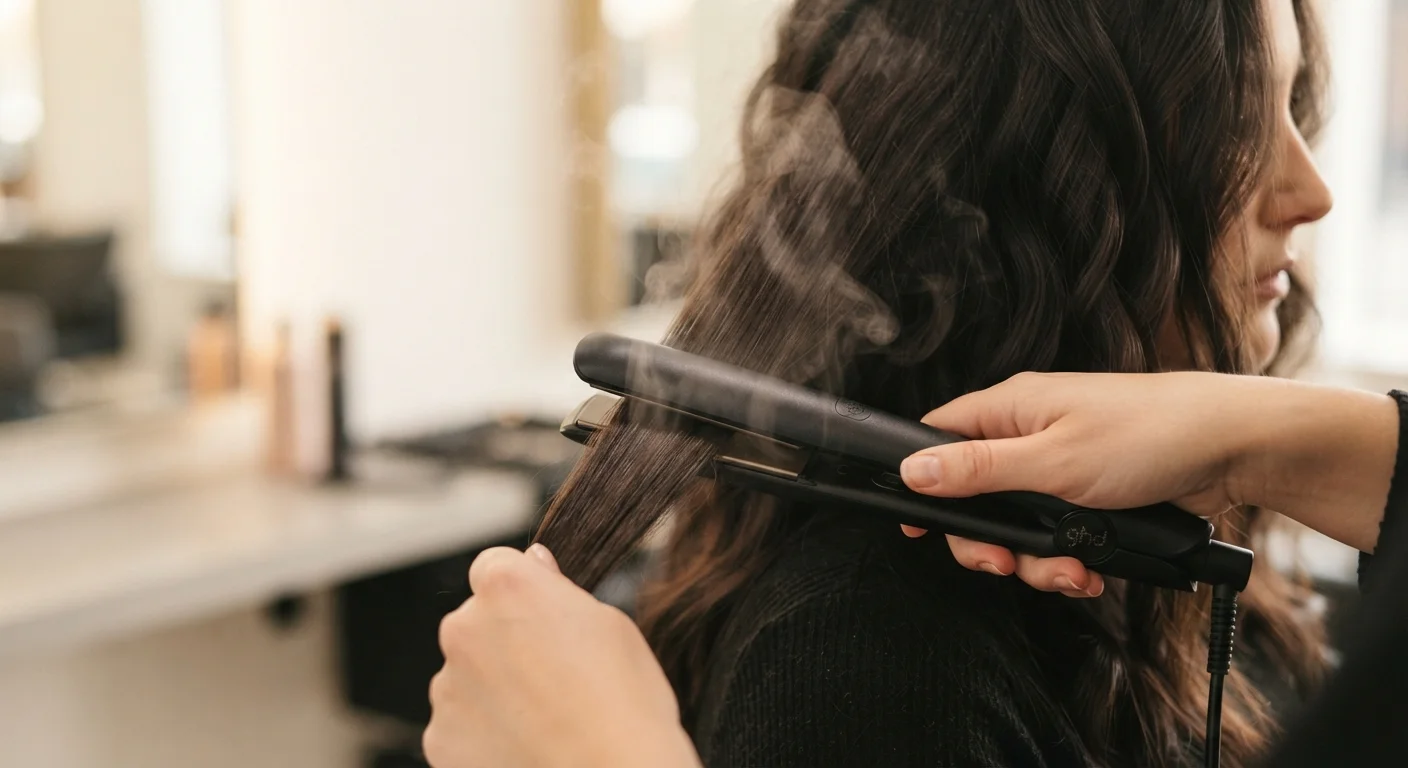
Photo: SaverSteals.com editorial
—— In This Article
Key Takeaways
- Heat tools cause measurable structural changes to hair, but most damage is preventable with the right technique.
- Hair porosity and existing damage level determine how vulnerable your strands are to heat injury.
- A heat protectant reduces — but does not eliminate — thermal damage when used correctly.
- Lower temperatures with slower passes often cause less damage than a single very high-heat pass.
- Air-drying isn't automatically safer than blow-drying; prolonged water exposure also stresses the hair shaft.
What Heat Actually Does to Hair Structure
Hair is primarily made of a protein called keratin, arranged in tightly coiled alpha-helix chains held together by hydrogen bonds, disulfide bonds, and salt bonds. When heat is applied, hydrogen bonds — the weakest and most numerous — break and reform in whatever shape the hair is held during cooling. This is the mechanism behind every curl, wave, and straightening session.
The trouble starts when heat exceeds what the hair's protein structure can handle. Research published in dermatology and cosmetic science literature has shown that temperatures above roughly 150°C (302°F) begin to alter the keratin matrix in ways that don't fully reverse. The outer cuticle layer — overlapping scale-like cells that protect the inner cortex — lifts and erodes under sustained high heat, leaving the cortex exposed and prone to moisture loss, breakage, and frizz.
How quickly and severely this happens depends on multiple factors: the tool's temperature, contact duration, the hair's moisture content, and its baseline condition. Understanding your own hair's porosity, elasticity, and density is one of the most useful things you can do before picking up any heat tool — those properties directly predict how vulnerable your strands are.
Common Myths About Heat Styling — Set Straight
There's no shortage of conflicting advice around blow dryers, flat irons, and curling wands. Let's separate the science from the noise.
Myth
Higher heat means faster, better results — so it's worth cranking the tool up.
Fact
Higher temperatures increase structural damage without reliably improving styling results beyond a certain threshold.
The idea that maximum heat equals maximum performance is one of the most persistent styling myths. In practice, hair begins to absorb and respond to heat well below the highest settings on most tools. Studies on flat iron use have found that repeated passes at moderate temperatures can achieve comparable smoothing results to a single very high-heat pass — while causing measurably less protein degradation. The sweet spot varies by hair type, but reflexively using the highest setting is rarely necessary and often counterproductive.
Myth
Heat protectants create a full barrier — your hair is basically safe once you apply one.
Fact
Heat protectants reduce thermal stress significantly but do not create complete protection, especially at very high temperatures.
Thermal protectants typically work by forming a thin film over the hair shaft and, in some formulations, by absorbing heat themselves before it reaches the cuticle. Research does confirm they lower the temperature the hair surface actually experiences. However, they are not a force field. At temperatures above 230°C (446°F), most protectants offer diminishing returns, and no product fully compensates for chronic high-heat exposure. Think of them as seat belts — essential, but not a license to drive recklessly.
Myth
Air-drying is always the healthier option compared to blow-drying.
Fact
Prolonged water saturation also stresses hair; a brief, low-heat blow-dry may in some cases cause less swelling damage than air-drying alone.
This one surprises a lot of people. Hair swells when wet because water enters the cortex and expands it — a process called hygral fatigue when repeated frequently. Research has suggested that hair left wet for extended periods undergoes repeated swelling and contraction of the cortex, which can weaken the fiber over time. A low-heat blow-dry that removes surface and internal moisture relatively quickly may, for some hair types, result in less cumulative stress than hours of air-drying. Context matters: the best method depends on your hair's porosity and how often you wash.
Myth
Once hair is heat-damaged, a deep conditioning treatment can fully repair it.
Fact
Conditioning treatments can improve damaged hair's appearance and manageability, but they cannot reverse structural protein changes.
Hair is a non-living fiber — it has no capacity to biologically repair itself the way skin does. Protein treatments and deep conditioners work by temporarily filling gaps in the cuticle and cortex, which reduces porosity and improves texture. This is genuinely useful and can make a significant cosmetic difference. But the underlying structural damage — broken disulfide bonds, eroded cuticle cells — remains. The only true remedy for severely heat-damaged hair is growing out healthy new growth from the root and trimming away the compromised length over time.
Myth
Curling irons damage hair less than flat irons because they don't 'straighten' the bonds.
Fact
Curling irons and flat irons operate at the same temperatures and cause the same types of thermal damage to hair structure.
The tool shape changes the style outcome, not the physics of heat transfer. Both curl and flat iron barrels make direct, sustained contact with the hair at temperatures that affect the keratin matrix. What matters for damage is temperature, contact time, and hair condition — not whether the tool makes a wave or a straight line. In fact, repeated wrapping of hair around a curling barrel can cause additional mechanical stress at the bending point, particularly near the ends.
Practical Ways to Reduce Heat Damage
The goal isn't to scare you away from your styling tools — it's to help you use them smarter. A few evidence-supported habits make a real difference.
Never Use High Heat on Chemically Treated Hair
Hair that has been bleached, permed, or relaxed has already undergone significant chemical alteration to its disulfide bonds. Applying high heat to chemically processed hair dramatically increases the risk of breakage and irreversible damage. If your hair has been chemically treated, use the lowest effective temperature possible and always apply a heat protectant — and consider consulting a professional stylist for guidance tailored to your hair's condition.
- Use the lowest effective temperature. Fine or chemically treated hair often responds well to 300–350°F; coarser or thicker hair may need more. Resist the reflex to max out the dial.
- Keep tools moving. Holding a flat iron stationary concentrates heat on one spot. Slow, steady movement distributes it more evenly.
- Apply protectant to damp, not soaking-wet, hair. Most thermal protectants are designed to work on hair that's been towel-dried to about 70–80% dry.
- Limit frequency. Even with protectant, daily heat styling accumulates damage over time. Rest days — or protective styling — give hair a chance to recover.
- Keep ends trimmed. Split ends travel up the shaft; regular trims prevent further splitting and reduce overall fragility.
Also worth noting: environmental humidity interacts with heat-styled hair in ways many people don't anticipate. How humidity affects hair can inform when and how you style, especially if you live in a climate with dramatic seasonal swings.

Style Editorial Team
Style Editorial Team is the collective byline for our editorial team and contributor network. Articles published under this byline or an editorial pen name are researched, written, and reviewed according to our editorial standards for clarity, consistency, and independence before publication.
View author profile