
Everything You Need to Know About Keeping Food Fresh Longer
From refrigerator zones to airtight containers and freezer wrapping, this guide covers the fundamentals of extending the life of your groceries.
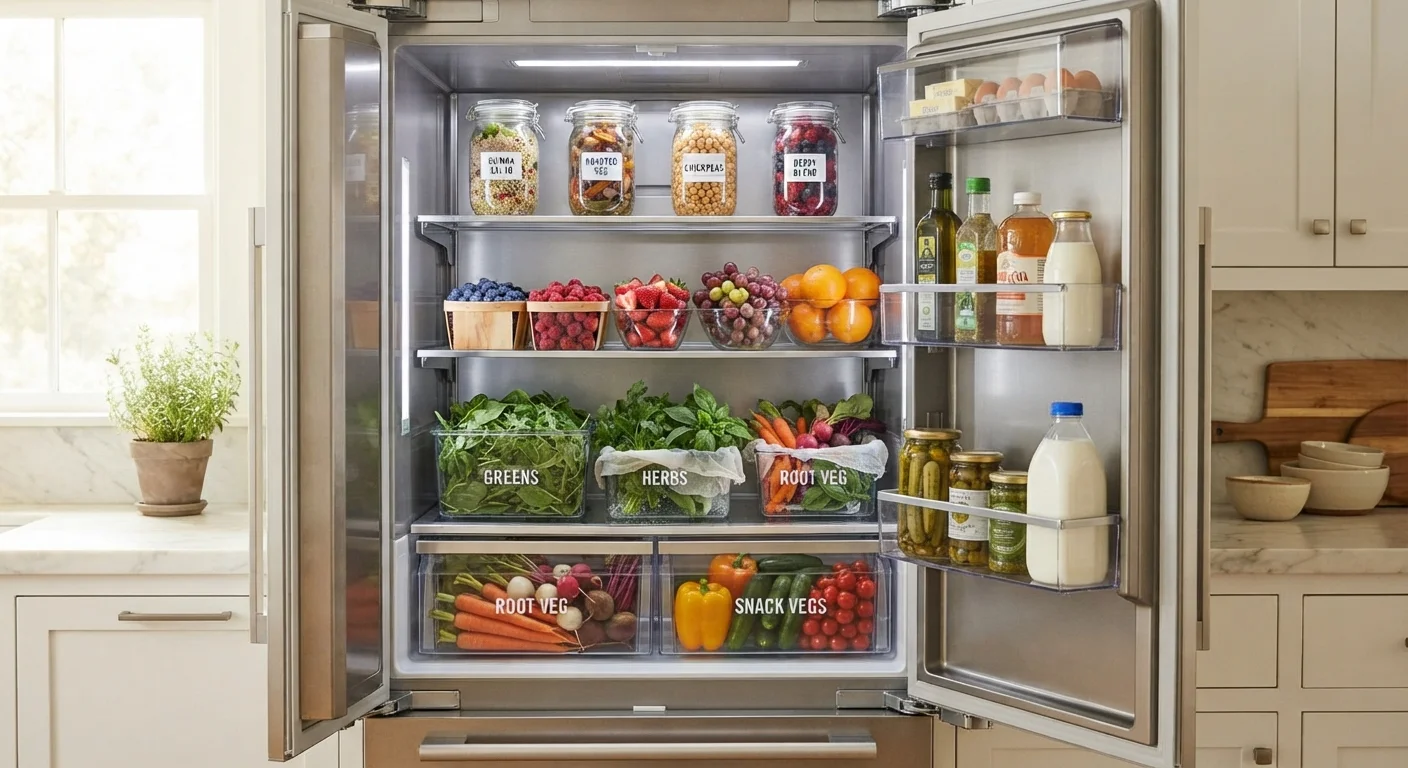
Photo: SaverSteals.com editorial
—— In This Article
Key Takeaways
- Temperature, moisture, and air exposure are the three main drivers of food spoilage.
- Different refrigerator zones have distinct temperature profiles suited to specific food types.
- Airtight containers consistently outperform loosely sealed or uncovered storage for most foods.
- Freezer burn is preventable with proper wrapping and portioning before freezing.
- Dry goods stored in cool, dark, dry spots last significantly longer than those kept near heat sources.
- Simple labeling habits reduce waste by eliminating guesswork about what to use first.
Why Food Goes Bad (and What You Can Control)
Food spoils through a combination of microbial growth, enzymatic activity, oxidation, and moisture changes. Bacteria and mold thrive in certain temperature ranges, enzymes in fruits and vegetables continue breaking down cellular structure after harvest, and exposure to air accelerates fat oxidation and texture degradation. Understanding these mechanisms gives you a practical framework for slowing each one down.
The factors you can realistically control at home are temperature, air exposure, humidity, and light. Reducing any one of these stressors extends shelf life — combining all four has a compounding effect. This guide covers exactly how to do that across every area of your kitchen.
30–40%
Share of U.S. food supply wasted
According to the USDA, roughly 30 to 40 percent of the U.S. food supply is wasted, much of it at the consumer level due to improper storage.
0°F
Recommended freezer temperature
The FDA recommends keeping your freezer at 0°F (-18°C) to stop bacterial growth entirely and preserve food quality.
40°F or below
Safe refrigerator temperature
The FDA advises maintaining refrigerator temperatures at or below 40°F (4°C) to slow the growth of most harmful bacteria.
Refrigerator Zones and What Belongs Where
Most refrigerators aren't uniformly cold. The door shelves fluctuate most — each time the door opens, that area warms up — making them a poor choice for dairy, eggs, or anything sensitive to temperature swings. The back of the lower shelves is the coldest and most consistent spot, ideal for raw meat, poultry, and fish.
The crisper drawers are designed to manage humidity. Most models have a high-humidity drawer suited to leafy greens, herbs, and thin-skinned produce, and a low-humidity drawer for fruits that emit ethylene gas, such as apples and pears. Mixing these categories accelerates ripening and decay. Keep the two drawers purposefully separated.
Upper shelves maintain moderate, stable temperatures — a good home for leftovers, prepared foods, and drinks. Middle shelves work well for dairy and eggs when kept in their original cartons.
Store fresh herbs like a bouquet: trim the stems, place in a jar with an inch of water, and loosely cover with a plastic bag before refrigerating. Treated this way, parsley and cilantro routinely last two weeks instead of five days.
Herbs are highly sensitive to moisture loss. Keeping the stems hydrated while shielding the leaves from dry refrigerator air replicates the conditions that keep them alive longest.
Don't wash berries until just before eating them. Pre-washing introduces moisture that dramatically accelerates mold, even in a sealed container.
Berries have porous surfaces that absorb and retain water. Even small amounts of residual moisture create the humid conditions mold spores need to establish quickly.
The Role of Airtight Containers and Wrapping
Exposure to air is a primary accelerant of spoilage. Oxygen enables oxidation in fats and degrades vitamins, while open surfaces allow moisture to evaporate from some foods and absorb into others. Airtight containers — whether glass, hard plastic, or silicone — create a barrier against both.
For cut produce, wrapping tightly in plastic wrap or beeswax wrap before placing in a container adds an additional moisture seal. Cooked grains, soups, and sauces benefit from being cooled first before lidding — sealing in heat traps steam and creates condensation that encourages bacterial growth.
For cheese, avoid plastic wrap directly on the surface for long storage. Cheese paper or wax paper followed by a loose plastic layer allows the cheese to breathe slightly, reducing moisture buildup while limiting air exposure. Deli meats kept in their original packaging should be re-wrapped in fresh wrapping after each use if not consumed within two to three days.
Label Everything Going Into the Fridge
Any time you transfer food into a container — leftovers, cut produce, decanted sauces — write the date on a piece of tape and stick it to the lid. This takes under ten seconds and removes any uncertainty about whether something is still good. A clear system also makes it easier to spot what needs to be used first.
Freezer Storage Done Right
Freezing is one of the most effective food preservation tools available — but only when done correctly. Freezer burn, the dry, discolored patches that appear on frozen food, results from sublimation: ice crystals on the food's surface evaporate directly into the air. It's caused by air pockets in the packaging, not by food being frozen too long.
The fix is removing as much air as possible before freezing. For solid items like meat, press plastic wrap directly against the surface before placing in a freezer bag. Expel air from bags manually or use a vacuum-seal system if you freeze food regularly. For liquids and soups, leave a small headspace in containers — liquid expands as it freezes.
Portion food before freezing so you only thaw what you need. Refreezing thawed food is generally safe if it was thawed in the refrigerator, but texture and quality degrade with each freeze-thaw cycle. Label everything with the date and contents — frozen food looks similar after a few weeks.
Pantry and Dry Goods: What People Get Wrong
Heat and humidity are the enemies of pantry staples. Storing cooking oils, spices, or canned goods above or beside the stove shortens their useful life considerably — the daily heat cycles accelerate oxidation and breakdown. A cool, dark cabinet away from the stove and dishwasher is a better default location.
Dry goods like flour, oats, rice, and pasta benefit from being transferred from their original paper or thin plastic packaging into sealed containers. Paper packaging isn't airtight, and pantry pests can enter through seams. Hard-sided containers with tight-fitting lids are more effective than clip-seal bags for long-term storage.
If you buy in bulk to save money, make sure you have the right storage infrastructure in place first. Our guide on which household supplies are worth buying in bulk covers when bulk purchasing pays off and when it backfires.
Don't Store Potatoes and Onions Together
Onions emit gases that accelerate potato sprouting, and both release moisture that encourages mold when confined together. Store them in separate, ventilated containers in a cool, dark location. Keeping them in airtight containers without ventilation traps moisture and speeds up decay rather than preventing it.
Practical Habits That Make a Difference
Storage systems only work if the daily habits around them are consistent. A few high-return practices stand out:
- First in, first out: Rotate older items to the front when restocking — in the fridge, pantry, and freezer alike. This simple habit prevents perfectly good food from being forgotten behind newer purchases.
- Label and date everything: Masking tape and a marker take seconds and eliminate guesswork. For the freezer especially, this is non-negotiable.
- Cool before storing: Hot foods placed directly in the refrigerator raise the internal temperature, which affects neighboring items. Cool cooked food to room temperature — within two hours — before refrigerating.
- Keep counters clear of heat-sensitive produce: Tomatoes, avocados, and bananas do fine at room temperature until ripe, but potatoes and onions stored near heat sources or in direct sunlight degrade faster.
Pairing thoughtful storage habits with a nutrition-focused grocery approach means you're not just buying better food — you're actually eating it before it goes to waste. More guidance on everyday consumer decisions is available at the Smart Shopping hub.

Shopping Editorial Team
Shopping Editorial Team is the collective byline for our editorial team and contributor network. Articles published under this byline or an editorial pen name are researched, written, and reviewed according to our editorial standards for clarity, consistency, and independence before publication.
View author profile