Cost Approach vs. Sales Comparison Approach in Home Valuation
Appraisers use different methodologies depending on the property. See how the cost approach and sales comparison method differ.
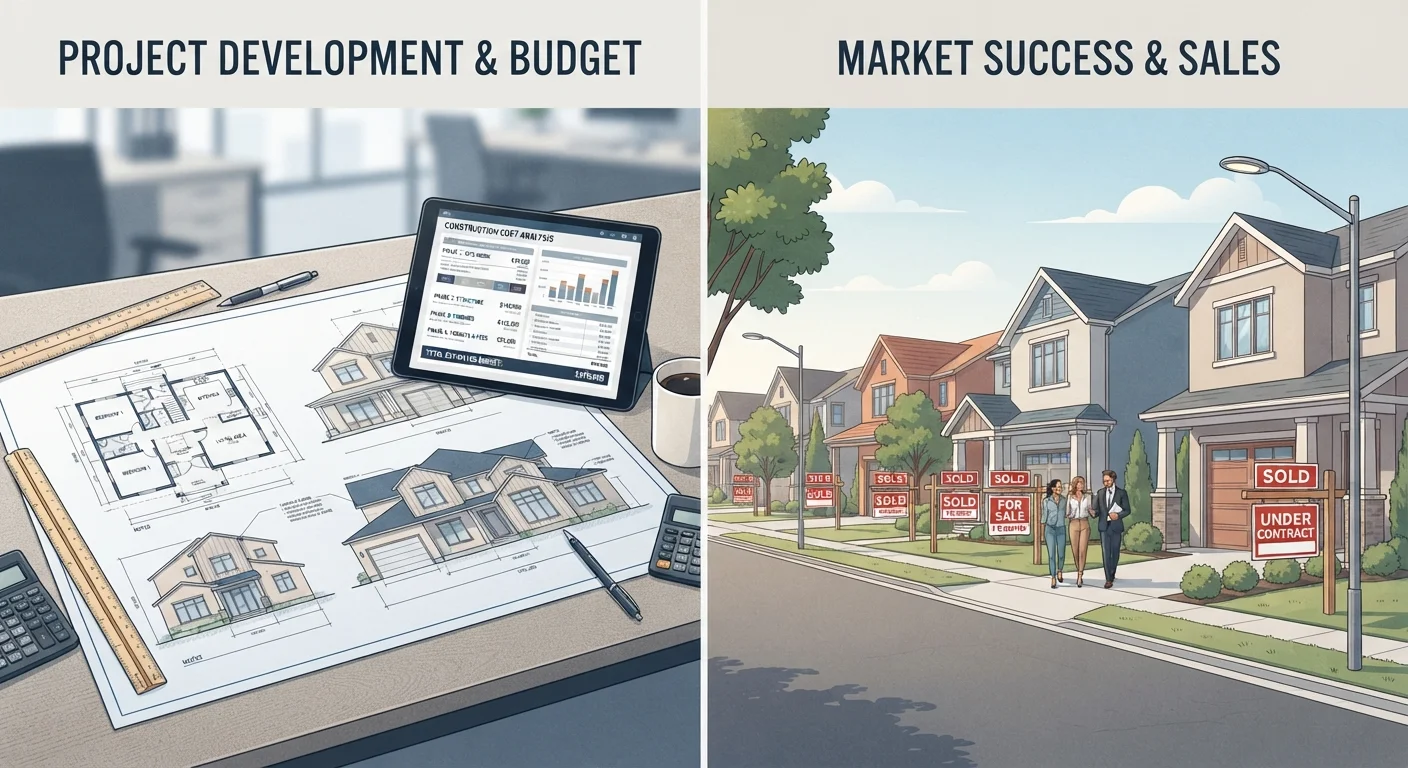
Photo: SaverSteals.com editorial
—— In This Article
Key Takeaways
- The cost approach estimates value by calculating what it would cost to rebuild a property, minus depreciation, plus land value.
- The sales comparison approach values a home based on recent sales of similar nearby properties.
- Most residential appraisals rely on the sales comparison approach when sufficient market data exists.
- The cost approach is most reliable for new construction or unique properties with few comparable sales.
- Appraisers may use both methods simultaneously and reconcile the results into a final value opinion.
Two Methods, One Goal
When a licensed appraiser determines a home's value, they don't rely on a single formula. Instead, they select from recognized methodologies based on the property type, available market data, and the purpose of the appraisal. The two most commonly applied approaches for residential properties are the cost approach and the sales comparison approach.
Understanding how each method works — and when appraisers lean on one over the other — helps homeowners, buyers, and sellers interpret appraisal reports with greater confidence. For a broader look at the appraisal process itself, see how home appraisals actually work.
The Cost Approach Explained
The cost approach estimates a property's value by answering a straightforward question: What would it cost to reproduce or replace this structure today, accounting for any depreciation, and adding the value of the land?
The formula is generally expressed as:
Value = Land Value + Cost to Rebuild − Accrued Depreciation
Depreciation here captures physical deterioration (wear and tear), functional obsolescence (outdated layouts or systems), and external obsolescence (neighborhood-level factors outside the owner's control).
This method is most credible when:
- The property is newly constructed, so depreciation is minimal and reliable cost data is available.
- The home is highly distinctive — such as a custom-built estate or a converted historic building — with no meaningful comparable sales nearby.
- The appraisal is being conducted for insurance or tax purposes rather than a mortgage transaction.
Land Value Must Be Estimated Separately
In the cost approach, land is always valued independently from the structure. Appraisers typically look for recent vacant land sales in comparable areas to establish this figure. In markets where undeveloped lots rarely change hands, this estimate requires additional professional judgment and may carry more uncertainty.
Because land value must be estimated separately in the cost approach, accuracy depends on identifying recent vacant land sales or extracting land value from other data — a task that can be challenging in dense urban markets where bare land rarely sells independently.
The Sales Comparison Approach Explained
The sales comparison approach — also called the market approach — values a property by comparing it to similar homes (comparables, or comps) that have sold recently in the same market area. Appraisers identify properties with similar size, age, condition, location, and features, then apply dollar adjustments for any differences between those properties and the subject home.
For example, if a comparable sold for $400,000 but has an extra bathroom the subject home lacks, the appraiser might subtract a value for that bathroom from the comp's price before using it as a benchmark.
This approach reflects what actual buyers have paid under current market conditions, making it the preferred method for most conventional mortgage appraisals on existing residential properties. How appraisers select and adjust comparable sales involves precise criteria and professional judgment — it is not simply averaging nearby sale prices.
| Cost Approach | Sales Comparison Approach | |
|---|---|---|
| Core question answered | What would it cost to rebuild this property? | What are similar homes actually selling for? |
| Data required | Construction costs, land value, depreciation estimates | Recent comparable sales in the same market area |
| Best suited for | New construction, unique or special-use properties | Existing homes in active residential markets |
| Primary weakness | Depreciation estimation is highly subjective | Requires sufficient comparable sales data to function |
| Common appraisal use | Insurance valuations, new builds, unusual properties | Purchase and refinance appraisals for standard homes |
| Market condition sensitivity | Lower — based on cost data, not buyer behavior | Higher — directly reflects current buyer activity |
Limitations and When Each Method Falls Short
No single approach is without weaknesses. The sales comparison method breaks down in markets with very few recent transactions — rural areas, resort communities, or neighborhoods where few homes have sold in the past six to twelve months. In those cases, an appraiser may have limited or no reliable comps to work from.
The cost approach, meanwhile, becomes less reliable as a property ages. Accurately measuring depreciation — especially functional and external obsolescence — requires significant appraiser judgment, introducing greater subjectivity into the final figure. Additionally, construction cost data can fluctuate meaningfully with material and labor market conditions.
Neither Approach Guarantees an Accurate Market Price
Appraisal methods are structured frameworks, not precise scientific calculations. Each involves professional judgment, and reasonable appraisers can reach different conclusions using the same data. If you believe an appraisal result does not reflect your property's condition or market accurately, you have the right to request a reconsideration of value through your lender, supported by additional comparable sales or documented factual errors.
It's also worth noting that appraised value and market value are related but distinct concepts. To understand how these figures can diverge, see appraised value vs. market value.
How Appraisers Reconcile Both Approaches
On many assignments — particularly for complex or unique properties — appraisers apply both methods and then reconcile the results into a single, supportable value conclusion. Reconciliation does not mean averaging the two figures; rather, the appraiser weighs each method's reliability given the specific property and market, and assigns more weight to the approach considered most credible under the circumstances.
For most standard single-family homes, the sales comparison approach will carry the greatest weight. For new construction or specialty properties, the cost approach may dominate. Understanding how assessed, appraised, and market values differ can further clarify why the same property may carry several different value figures depending on who is asking and why.
This article provides general educational information about appraisal methodology and is not a substitute for advice from a licensed real estate appraiser or other qualified professional regarding your specific property or circumstances.

Real Estate Editorial Team
Real Estate Editorial Team is the collective byline for our editorial team and contributor network. Articles published under this byline or an editorial pen name are researched, written, and reviewed according to our editorial standards for clarity, consistency, and independence before publication.
View author profile