
What Pet Food Labels Mean — and What They're Allowed to Leave Out
Decode the terminology on pet food packaging, from "complete and balanced" to ingredient ordering rules, so you can compare products with confidence.
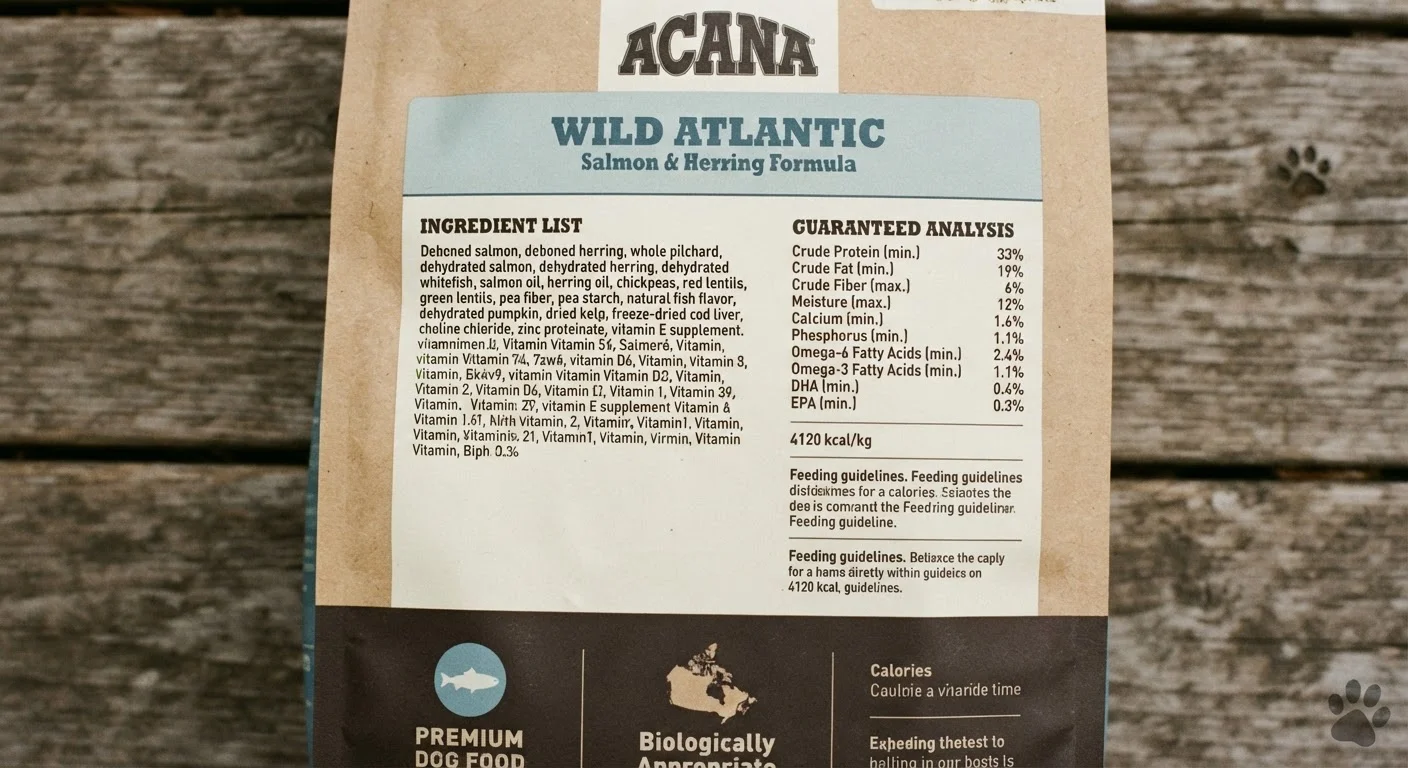
Photo: SaverSteals.com | Explore More. Shop Smarter. editorial
—— In This Article
Key Takeaways
- "Complete and balanced" is a defined regulatory claim, not a marketing phrase — it requires meeting AAFCO nutrient profiles.
- Ingredients are listed by pre-cooking weight, which can make meat ingredients appear more prominent than they truly are.
- The guaranteed analysis shows minimum or maximum nutrient levels, not exact amounts.
- Manufacturers are not required to disclose ingredient sourcing, country of origin for components, or processing methods.
- A higher price does not automatically mean a label is more transparent or a formula more nutritious.
The Five Required Label Elements
Every pet food sold legally in the U.S. must display five core elements: the product name, the net quantity, the manufacturer's name and address, an ingredient list, and a guaranteed analysis panel. These aren't optional niceties — they're the baseline. Understanding each one helps you cut through packaging noise when comparing products on a budget.
The product name itself carries regulatory meaning. AAFCO's naming rules require that if a single ingredient is named (e.g., "Salmon Cat Food"), salmon must make up at least 70% of the product. A label reading "with salmon" only requires 3% salmon content. This single distinction can affect both perceived and actual value significantly.
3%
Minimum ingredient content for "with [ingredient]" claims
AAFCO naming rules require just 3% of a named ingredient when the label uses "with" — compared to 70% when the ingredient leads the product name.
70%
Required content when ingredient is the product name
Under AAFCO guidelines, a product named "Salmon Cat Food" must contain at least 70% of that named ingredient by weight, excluding water for processing.
2
Methods allowed to substantiate nutritional adequacy claims
Manufacturers may use either AAFCO nutrient profile formulation or live-animal feeding trials — the label must state which method was used.
How the Ingredient List Works — and Where It Misleads
Ingredients are listed in descending order by pre-cooking weight. This matters because moisture-heavy ingredients like fresh meat weigh more raw than they do after processing. A food listing "chicken" first may contain less actual chicken protein in the final product than one listing "chicken meal" (which is already dried and concentrated) in the third position.
Manufacturers are also permitted to split a single ingredient into multiple sub-components. For example, "ground corn," "corn gluten meal," and "corn bran" may each appear separately in the list. Added together, they could outweigh the first-listed protein — a practice sometimes called ingredient splitting. It's not illegal, but it changes how the list reads.
For a parallel look at how ingredient labeling works in another consumer category, see how beauty ingredient lists are structured — the ordering logic has some similarities worth knowing.
Calculate Cost Per Day, Not Per Bag
Divide the bag price by the number of days it will last at your pet's recommended daily serving. This gives you a true daily cost that makes cross-product comparison more meaningful than comparing sticker prices alone. A smaller, denser bag may outlast a cheaper, larger one.
What "Nutritional Adequacy" Claims Actually Tell You
The nutritional adequacy statement is arguably the most important line on the label. It tells you whether a food is intended as a complete diet or only a supplement/treat, and which life stage it targets (growth, adult maintenance, all life stages, etc.). A food labeled for "all life stages" technically meets the higher nutritional demands of puppies or kittens — which may mean it's nutritionally denser than your adult pet needs.
There are two ways a manufacturer can support this claim: by formulating to AAFCO nutrient profiles, or by conducting feeding trials. The label must state which method was used. Feeding-trial foods have been tested on live animals; formulated foods have been calculated against a nutrient database. Neither method is inherently superior for every situation, but knowing which applies gives you more context.
Once you understand label claims, you're better positioned to evaluate cost-per-serving rather than cost-per-bag. That matters for budget pet care across food, supplies, and vet costs.
What Labels Are Permitted to Omit
This is where label literacy becomes genuinely useful for cost-conscious shoppers. Manufacturers are not required to disclose:
- The country of origin for individual ingredients (only the manufacturer's domestic address is required)
- Exact percentages of each ingredient in the finished product
- Processing methods or temperatures used during manufacturing
- Whether ingredients are sourced from human-grade or feed-grade supply chains
The guaranteed analysis panel shows minimums for crude protein and crude fat, and maximums for crude fiber and moisture — not exact values. Actual protein content could be meaningfully higher or lower than the minimum stated. This makes direct nutritional comparison across products less precise than the panel implies.
These gaps are worth understanding before assuming a more expensive product is more transparent. For a deeper look at how labeling compares between store and name brands, see what labels are actually telling you about generic vs. name-brand food.
"Human-Grade" Is Not an AAFCO-Defined Term
"Human-grade" appears on some pet food packaging but has no formal regulatory definition under AAFCO or FDA pet food rules as of current guidance. It is a marketing claim, not a regulated standard, and does not carry a specific legal obligation about ingredient sourcing or manufacturing conditions.
Using Label Knowledge to Spend More Wisely
Reading labels critically doesn't mean chasing the most complex ingredient list or the longest claims panel. It means knowing what a given claim obligates the manufacturer to deliver — and what it doesn't. A food meeting AAFCO standards for your pet's life stage covers the nutritional baseline regardless of price tier.
Cost-per-day (calculated from bag weight, feeding guidelines, and price) is a more useful comparison metric than sticker price alone. A denser, higher-calorie food fed in smaller portions can cost less daily than a cheaper bag with lower energy density requiring larger servings.
Several common assumptions about budget-priced foods don't hold up well under scrutiny. See myths about cheap pet food that keep owners overspending for a breakdown of what the evidence actually shows.
Frequently Asked Questions

Pets Editorial Team
Pets Editorial Team is the collective byline for our editorial team and contributor network. Articles published under this byline or an editorial pen name are researched, written, and reviewed according to our editorial standards for clarity, consistency, and independence before publication.
View author profile