
Reading a Beauty Ingredient List Without Getting Lost
INCI names and long ingredient lists can be confusing. Here's how to decode beauty labels so you know exactly what you're paying for.
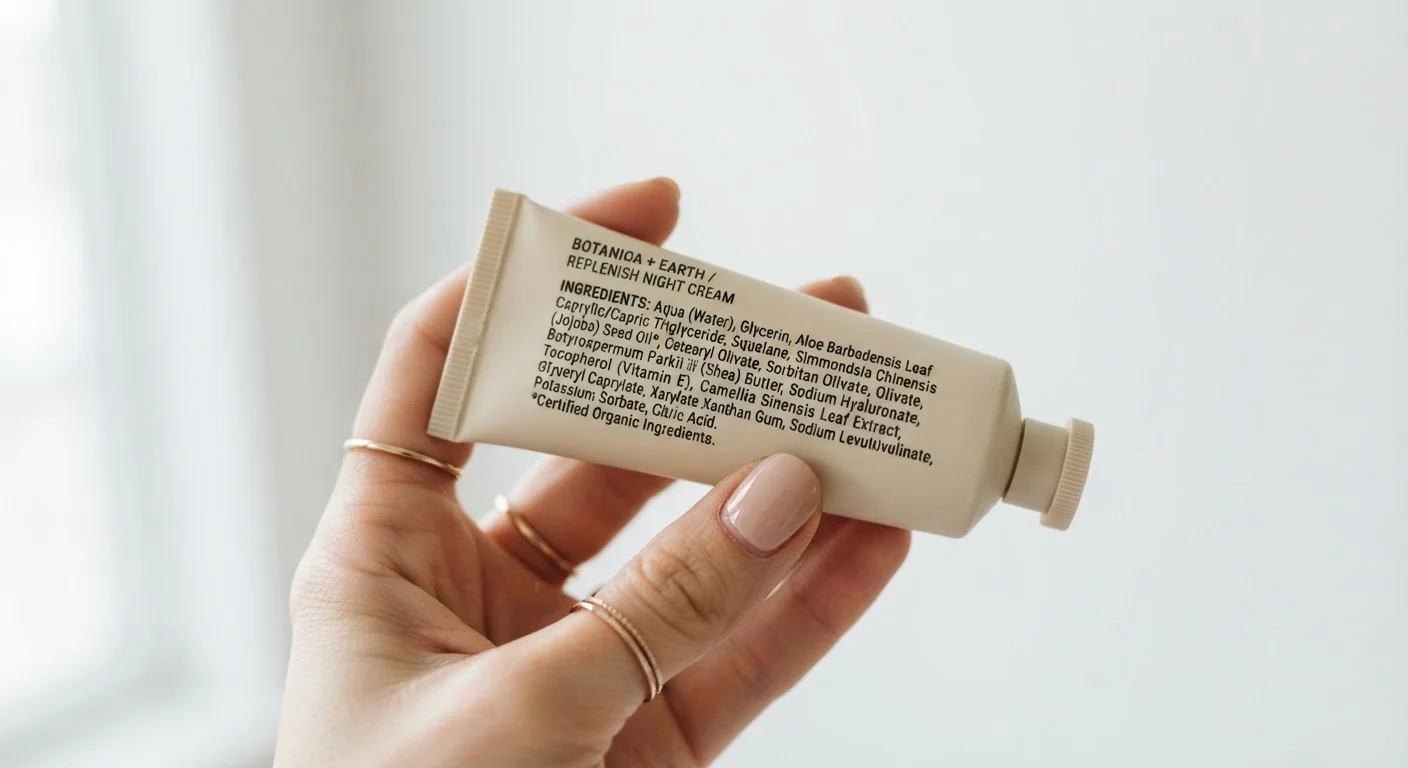
Photo: SaverSteals.com | Explore More. Shop Smarter. editorial
—— In This Article
Key Takeaways
- Ingredient lists follow a standardized naming system called INCI, which is the same worldwide.
- Ingredients are listed in descending order by concentration, with the largest amounts first.
- The first five or six ingredients typically make up the majority of a product's formula.
- Identifying actives by their INCI names lets you compare expensive and affordable products side by side.
- Understanding labels is one of the most reliable ways to find effective drugstore alternatives to pricier products.
Why Ingredient Lists Look So Confusing
Flip over almost any skincare or makeup product and you'll find a small-print wall of text that reads more like a chemistry exam than a shopping guide. Names like butylene glycol, tocopheryl acetate, and phenoxyethanol appear on products at every price point - from dollar-store moisturizers to department-store serums. The unfamiliarity is by design: ingredient names follow an international scientific standard, not consumer-friendly branding.
The good news is that once you understand the system, ingredient lists become genuinely useful tools - especially when you're trying to spend less without sacrificing results. For a broader look at the vocabulary involved, see our practical glossary of budget beauty terms.
INCI
The International Nomenclature of Cosmetic Ingredients - a standardized global system for naming cosmetic ingredients consistently across brands and countries.
Active ingredient
The ingredient in a formula responsible for its primary claimed benefit, such as a vitamin C derivative for brightening or a sunscreen filter for UV protection.
Emollient
An ingredient that softens and smooths skin by filling gaps between skin cells, commonly found near the top of moisturizer ingredient lists.
Humectant
An ingredient that draws moisture into the skin from the surrounding environment or deeper layers, such as hyaluronic acid or glycerin.
Dupe
Short for duplicate - an affordable product with a formula similar enough to a more expensive one that it may deliver comparable results.
Preservative
An ingredient added to prevent microbial growth and extend shelf life; common examples include phenoxyethanol and sodium benzoate.
How INCI Names Work
Every ingredient on a US cosmetic label must appear under its INCI name - a globally standardized identifier regulated by the Personal Care Products Council and recognized by the FDA. INCI names are often Latin botanical names (e.g., Camellia sinensis leaf extract for green tea) or established chemical names (e.g., ascorbic acid for vitamin C).
This standardization is what makes label-reading so powerful for budget shoppers. A $9 drugstore serum and a $90 department-store serum both have to use the same INCI name for the same ingredient. That common language lets you make direct, factual comparisons - without relying on marketing claims printed on the front of the box.
Reading Order and Concentration
US cosmetic regulations require ingredients to be listed in descending order of concentration by weight. The ingredient making up the largest proportion of the formula appears first. This ordering continues until you reach ingredients present at approximately 1% or less - at that threshold, manufacturers may list remaining ingredients in any order they choose.
In practice, the first five or six ingredients typically account for the bulk of a formula. Water (aqua) heads most water-based products. Emollients, humectants, and thickeners usually follow. Fragrance, preservatives, and low-concentration actives typically appear toward the end.
Use the 1% threshold as a guide
When scanning a list, fragrance and preservatives are almost always present below 1%. If an active ingredient you care about appears after those entries, it's likely present at a similarly low level. For actives that require higher concentrations to be effective - such as certain exfoliants - position on the list is especially worth noting.
Understanding this ordering is central to evaluating whether a product is worth its price - and to the broader skills covered in our guide to making budget beauty purchases that actually last.
Spotting Key Actives on a Budget
Actives are the ingredients responsible for a product's primary claimed benefit - think niacinamide for tone-evening, retinol for cell turnover, or hyaluronic acid for hydration. When a product is marketed around a specific active, check where that ingredient falls on the list.
If a celebrated active appears after fragrance or a preservative like phenoxyethanol, its concentration is almost certainly below 1% - possibly far below. That doesn't automatically make the product ineffective (some actives work at very low concentrations), but it does put marketing claims in context. For over-the-counter drug products such as sunscreens, the rules differ: actives must be listed separately at the top, with their exact percentages disclosed.
Using Labels to Find Drugstore Dupes
Comparing ingredient lists is one of the most reliable methods for identifying affordable alternatives to expensive products. Start with the hero product you want to replicate and note its first five to eight ingredients, paying particular attention to any actives and their approximate positions on the list. Then compare candidate drugstore products against that benchmark.
A true dupe isn't just a similar product category - it shares a meaningfully similar formula, with key actives present at comparable positions. Exact matches are rare, but close alignment in the top ingredients is a reasonable indicator of similar performance. This approach won't guarantee identical results (formulation nuances matter), but it gives you an evidence-based reason to try an alternative rather than guessing.
For savings on your purchases once you've identified what you want, exploring beauty coupons and loyalty programs can extend your budget further. And for a complete framework covering formulation basics through shopping habits, see The Full Picture on Budget Beauty.
Formulation Is More Than Ingredients
Two products can share the same key ingredient yet perform differently due to variations in pH, particle size, encapsulation technology, or the supporting ingredients around them. Ingredient lists are a strong starting point for comparison, but they don't tell the complete formulation story. Patch testing any new product is always a sensible step before full use.
Frequently Asked Questions

Beauty Editorial Team
Beauty Editorial Team is the collective byline for our editorial team and contributor network. Articles published under this byline or an editorial pen name are researched, written, and reviewed according to our editorial standards for clarity, consistency, and independence before publication.
View author profile