
Generic vs. Name-Brand Pet Food: What the Labels Are Actually Telling You
Compare store-brand and name-brand pet food across ingredients, nutritional standards, and price — so you can make an informed choice for your animal.
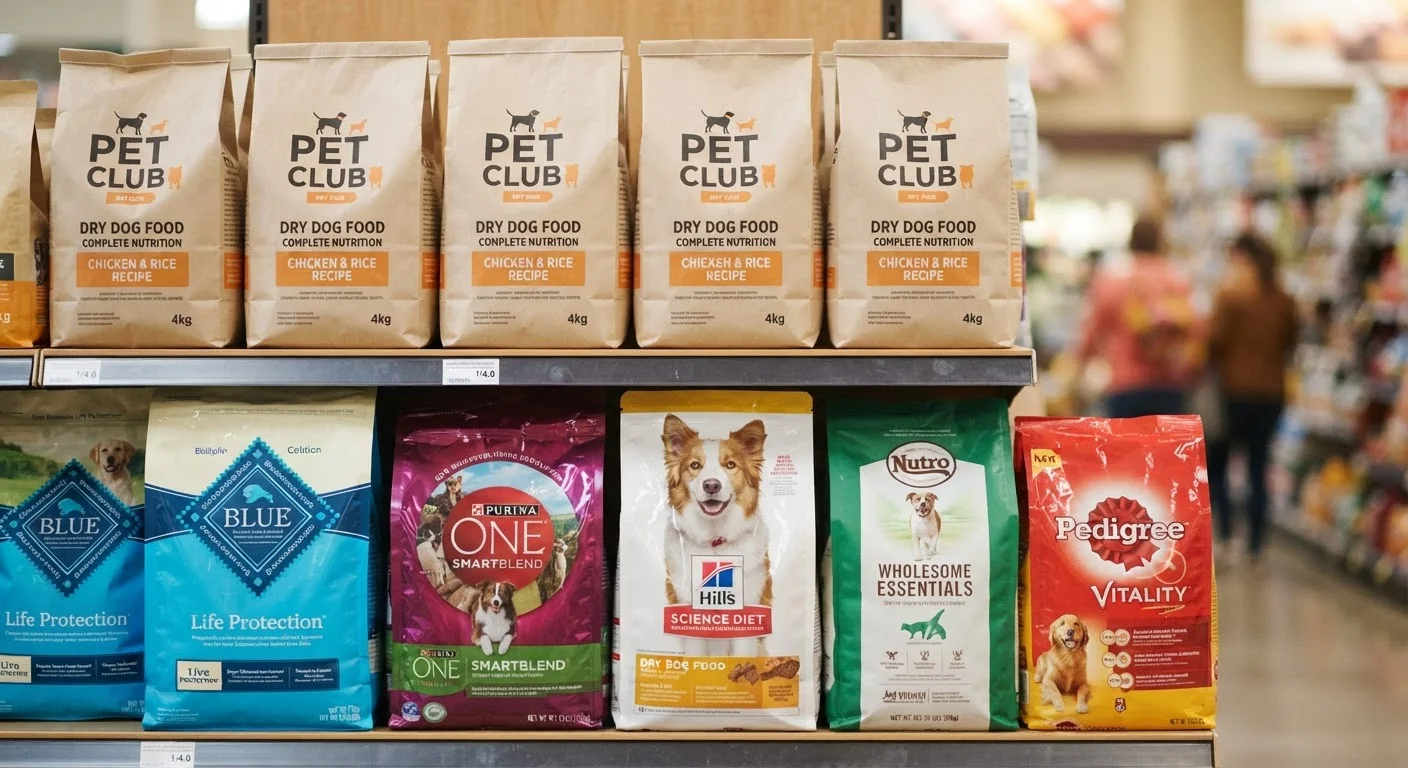
Photo: SaverSteals.com | Explore More. Shop Smarter. editorial
—— In This Article
Key Takeaways
- Both generic and name-brand pet foods must meet the same AAFCO nutritional standards to carry a 'complete and balanced' claim.
- Ingredient quality and sourcing transparency vary widely within each category — price alone is not a reliable indicator.
- Generic foods typically cost 20–40% less per serving, but the savings may be offset by lower caloric density requiring larger portions.
- Marketing spend, not ingredient cost, accounts for a significant share of premium brand price premiums.
- Your pet's age, health status, and individual digestive response matter more than brand prestige when choosing food.
- Reading the guaranteed analysis and ingredient list is the most reliable way to compare any two products regardless of brand tier.
What Both Options Are Actually Required to Deliver
The single most important fact in this debate: every pet food sold in the U.S. that carries the phrase "complete and balanced" has met the nutritional standards set by the Association of American Feed Control Officials (AAFCO). That applies to a $9 store-brand bag and a $45 premium bag equally. The label claim is a legal floor, not a marketing phrase.
AAFCO profiles define minimum (and in some cases maximum) levels of protein, fat, vitamins, and minerals for dogs and cats at different life stages. A product can meet those profiles either through laboratory analysis or through an actual feeding trial — the latter being a more rigorous demonstration. Decoding what pet food labels mean and what they're allowed to leave out is an important first step before comparing any two products.
Where the regulation stops is ingredient sourcing, manufacturing facility standards beyond basic safety compliance, and quality consistency across production batches. Those gaps are where real differences between generic and name-brand products can emerge — and where reading beyond the marketing copy matters.
| Criterion | Generic (Store-Brand) | Name-Brand |
|---|---|---|
| AAFCO compliance | Required if labeled 'complete and balanced' | Required if labeled 'complete and balanced' |
| Average cost per pound | Generally 20–40% lower | Higher due to marketing overhead |
| Ingredient sourcing transparency | Often limited; generic language | Typically more specific, though unregulated |
| Feeding trial documentation | Less commonly published | More frequently available |
| Caloric density consistency | Can vary more between batches | Generally more consistent |
| Suitability for special dietary needs | Limited specialized formulas | Broader range of condition-specific options |
| Manufacturing transparency | Rarely disclosed | Varies; some publish facility details |
Ingredients, Sourcing, and What the Guaranteed Analysis Doesn't Show
Ingredient lists on pet food are ordered by pre-cooking weight, so a meat listed first doesn't automatically mean the finished food is protein-dense — water weight is included. The guaranteed analysis panel (minimum crude protein, minimum crude fat, maximum crude fiber, maximum moisture) gives you a more useful cross-product comparison, though it still doesn't reveal ingredient quality or digestibility.
Generic brands frequently use ingredient splitting (listing one ingredient under multiple names to push it lower on the list) or rely more heavily on by-products and rendered meals. That isn't inherently unsafe — meat meal, for example, is a concentrated protein source — but it does make label-to-label comparison harder. Name brands, especially those positioned as premium, often publish more specific sourcing language, though that language is largely unregulated and difficult to independently verify.
~$150B
U.S. pet industry annual revenue
The American Pet Products Association estimates the U.S. pet industry generates roughly $150 billion annually, with food representing the largest single category.
2 methods
Ways a food can claim AAFCO compliance
AAFCO allows nutritional adequacy claims via either a laboratory nutrient profile analysis or a live animal feeding trial — only the latter tests actual digestibility.
~30–40%
Estimated marketing share of premium pet food price
Industry analysts have estimated that a significant portion of the price gap between budget and premium pet foods reflects advertising and distribution costs rather than ingredient differences.
Digestibility — how much of the food your pet actually absorbs — is rarely published but critically important. A cheaper food that requires 20% larger portion sizes to meet your pet's energy needs may not generate the savings the shelf price suggests. Common misconceptions about cheap pet food that could end up costing more covers this math in detail.
Price Gaps and Where They Actually Come From
Name-brand pet food price premiums are driven by several factors that have nothing to do with what's in the bag: national advertising campaigns, retail slotting fees, celebrity endorsements, and packaging design all inflate the cost structure before a single ingredient is purchased. Understanding why pet supply pricing varies so much across retailers helps contextualize why the same nutritional profile can carry very different price tags.
Store brands, by contrast, avoid most of those costs. They're typically manufactured by contract facilities — sometimes the same plants that produce name-brand products — and sold under a retailer's own label with minimal marketing overhead. That cost structure is why generic options can be significantly less expensive per pound without necessarily compromising on the regulated nutritional baseline.
One practical strategy: use the guaranteed analysis figures and the AAFCO statement as your primary filter, then compare cost-per-calorie rather than cost-per-pound. Comparing subscription delivery against in-store pet food buying adds another dimension to that cost calculation. For a broader view of where food fits in your total pet budget, see a full category-by-category breakdown of pet ownership costs.
This article is for informational purposes only. Consult a licensed veterinarian before making significant changes to your pet's diet, particularly for animals with health conditions.

Pets Editorial Team
Pets Editorial Team is the collective byline for our editorial team and contributor network. Articles published under this byline or an editorial pen name are researched, written, and reviewed according to our editorial standards for clarity, consistency, and independence before publication.
View author profile