
Teaching a Dog to Walk Calmly on a Leash
Step-by-step guidance on loose-leash walking, managing pulling, and building focus so every walk is enjoyable for both of you.
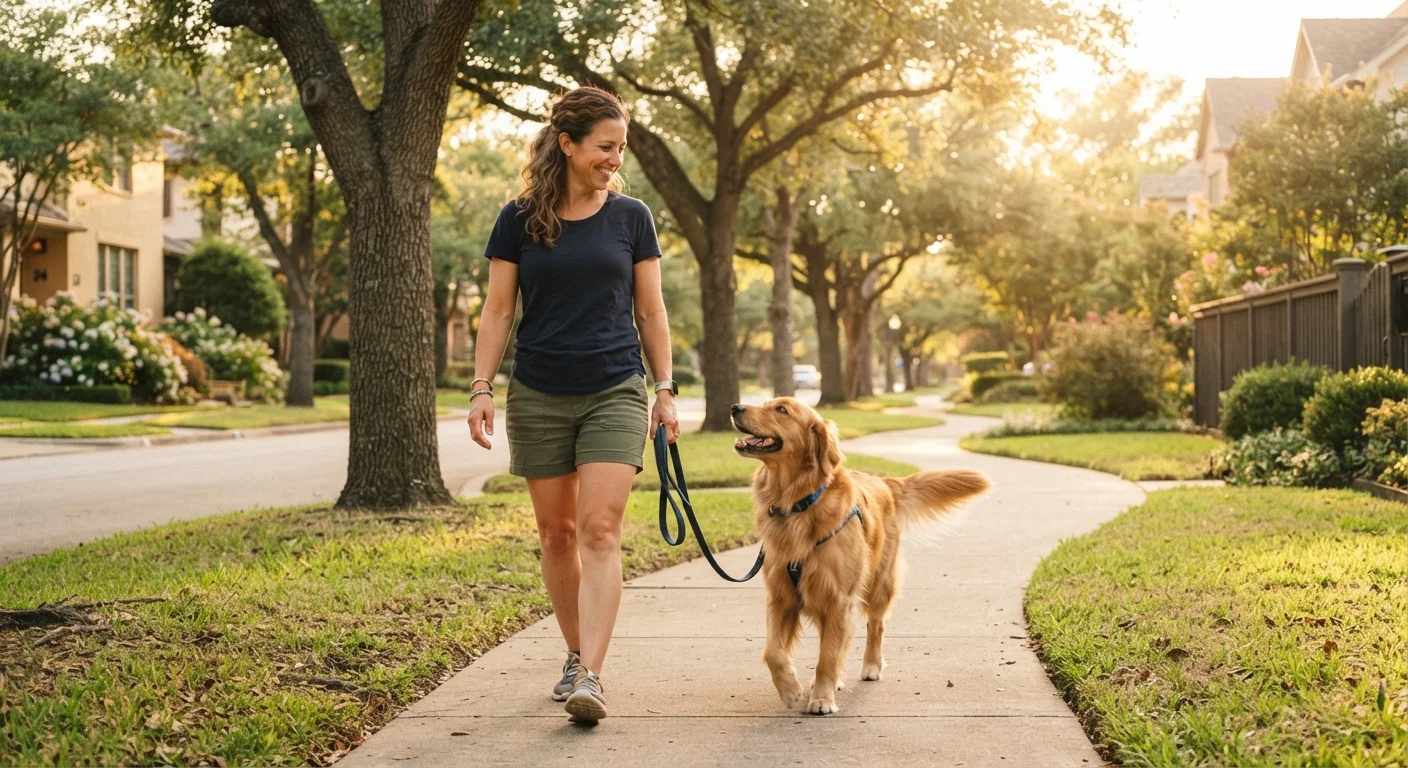
Photo: SaverSteals.com editorial
—— In This Article
Key Takeaways
- Loose-leash walking is a learned skill — consistency and short practice sessions matter most.
- Reward your dog for staying near you, not just for stopping when they pull.
- Start in low-distraction environments and gradually increase difficulty as your dog improves.
- Management tools like front-clip harnesses can reduce pulling while you train.
- Every family member who walks the dog should follow the same approach for faster results.
Why Loose-Leash Walking Is Worth the Effort
Pulling on the leash is one of the most common complaints dog owners have — and one of the most common reasons walks get cut short or skipped altogether. A dog that drags you down the street isn't just inconvenient; it can be unsafe for both of you, and it puts real strain on the human-animal bond. The good news is that loose-leash walking is a trainable skill at any age.
Understanding why dogs pull helps. Dogs walk faster than we do, and forward movement is inherently rewarding. If pulling has worked in the past — even occasionally — your dog has learned it's worth trying. The key is changing that equation consistently. For a deeper look at the mechanics behind this, our overview of how dogs learn explains operant conditioning in plain language.
Regular, enjoyable walks also contribute directly to your dog's physical wellbeing. Exercise supports a healthy weight and mental stimulation, which in turn improves overall behavior at home. Think of leash training as an investment in the whole relationship, not just a fix for one annoying habit.
Standard flat leash (4–6 feet)
Provides the right amount of slack to practice loose-leash technique without giving the dog too much freedom.
Front-clip harness
Redirects a pulling dog toward you rather than allowing forward momentum, reducing strain on both dog and handler.
High-value training treats
Motivates the dog to choose staying close over exploring; small, soft treats work best for rapid repetition.
Treat pouch or bait bag
Keeps rewards accessible so you can reinforce good behavior the moment it happens.
What You'll Need Before You Start
The right setup makes training significantly easier. You don't need a lot of gear, but a few key items will reduce frustration for both you and your dog.
What you will need
Avoid Retractable Leashes During Training
Retractable leashes constantly reward pulling with forward movement, which is the opposite of what you're teaching. Stick with a standard 4–6 foot leash while building loose-leash skills. Once your dog is reliable, you can reintroduce a retractable in appropriate open spaces if desired.
Step-by-Step: Building Loose-Leash Walking
Follow these steps in order, progressing only when your dog is consistently succeeding at the current stage. Rushing ahead when your dog isn't ready is the most common reason training stalls.
Introduce the leash in a calm setting
Clip the leash onto your dog's collar or harness and let them move around briefly at home. Practice simply standing still and rewarding your dog whenever they naturally drift toward your side. This builds a positive association between the leash and good things happening near you — before any outdoor distractions enter the picture.
Mark and reward the "beside you" position
Choose which side you'd like your dog to walk on and be consistent. When your dog moves into that position — roughly hip-level beside you — immediately mark the moment with a verbal cue like "yes" or a clicker, then deliver a treat. Repeat this in your driveway or yard until your dog starts offering the position voluntarily.
Take a few steps and reward movement together
Take two or three steps forward, then pause and reward your dog for keeping the leash loose and staying near you. Gradually increase the number of steps between rewards as your dog gets the idea. Keep early sessions to five to ten minutes — frequent short sessions are more effective than one long, frustrating walk.
Respond to pulling by stopping — not correcting
The moment you feel leash tension, stop walking completely. Stand still and wait. When the leash goes slack — even slightly — mark it and resume walking. This teaches your dog that pulling makes forward progress stop, while a loose leash means the walk continues. It requires patience, but it is one of the most durable lessons a dog can learn.
Add distractions gradually
Once your dog is reliable at home, move practice to a quiet street, then a park, then busier areas. Each new environment is a new challenge — drop back to rewarding more frequently when you introduce more distractions. If your dog is struggling, you've likely moved too fast; return to an easier setting and build success there first.
Practice every walk, not just training sessions
Loose-leash skills are reinforced or eroded on every single outing. Make it your standard: every walk is a training opportunity. Ask everyone in your household to follow the same rules — one person allowing pulling undoes progress quickly. For more structure, consider weaving leash practice into a consistent daily routine your dog can predict and thrive on.
Short Sessions Build Lasting Skills
Research in canine learning consistently supports brief, frequent training sessions over long, infrequent ones. Aim for two to three five-minute sessions daily rather than one 30-minute session. Ending on a win — a successful loose-leash moment — helps your dog finish with a positive association and come back ready to learn.
Troubleshooting Common Setbacks
Even with a solid approach, progress isn't always linear. If your dog regresses after a period of success, consider what changed: a new route, a new schedule, or a stressful event can all temporarily affect behavior. If your dog seems to be ignoring your cues entirely, our article on why dogs ignore commands explores the real reasons this happens and how to address them.
Persistent Pulling May Signal an Underlying Issue
If your dog pulls intensely, lunges at other dogs or people, or shows signs of anxiety or reactivity on walks, a certified professional dog trainer or veterinary behaviorist can provide personalized guidance. General training advice is not a substitute for hands-on support when behavior is severe. This article offers general educational information, not a tailored training plan.
For most dogs, patience and consistency over several weeks will produce a noticeably calmer walk. Celebrate small wins — a five-second loose leash in a busy environment is genuine progress. As your dog's confidence and skills grow, walks become one of the best parts of your shared pet lifestyle together.
This article provides general educational information about dog training techniques and is not a substitute for personalized guidance from a qualified trainer or veterinary professional.

Pets Editorial Team
Pets Editorial Team is the collective byline for our editorial team and contributor network. Articles published under this byline or an editorial pen name are researched, written, and reviewed according to our editorial standards for clarity, consistency, and independence before publication.
View author profile