
Reading Your Auto Insurance Declarations Page
Your declarations page is the snapshot of your entire policy. Learn how to find coverage limits, deductibles, and exclusions at a glance.
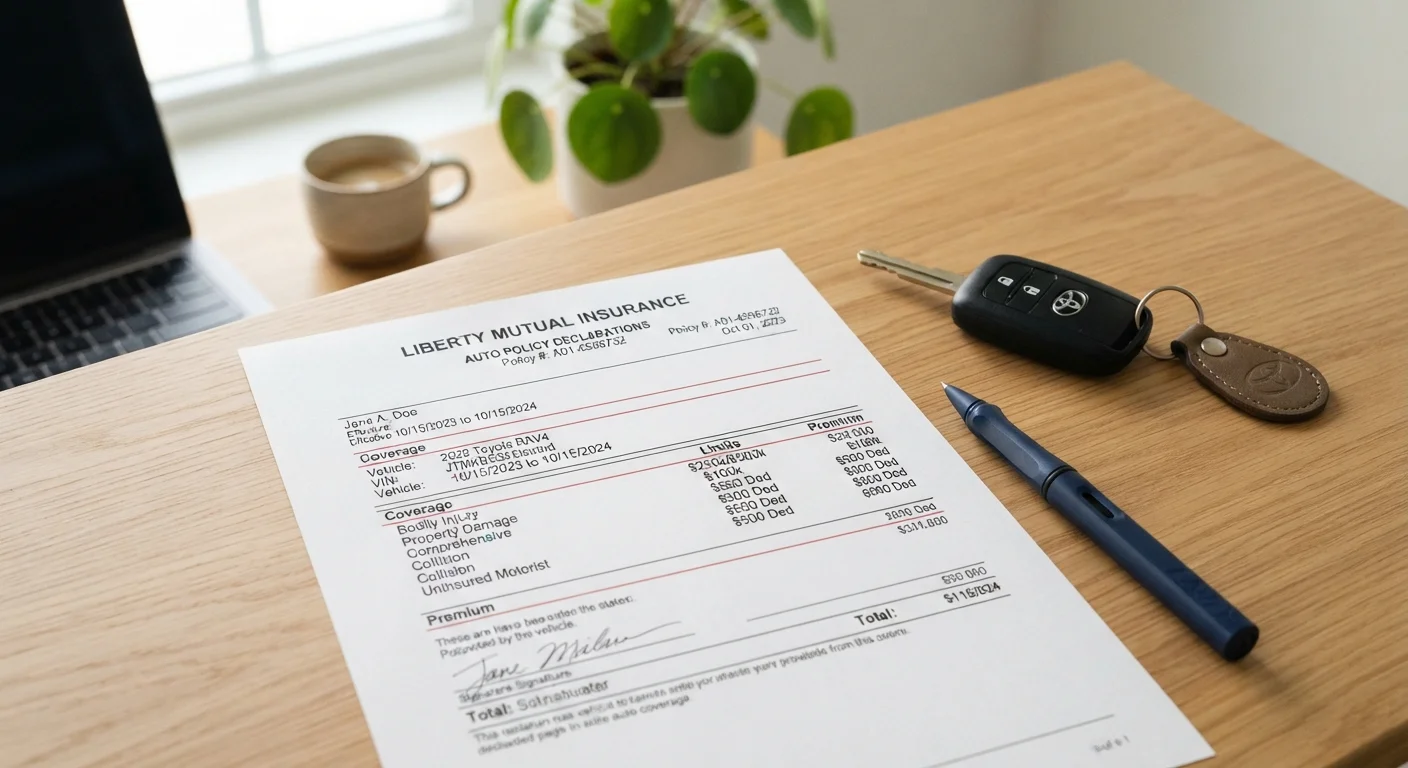
Photo: SaverSteals.com editorial
—— In This Article
Key Takeaways
- Your declarations page is a one- or two-page summary of your entire auto insurance policy.
- It lists every coverage type you carry, along with its limit and deductible.
- Named drivers, vehicle details, and the policy period are all verified on this document.
- Spotting errors early on your dec page can prevent claim denials later.
- Coverage limits directly affect how much your insurer will pay after a loss.
What a Declarations Page Actually Is
Every auto insurance policy comes with a declarations page — commonly called a dec page — which acts as a condensed summary of your entire policy. While the full policy document can run dozens of pages of legal language, the dec page distills the essential facts onto one or two pages. It tells you who is covered, what vehicles are insured, what coverages are in place, and how much you're paying.
Insurers mail or email a new dec page at the start of every policy period and whenever you make a mid-term change. If you've never taken a close look at yours, you may be missing critical details — including gaps or errors that could affect a future claim. For broader context on how policies are structured, our Auto Insurance From the Ground Up guide is a helpful starting point.
Current Declarations Page
The primary document you'll be reading and verifying throughout this process.
Previous Policy's Dec Page
Useful for comparing coverage changes between renewal periods.
State Minimum Coverage Reference
Helps you confirm whether your listed limits meet your state's legal requirements.
How to Read It, Step by Step
Reading a declarations page is straightforward once you know what each section represents. Follow the steps below to work through your own dec page systematically.
What you will need
Locate the Named Insured and Policy Period
At the very top of your declarations page, you'll find the named insured — the policyholder — along with their mailing address. Verify that your name and address are spelled correctly. Below or beside that, the policy period shows the exact start and end dates of your coverage. Confirm these dates align with when you expect to be covered.
Identify Each Vehicle on the Policy
Your dec page lists every insured vehicle by year, make, model, and Vehicle Identification Number (VIN). Cross-reference the VIN against the number on your dashboard or title. If you've added or removed a vehicle since the last renewal, confirm those changes are reflected here.
Review Your Coverage Types and Limits
This is the most detailed section of the dec page. Each line names a coverage type and shows the corresponding limit — the maximum your insurer will pay for a covered loss. Common entries include:
- Bodily Injury Liability — often expressed as two numbers (e.g., 100/300), meaning $100,000 per person and $300,000 per accident
- Property Damage Liability — covers damage your vehicle causes to someone else's property
- Collision — pays for damage to your vehicle from an at-fault accident
- Comprehensive — covers non-collision events like theft, weather, or fire
- Uninsured/Underinsured Motorist — protects you when an at-fault driver has insufficient coverage
- Medical Payments or PIP — covers medical expenses for you and passengers regardless of fault
For a deeper breakdown of what each type protects, see our guide to auto insurance coverage types.
Note Your Deductibles
For physical damage coverages like collision and comprehensive, the dec page will show a deductible — the amount you pay out of pocket before insurance covers the rest. A higher deductible typically lowers your premium, while a lower deductible means more insurer responsibility. Confirm the deductible amount is what you agreed to when you purchased or renewed the policy.
Check for Endorsements and Exclusions
Endorsements are additions or modifications to your base policy — such as roadside assistance or rental reimbursement. They appear either as line items on the dec page or as attached documents. Exclusions are situations your policy won't cover; these are usually detailed in the full policy document rather than the dec page itself, but the dec page may reference them. Understanding what's excluded is just as important as knowing what's covered — our article on common auto insurance misunderstandings covers several that catch drivers off guard.
Confirm Your Premium and Billing Schedule
The dec page will show your total policy premium for the coverage period. If you pay in installments, the billing schedule may be listed separately or noted on the page. Compare this figure to what you were quoted to ensure no unexpected changes occurred at renewal.
Errors on Your Dec Page Have Real Consequences
If your vehicle VIN, driver list, or coverage dates contain mistakes, a claim could be delayed or denied. Review your declarations page as soon as you receive a new or renewed policy. Contact your insurer or agent immediately if anything looks incorrect — do not wait until you need to file a claim.
Low Limits Can Leave You Exposed
State minimum liability limits are often far below the actual cost of a serious accident. If your liability coverage is exhausted, you may be personally responsible for the remaining damages. Consider whether your current limits reflect your assets and risk tolerance, and consult a licensed insurance agent for guidance tailored to your situation.
Why These Details Affect Your Rate
Your dec page isn't just a confirmation document — it's also a window into why your premium is what it is. Insurers set rates based on the combination of coverages selected, the limits chosen, the deductibles set, the drivers listed, and the vehicles insured. Higher limits and lower deductibles increase premiums; adding young or high-risk drivers does the same.
Understanding how liability, comprehensive, and collision coverage differ helps you evaluate whether your current selections reflect your actual needs. If you're considering adjustments, our guide on comparing auto insurance options can help you approach that process systematically.
Keep Your Dec Page Accessible
Store a digital copy of your declarations page on your phone or in a cloud folder. If you're in an accident, you'll want quick access to your policy number, coverage types, and insurer contact information. Most insurers also offer mobile apps where the dec page is always available.
This article provides general insurance information for educational purposes only and is not personalized insurance, financial, or legal advice. Coverage terms, limits, exclusions, and regulations vary by insurer and by state. Always read your actual policy documents and consult a licensed insurance agent or adviser for guidance specific to your situation.

Insurance Editorial Team
Insurance Editorial Team is the collective byline for our editorial team and contributor network. Articles published under this byline or an editorial pen name are researched, written, and reviewed according to our editorial standards for clarity, consistency, and independence before publication.
View author profile