
Auto Insurance From the Ground Up
New to auto insurance? This guide walks through how policies work, what you're required to carry, and how premiums are calculated.
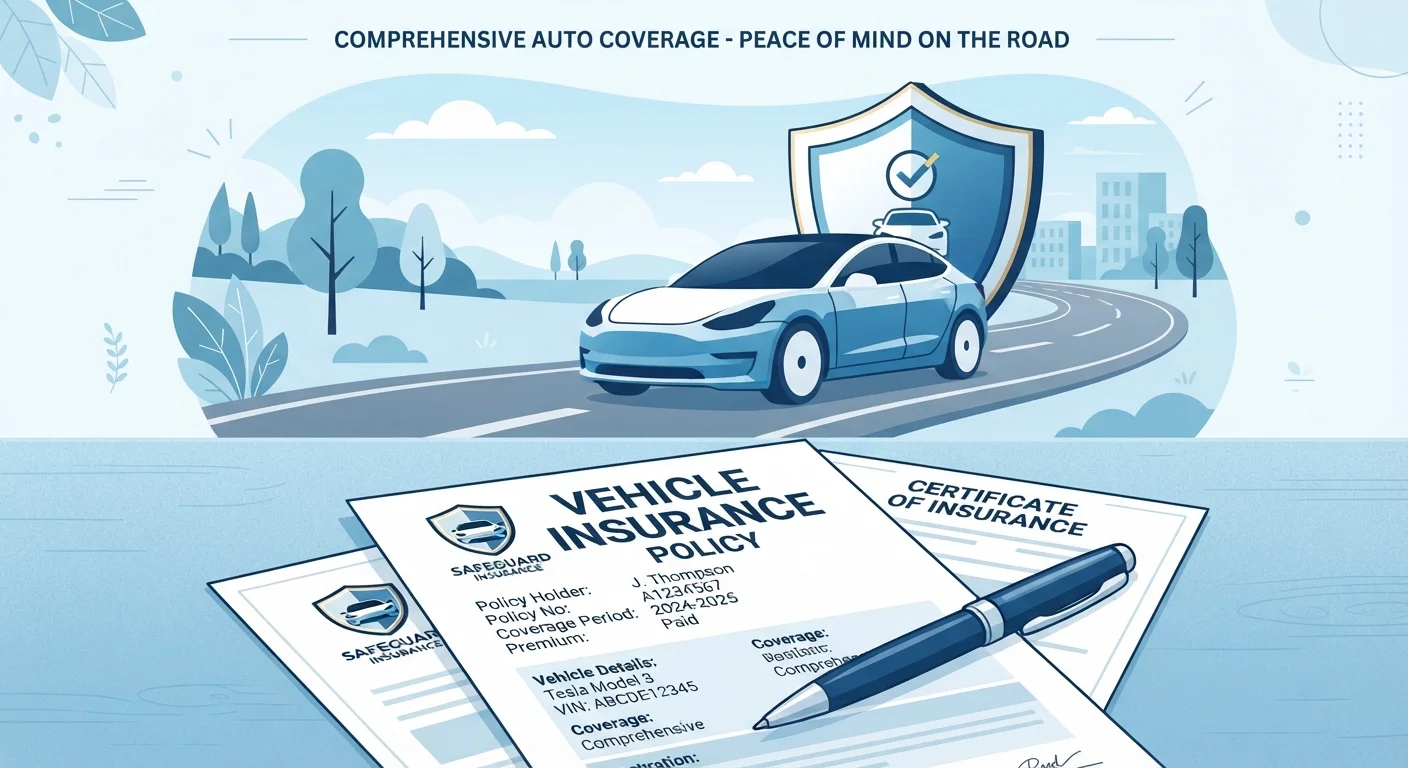
Photo: SaverSteals.com editorial
—— In This Article
Key Takeaways
- Auto insurance is a contract where you pay premiums in exchange for financial protection against defined losses.
- Most states require at least liability coverage; the minimums vary significantly by state.
- Premiums are shaped by your driving record, vehicle type, location, and the coverage limits you choose.
- A declarations page summarizes your entire policy at a glance — learn how to read it.
- Optional coverages like comprehensive and collision are often required by lenders if you finance a vehicle.
What Auto Insurance Actually Is
Auto insurance is a legal contract between you and an insurance company. You pay a premium — a regular fee, usually monthly or semi-annually — and the insurer agrees to cover certain financial losses defined in the policy. When a covered event occurs, you file a claim, and the insurer pays up to the limits you selected, minus any deductible you owe.
Think of it as a risk-sharing arrangement. Instead of facing a potentially devastating expense alone — say, a $40,000 repair bill after a serious accident — you spread that risk across a pool of policyholders. No outcome is guaranteed; coverage depends entirely on the terms of your specific policy. This article is general educational information, not personalized insurance advice. Always read your actual policy documents and consult a licensed agent for guidance on your situation.
Premium
The amount you pay your insurer on a regular schedule — monthly, semi-annually, or annually — to keep your policy active.
Deductible
The fixed dollar amount you pay out of pocket on a claim before your insurance coverage kicks in.
Coverage limit
The maximum dollar amount your insurer will pay for a covered loss. Costs beyond this limit are your responsibility.
Liability coverage
Insurance that pays for injuries or property damage you cause to other people. It does not cover your own vehicle or injuries.
Declarations page
A summary document provided with your policy that lists your coverages, limits, deductibles, vehicles, and premium in one place.
Claim
A formal request you submit to your insurer asking them to pay for a loss covered under your policy.
Coverage Types Every Driver Should Know
A single auto insurance policy can bundle several distinct coverages, each protecting against different scenarios. Understanding what each one does is essential before you choose limits or compare options. Our in-depth article on liability vs. comprehensive vs. collision coverage goes further into how these types differ in practice.
- Liability: Pays for injuries and property damage you cause to others. It does not cover your own vehicle or injuries.
- Collision: Covers damage to your car from a collision with another vehicle or object, regardless of fault.
- Comprehensive: Covers non-collision losses — theft, weather, vandalism, animal strikes.
- Uninsured/Underinsured Motorist (UM/UIM): Protects you if the at-fault driver has no insurance or not enough to cover your losses.
- Medical Payments (MedPay) / Personal Injury Protection (PIP): Covers medical costs for you and your passengers after an accident, regardless of fault.
Match Coverage to What You Actually Own
If your car is older and its market value is low, paying for collision and comprehensive coverage may cost more annually than the car is worth. A licensed agent can help you weigh whether optional coverages make financial sense for your specific vehicle.
What States Require You to Carry
Every state sets its own minimum coverage requirements. The most common mandate is liability insurance, expressed as split limits — for example, 25/50/25 means $25,000 per person for bodily injury, $50,000 per accident, and $25,000 for property damage. Some states also require PIP or UM/UIM coverage.
State minimums are a legal floor, not a recommended amount. If you cause serious injuries and your limits are exhausted, you may be personally responsible for the remainder. Financing a vehicle typically adds another layer of requirements: lenders generally require collision and comprehensive coverage to protect their financial interest in the car. For a fuller picture of what vehicle ownership actually costs, including insurance, see our guide on what first-car ownership actually costs.
State Minimums May Not Be Enough
Minimum liability limits required by your state are often lower than what a serious accident can actually cost. If damages exceed your limits, you could be personally liable for the difference. Review your limits carefully and consider whether higher coverage is appropriate for your situation.
How Insurers Calculate Your Premium
Your premium is not arbitrary. Insurers use actuarial data to estimate how likely you are to file a claim and how costly that claim might be. Several factors are commonly weighted:
- Driving record: At-fault accidents, traffic violations, and DUI convictions typically raise rates significantly.
- Vehicle type: Repair costs, safety ratings, and theft rates for your specific make and model all influence pricing.
- Location: Urban areas with higher accident frequency or theft rates generally carry higher premiums than rural areas.
- Coverage limits and deductibles: Higher limits cost more; higher deductibles lower your premium but increase your out-of-pocket cost per claim.
- Credit-based insurance score: Permitted in most states as one rating factor.
- Annual mileage: More time on the road generally means more exposure to risk.
Because rating factors and their weights vary by insurer and state, two drivers with similar profiles may receive meaningfully different quotes. Consulting a licensed agent can help you understand what's driving your specific rate. For context on how auto insurance fits alongside other personal insurance needs, explore the Car Ownership Basics hub.
Reading a Declarations Page
Every policy comes with a declarations page (often called the "dec page") — a one- or two-page summary of your coverage. Learning to read it helps you confirm you have what you think you have. Key items to locate:
- Named insured
- The person(s) covered under the policy. Verify this is correct.
- Policy period
- The start and end dates of coverage. Gaps between renewal periods leave you uninsured.
- Covered vehicles
- The VIN, year, make, and model of each insured vehicle.
- Coverage summary
- A line-by-line list of each coverage type, its limit, and its deductible.
- Premium breakdown
- What you're paying for each coverage component.
If anything on the dec page doesn't match what you discussed with your agent or what you intended to purchase, contact your insurer promptly. Discrepancies discovered after a loss are much harder to resolve. Insurance terms, exclusions, and available coverages vary by provider and state — always refer to your complete policy documents for the definitive terms of your coverage.
This article is for general informational purposes only and does not constitute personalized insurance, financial, or legal advice. Coverage availability, requirements, and costs vary by provider, state, and individual circumstances. Consult a licensed insurance professional for guidance specific to your situation.
Frequently Asked Questions

Insurance Editorial Team
Insurance Editorial Team is the collective byline for our editorial team and contributor network. Articles published under this byline or an editorial pen name are researched, written, and reviewed according to our editorial standards for clarity, consistency, and independence before publication.
View author profile