
Auto Insurance Coverage Types, Decoded
Liability, collision, comprehensive — learn what each auto insurance coverage type actually protects and when it applies to you.
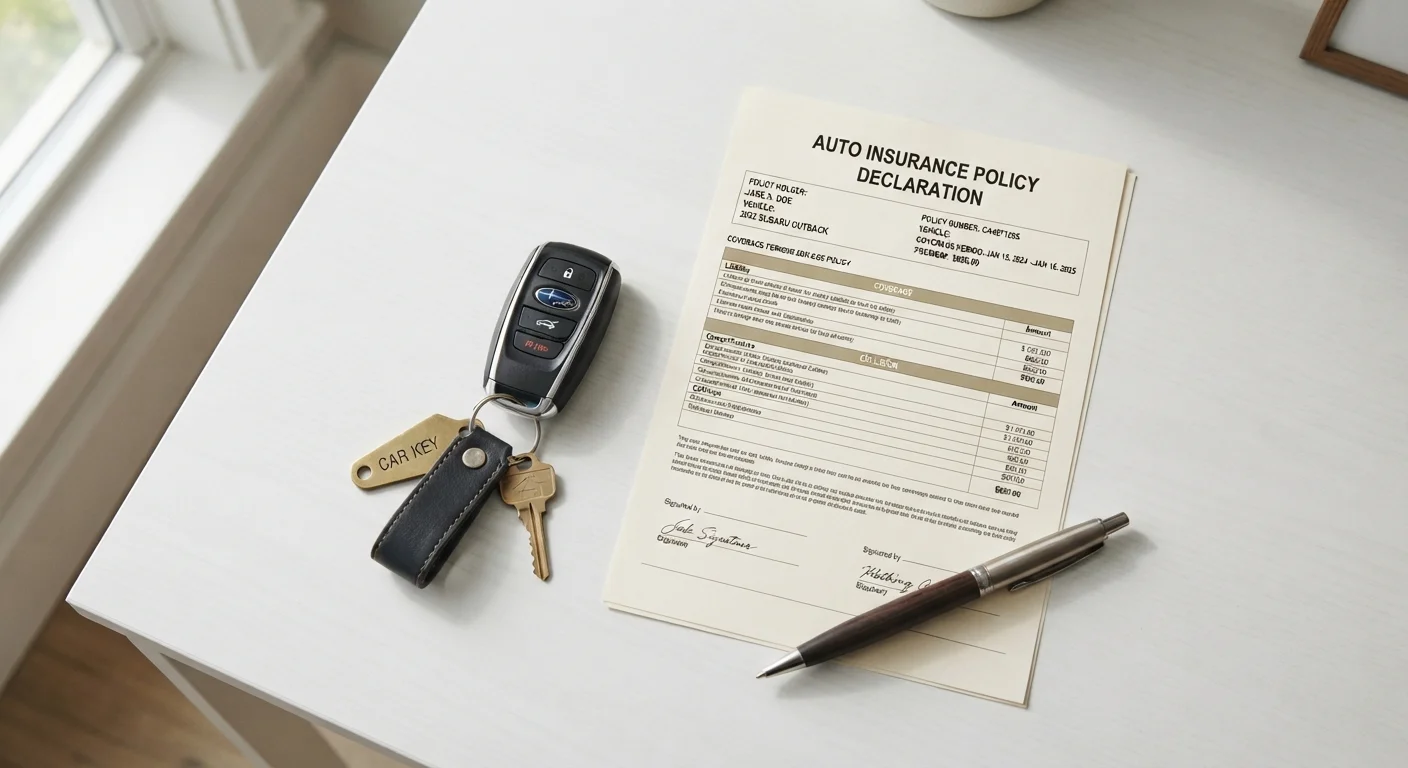
Photo: SaverSteals.com editorial
—— In This Article
Key Takeaways
- Liability coverage pays for damage or injuries you cause to others — not for your own vehicle.
- Collision coverage repairs your car after an accident, regardless of who is at fault.
- Comprehensive coverage protects against non-collision events like theft, weather, and falling objects.
- Uninsured/underinsured motorist coverage fills the gap when the at-fault driver lacks adequate insurance.
- Medical payments or personal injury protection covers your medical costs after a crash, regardless of fault.
- Each coverage type has its own deductible and limit — reading your declarations page is essential.
Liability Coverage: Your Legal Foundation
Liability coverage is the backbone of nearly every auto policy — and the one type most states legally require. It pays for bodily injury and property damage that you cause to other people in an accident. If you rear-end another vehicle, liability covers the other driver's medical bills and vehicle repairs, up to your policy limits.
Critically, liability does not cover your own injuries or vehicle damage. It is outward-facing protection. Policies express liability limits in a split format such as 100/300/100, meaning $100,000 per injured person, $300,000 per accident for all injuries, and $100,000 for property damage. Choosing limits well above the state minimum is worth understanding, because if a judgment exceeds your limit, you may owe the difference personally.
For a deeper look at how state minimums are structured, see state minimum auto insurance requirements.
Know Your Limits Before You Need Them
Your liability limits are printed on your declarations page — the summary document at the front of your policy. Review them annually and consider whether they reflect your current financial situation. If a serious accident results in a judgment that exceeds your limits, your personal assets could be at risk. A licensed insurance agent can walk you through whether your current limits make sense.
Collision and Comprehensive: Protecting Your Own Vehicle
While liability points outward, collision and comprehensive both point inward — they pay to repair or replace your vehicle under different circumstances.
Collision coverage applies when your car is damaged by impact — whether you hit another vehicle, a guardrail, or a tree. Fault does not determine whether collision pays; it activates based on the event type. You pay your deductible, and collision covers the rest up to the vehicle's actual cash value (ACV).
Comprehensive coverage addresses losses that are not caused by a collision: theft, vandalism, fire, flooding, hailstorms, and animal strikes are common examples. If a deer runs into your car or a falling branch dents your roof, comprehensive is what responds.
These two coverages are often purchased together but are priced and deducted separately. For a side-by-side breakdown, collision vs. comprehensive coverage explains the distinction in full detail.
~13%
U.S. drivers estimated to be uninsured
According to Insurance Research Council estimates, roughly 1 in 8 drivers on U.S. roads carries no auto insurance, reinforcing the value of uninsured motorist coverage.
3 in 10
Auto claims involve collision damage
Industry data consistently shows collision as one of the most frequently filed auto insurance claim types, making it the most commonly used physical damage coverage.
~80%
Insured drivers carry comprehensive
The Insurance Information Institute reports that the majority of insured drivers in the U.S. carry comprehensive coverage, often because lenders require it on financed vehicles.
Uninsured and Underinsured Motorist Coverage
Even in states that require liability insurance, a meaningful share of drivers on the road carry no coverage at all — and others carry limits too low to cover a serious accident. Uninsured motorist (UM) coverage protects you when you are hit by one of those drivers. Underinsured motorist (UIM) coverage picks up where an at-fault driver's liability policy leaves off.
Both coverages can apply to bodily injury — and in some states, property damage as well. They are optional in most states, but declining them without understanding the gap they fill is a common oversight. Common auto insurance misconceptions include assuming the other driver's insurance will always be sufficient.
No-Fault States Have Different Rules
In no-fault states, your own PIP coverage pays your injury costs first — regardless of who caused the crash — and your ability to sue the other driver may be limited unless injuries meet a defined severity threshold. The rules vary significantly by state. If you live in a no-fault state, understanding how PIP interacts with your health coverage and liability limits is especially important. Check your state's insurance department website for specifics.
Medical Payments and Personal Injury Protection
Medical payments coverage (MedPay) pays for reasonable medical expenses for you and your passengers after a crash, regardless of who caused it. It is typically available in relatively modest limits and is designed to work alongside health insurance, not replace it.
Personal injury protection (PIP) is broader and is required in no-fault states. In addition to medical expenses, PIP can cover lost wages, rehabilitation costs, and sometimes services like childcare affected by an injury. No-fault laws require each driver to use their own PIP before pursuing the other driver's liability coverage.
Neither MedPay nor PIP covers vehicle damage — they are strictly injury-related coverages. Understanding how these interact with your health plan is essential, particularly if your health policy has high deductibles. For unfamiliar terms, the auto insurance terms glossary is a useful reference.
This article is for general informational purposes only and does not constitute personalized insurance, financial, or legal advice. Coverage terms, availability, and requirements vary by state and insurer. Consult a licensed insurance professional and read your actual policy documents before making coverage decisions.
Frequently Asked Questions

Insurance Editorial Team
Insurance Editorial Team is the collective byline for our editorial team and contributor network. Articles published under this byline or an editorial pen name are researched, written, and reviewed according to our editorial standards for clarity, consistency, and independence before publication.
View author profile