
The Auto Insurance Terms Glossary Every Driver Should Know
Deductible, subrogation, underinsured motorist — a plain-language reference for the most commonly misunderstood auto insurance terms.
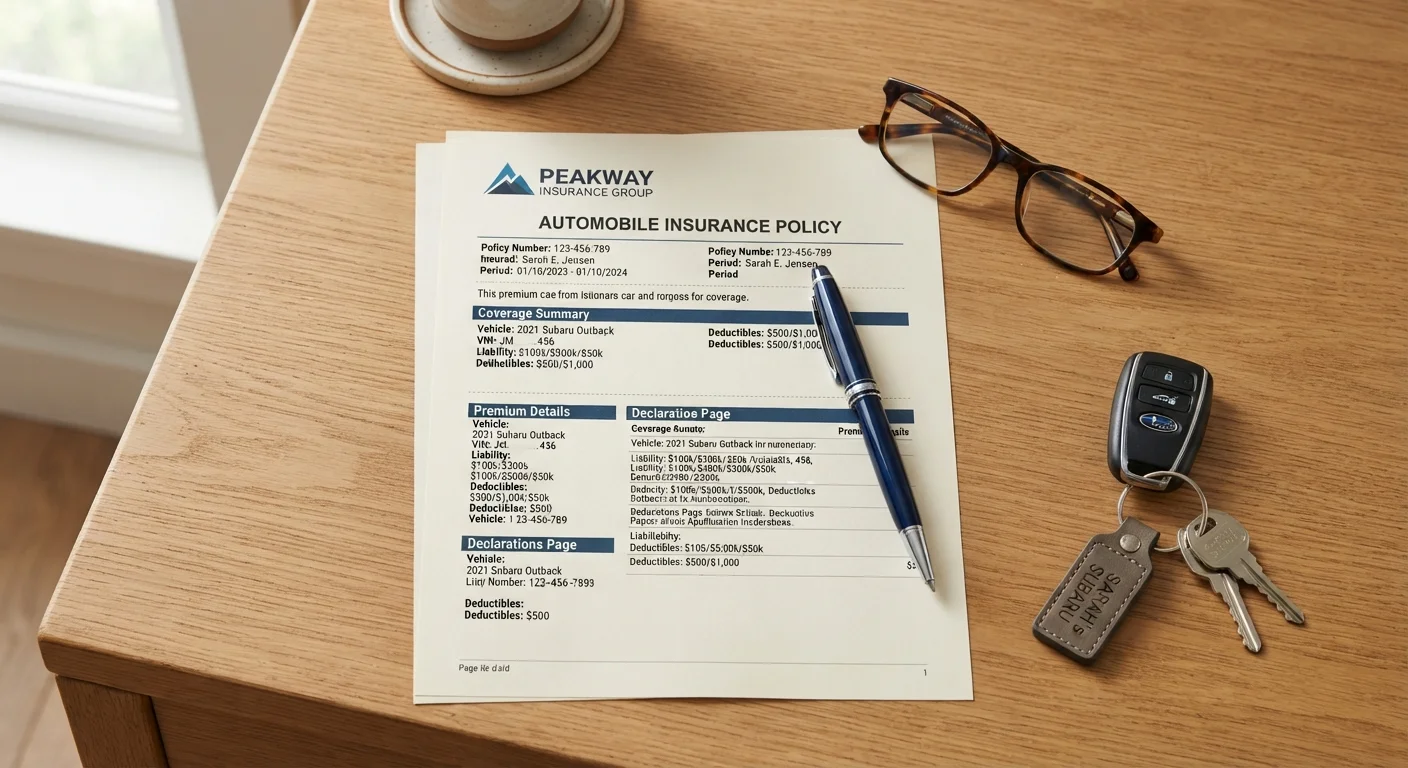
Photo: SaverSteals.com editorial
—— In This Article
Why Policy Language Matters
Auto insurance policies are legal contracts, and the specific words they use carry precise meaning. Misreading a term — or skipping over it — can lead to surprises when a claim is filed. This glossary covers the terms that appear most frequently in US auto policies, with plain-language explanations designed to help you read your own documents with confidence.
For a deeper look at how individual coverage types work together, see our guide to auto insurance coverage types. If you want to explore optional features beyond standard coverage, auto insurance add-ons worth understanding explains common policy endorsements.
| Minimum coverage requirement | Required in 49 of 50 US states (New Hampshire is the exception, with conditions) (State-specific requirements vary; verify with your state's DMV or insurance department) |
| Common liability limit format | Written as three numbers, e.g., 25/50/25 (bodily injury per person / per accident / property damage) |
| Typical deductible range | $250 to $1,500 for collision and comprehensive (Exact options vary by insurer and state) |
| At-fault vs. no-fault states | Approximately 12 states operate under no-fault insurance rules, affecting how claims are filed (Insurance Information Institute; state rules subject to legislative change) |
| Policy period | Most personal auto policies renew every 6 or 12 months |
Core Coverage and Cost Terms
These are the terms most directly tied to what you pay and what your policy will pay out.
Premium
The amount you pay — monthly, semi-annually, or annually — to keep your auto insurance policy active. Your premium is calculated based on factors such as your driving history, vehicle type, location, and the coverage levels you choose.
Deductible
The dollar amount you agree to pay out of pocket before your insurer covers the remaining eligible claim costs. For example, a $500 deductible on a $2,000 repair means you pay $500 and your insurer pays $1,500.
Liability Coverage
Covers costs you become legally responsible for if you injure someone or damage their property in an accident. It does not cover your own injuries or vehicle damage. Most states require drivers to carry a minimum level of liability coverage.
Collision Coverage
Pays to repair or replace your vehicle if it is damaged in a collision with another car or object, regardless of who was at fault. This coverage is subject to your deductible.
Comprehensive Coverage
Covers vehicle damage from non-collision events such as theft, vandalism, fire, hail, flooding, or animal strikes. Like collision coverage, it is subject to a deductible.
Uninsured Motorist Coverage
Protects you if you are hit by a driver who has no auto insurance. It can cover your medical bills and, in some states, vehicle repair costs. Many states require this coverage.
Underinsured Motorist Coverage
Steps in when the at-fault driver has insurance, but their policy limits are too low to fully cover your damages. It bridges the gap between the other driver's limit and your actual costs.
Declarations Page
A summary page at the front of your policy that lists your name, coverage types, coverage limits, deductibles, and policy period. It is the quickest way to confirm what protection you have in place.
Coverage Limit
The maximum dollar amount your insurer will pay for a covered claim. Limits are often expressed per person and per accident (e.g., 100/300 for bodily injury liability). Costs beyond the limit are your responsibility.
Subrogation
The right of your insurer to pursue legal or financial recovery from the party responsible for a loss after paying your claim. This process generally happens between insurers and does not require active participation from you.
Exclusion
A specific situation, person, or type of damage that your policy explicitly does not cover. Common exclusions include intentional damage, using your personal vehicle for commercial delivery, and damage caused by mechanical breakdown.
Gap Insurance
An optional coverage that pays the difference between your vehicle's actual cash value at the time of a total loss and the remaining balance on your auto loan or lease. Particularly relevant for newer vehicles that depreciate quickly.
Understanding how deductibles and premiums interact is especially useful when comparing policy options. A higher deductible generally means a lower premium — but it also means more out-of-pocket expense before your insurer steps in. Neither choice is universally better; it depends on your financial situation and risk tolerance.
Many drivers also encounter the term named insured, which refers to the person (or persons) specifically listed on the policy. Additional drivers in a household may need to be listed separately to be covered consistently — check your policy's declarations page for details.
Liability, Fault, and Less-Familiar Terms
Several terms in auto insurance relate to how responsibility is assigned and how your insurer recovers costs. These appear less often in everyday conversation but are critical to understanding claims.
No-Fault vs. At-Fault States: A Key Distinction
In no-fault states, each driver's own insurer pays for their medical expenses after an accident, regardless of who caused it — this is handled through Personal Injury Protection (PIP) coverage. In at-fault states, the driver responsible for the accident (or their insurer) is liable for the other party's costs. The rules governing how claims are filed and what you can sue for differ significantly between these two systems. Check your state's insurance department website to understand which framework applies where you live.
Subrogation is one of the most overlooked concepts in auto insurance. It refers to your insurer's legal right to pursue the at-fault party (or their insurer) to recover money paid on your claim. In practical terms: if another driver hits you, your insurer may pay your repairs first and then seek reimbursement from the at-fault driver's insurer. You generally don't need to manage this process yourself, but you may be asked not to release the at-fault party from liability before your insurer has recovered costs.
Drivers who want to avoid claim misunderstandings should also review common misconceptions about what auto insurance covers. For financial terminology in a broader context, our glossary of saving and debt terms covers vocabulary that often surfaces alongside insurance decisions.
This article is for general informational purposes only and does not constitute personalized insurance, financial, or legal advice. Coverage terms, exclusions, and regulations vary by insurer, policy, and state. Always read your actual policy documents and consult a licensed insurance professional for guidance specific to your situation.

Insurance Editorial Team
Insurance Editorial Team is the collective byline for our editorial team and contributor network. Articles published under this byline or an editorial pen name are researched, written, and reviewed according to our editorial standards for clarity, consistency, and independence before publication.
View author profile