
Comparing Popular Dietary Approaches: Mediterranean, DASH, Low-Carb, and Plant-Based
A side-by-side look at four widely studied eating frameworks — how they differ in structure, evidence base, and practical fit for different lifestyles.
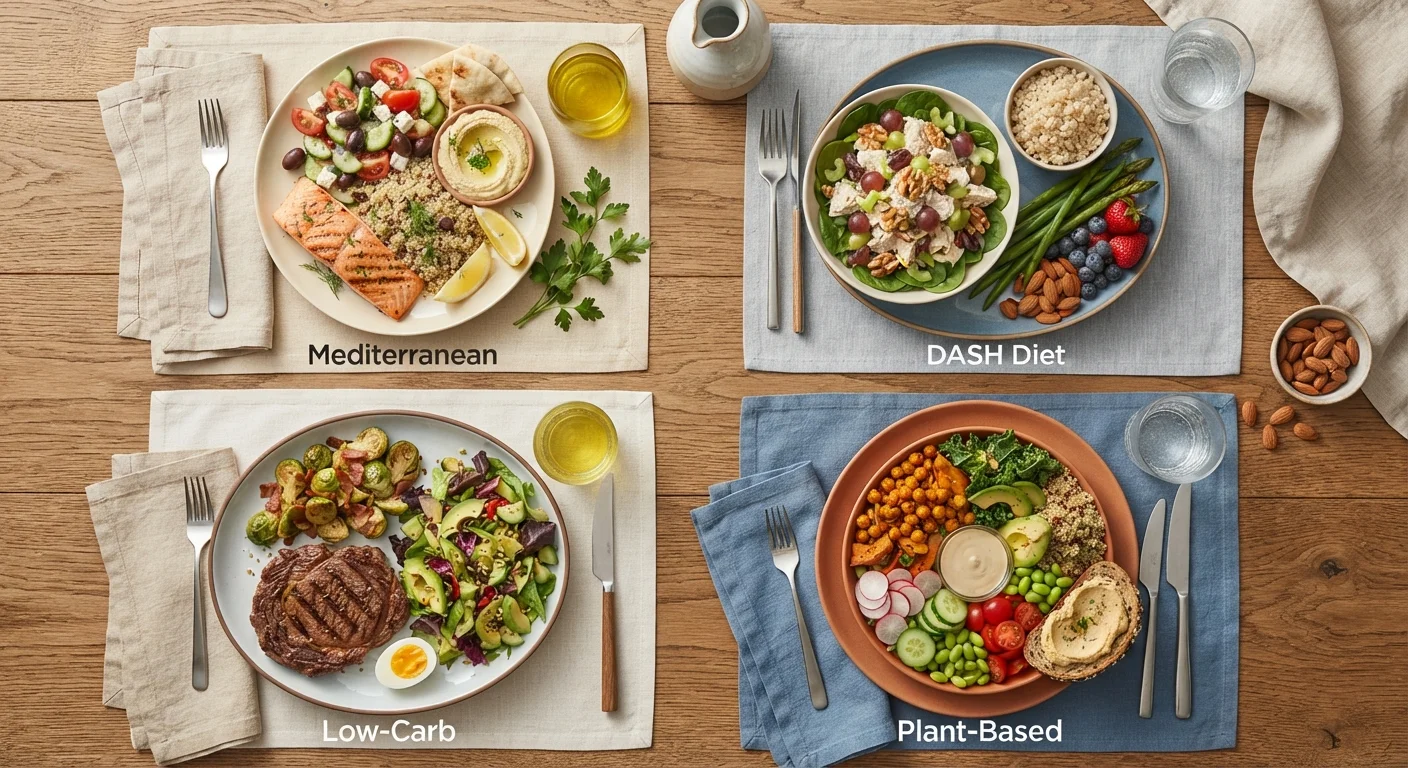
Photo: SaverSteals.com editorial
—— In This Article
Key Takeaways
- Mediterranean and DASH diets have the most extensive long-term research support among the four approaches.
- Low-carb diets show meaningful short-term benefits for blood sugar and weight, though long-term evidence is still developing.
- Plant-based eating offers strong cardiovascular and environmental benefits but requires attention to key nutrient gaps.
- No single dietary pattern is universally optimal — individual health context, preferences, and sustainability all matter.
- Consulting a registered dietitian or physician is the most reliable way to choose an approach suited to your needs.
How These Four Dietary Frameworks Are Defined
The terms Mediterranean, DASH, low-carb, and plant-based describe fundamentally different approaches to structuring meals — each with its own emphasis on food groups, macronutrient ratios, and underlying goals.
The Mediterranean diet is modeled on the traditional eating patterns of countries bordering the Mediterranean Sea. It emphasizes olive oil, vegetables, legumes, whole grains, fish, and moderate amounts of dairy and red wine, while limiting red meat and ultra-processed foods.
The DASH diet (Dietary Approaches to Stop Hypertension) was developed specifically to reduce blood pressure. It shares many elements with Mediterranean eating but places stricter limits on sodium and saturated fat while emphasizing potassium-rich foods such as fruits, vegetables, and low-fat dairy.
A low-carb diet restricts total carbohydrate intake, ranging from moderate reductions to very-low-carb ketogenic approaches. Fat and protein typically increase to compensate. The goal is often to lower blood glucose, reduce insulin response, or promote weight loss.
A plant-based diet centers on foods derived from plants — vegetables, fruits, legumes, grains, nuts, and seeds — while minimizing or eliminating animal products. This category spans everything from flexitarian to vegan patterns. For a practical introduction, see our plant-based starter framework.
Evidence Base and Health Outcomes
Research depth varies considerably across these four frameworks, and it's worth understanding what the evidence actually shows versus what is still emerging.
~30%
Cardiovascular event reduction in key trial
The PREDIMED trial found roughly a 30% reduction in major cardiovascular events among high-risk participants following a Mediterranean diet supplemented with olive oil or nuts, compared to a low-fat control group.
8–14 mmHg
Systolic blood pressure drop with DASH
Early DASH diet clinical trials found systolic blood pressure reductions in this range in participants with hypertension, according to findings published in the New England Journal of Medicine.
~0.5–1% reduction
HbA1c drop with low-carb in type 2 diabetes
Multiple systematic reviews have found that low-carbohydrate diets can reduce HbA1c (a measure of long-term blood sugar) in people with type 2 diabetes, though effects vary by individual and adherence.
The Mediterranean diet is among the most studied dietary patterns in nutritional science. Large observational studies and the landmark PREDIMED trial (a major randomized controlled trial conducted in Spain) found associations with reduced cardiovascular events, lower risk of type 2 diabetes, and improved cognitive outcomes. Researchers and public health bodies widely consider it one of the most evidence-supported general dietary patterns available.
The DASH diet emerged from rigorously designed clinical trials in the 1990s and has consistently demonstrated blood pressure reductions in adults, even without sodium restriction. Its cardiovascular benefits are well-established in the peer-reviewed literature.
Evidence for low-carb diets is robust for short-term weight loss and glycemic control, particularly in people with type 2 diabetes. However, long-term studies are fewer in number and less consistent. Questions remain about cardiovascular effects depending on the types of fat consumed. Common nutrition myths — including oversimplified views on dietary fat — are worth understanding before interpreting this research.
The plant-based evidence base is strong for cardiovascular risk reduction and lower rates of certain chronic diseases, drawn largely from large cohort studies such as the Adventist Health Studies. However, whole-food plant-based diets differ substantially from low-quality vegan patterns, so diet quality within the category matters enormously.
For a broader look at which patterns epidemiological research ties to long-term health, see eating patterns associated with long-term health.
Side-by-Side Comparison Across Key Criteria
The table below summarizes how each framework compares across practical and evidence-based dimensions. These are generalizations — individual implementation can shift many of these factors significantly.
| Mediterranean | DASH | Low-Carb | Plant-Based | |
|---|---|---|---|---|
| Primary health goal | Cardiovascular & overall health | Blood pressure reduction | Blood sugar & weight management | Cardiovascular & chronic disease prevention |
| Carbohydrate emphasis | Moderate, whole-grain focus | Moderate, whole-grain focus | Restricted, sometimes very low | Moderate to high, whole foods |
| Animal products allowed | Fish, poultry, limited red meat | Lean meats, low-fat dairy | All types, higher fat varieties common | Minimal to none |
| Strength of long-term evidence | Very strong | Strong | Moderate, growing | Strong for whole-food versions |
| Ease of social eating | High | Moderate | Low to moderate | Moderate |
| Key nutritional watch points | Portion balance, caloric density | Sodium tracking required | Fat quality, fiber intake | B12, iron, calcium, omega-3s |
| Flexibility and food variety | Very high | High | Moderate | Moderate to high |
It's also useful to consider how these frameworks interact with other eating strategies. Unlike the four patterns above, approaches such as intermittent fasting focus on timing rather than food composition. For a separate perspective, intermittent fasting evidence and limitations is worth reviewing.
Practical Fit and Sustainability
Research consistently shows that the most effective dietary pattern for any individual is the one they can sustain over the long term. Adherence is among the strongest predictors of real-world outcomes — stronger, in many studies, than which specific diet someone chooses.
Consistency Matters More Than Perfection
Nutritional research repeatedly finds that long-term dietary patterns — not individual meals — are what drive health outcomes. Rather than pursuing a rigid framework, many registered dietitians suggest starting with the eating pattern that feels most compatible with your current habits and preferences. Small, sustainable shifts over time tend to produce more durable results than dramatic overhauls that are hard to maintain.
The Mediterranean diet tends to score well on palatability and cultural adaptability. It allows a wide variety of foods and accommodates social eating. Its flexibility makes it easier for most people to maintain without feeling heavily restricted.
The DASH diet can require more deliberate label reading and meal planning to consistently meet sodium targets, which some people find harder to maintain when eating out frequently.
Low-carb approaches often require significant changes to food habits and can be socially challenging in carbohydrate-heavy food cultures. Some people experience side effects during initial adaptation (commonly called the "keto flu" in very-low-carb versions). These patterns may be a poor fit for people who are pregnant, have certain kidney conditions, or have a history of disordered eating — and professional guidance is strongly recommended before starting.
A plant-based approach requires careful attention to nutrients that are less abundant or less bioavailable from plant sources — including vitamin B12, iron, calcium, zinc, and omega-3 fatty acids. Without planning, nutritional gaps can develop. For practical guidance on building a nutritious cart to support any of these patterns, see grocery shopping with nutrition in mind.
This article is for general informational and educational purposes only and does not constitute medical or nutritional advice. Speak with a qualified healthcare professional or registered dietitian before making significant changes to your diet, especially if you have a medical condition.

Health Editorial Team
Health Editorial Team is the collective byline for our editorial team and contributor network. Articles published under this byline or an editorial pen name are researched, written, and reviewed according to our editorial standards for clarity, consistency, and independence before publication.
View author profile