
Clearance vs. Sale: What the Tag Actually Means for Furniture Shoppers
Clearance and sale labels aren't interchangeable. Learn what each pricing status signals and how it affects your negotiating position.
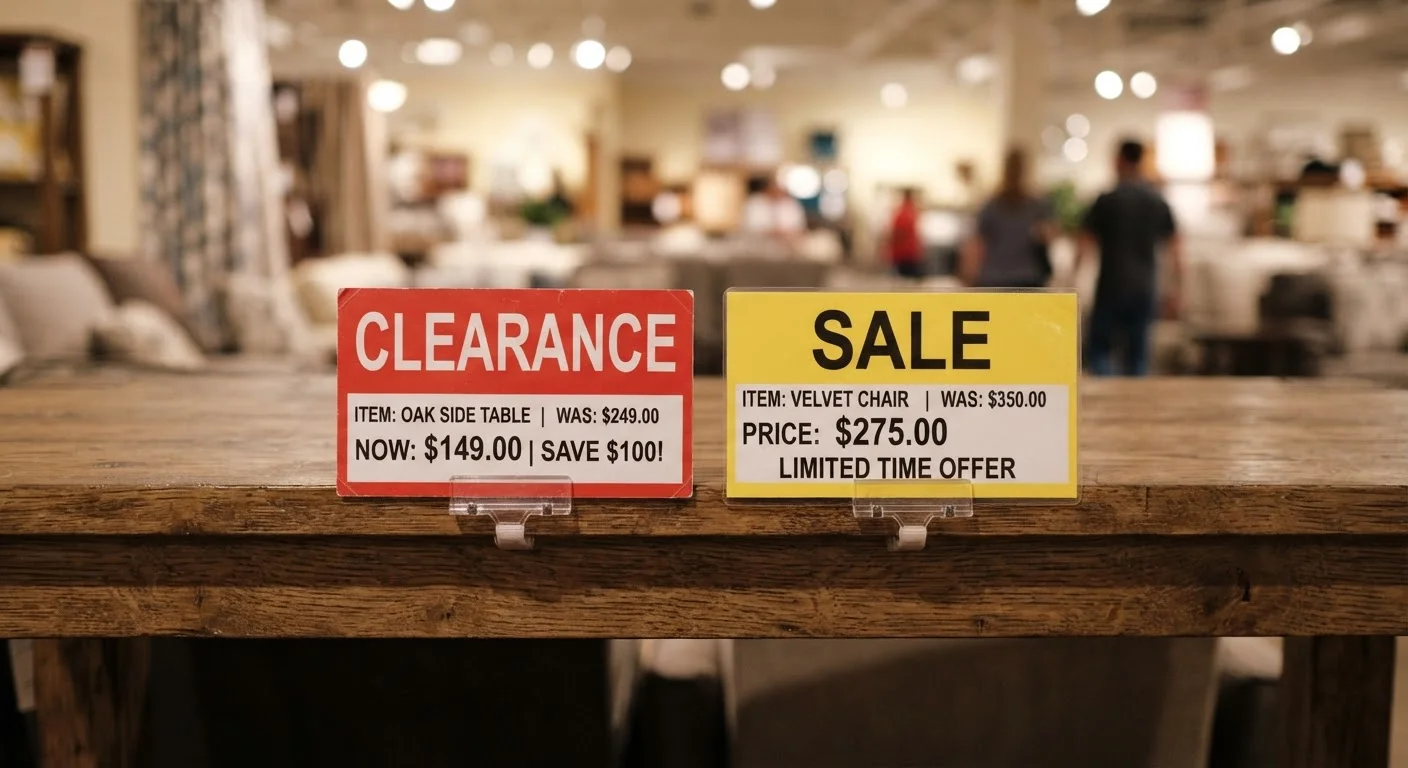
Photo: SaverSteals.com | Explore More. Shop Smarter. editorial
—— In This Article
Key Takeaways
- Clearance means the retailer is discontinuing or removing that item — it won't be restocked.
- Sale pricing is temporary and applies to items the store still actively carries.
- Clearance tags often signal stronger negotiating leverage, especially on floor models or damaged pieces.
- Sale discounts can disappear and return — clearance discounts typically deepen over time until stock is gone.
- Neither label guarantees the lowest possible price; always compare against regular pricing history.
What Each Tag Is Actually Telling You
Furniture retailers use clearance and sale to signal fundamentally different inventory situations — and confusing the two can cost you time, money, or both.
A sale tag means the retailer has temporarily reduced a price on an item they plan to continue stocking. The discount has an end date. When the event ends, the price reverts — and the item is still available. Sales are promotional tools designed to drive volume on current inventory.
A clearance tag means the opposite: the retailer is actively trying to remove that item from their inventory permanently. It may be a discontinued model, an end-of-season piece, a floor display being replaced, or simply overstock they can't move. The item will not be reordered. Once it sells, it's gone.
This distinction matters because it changes what you can reasonably expect and how much leverage you have. For a deeper breakdown of how retailers construct these pricing labels, see how furniture price tags work.
| Criterion | Clearance | Sale |
|---|---|---|
| Inventory status | Being discontinued or removed | Still actively stocked |
| Will it be restocked? | No | Yes |
| Price over time | Typically drops further if unsold | Reverts to regular price when sale ends |
| Negotiating leverage | Higher — retailer motivated to move stock | Lower — price is already set for the event |
| Selection available | Limited to remaining stock | Full range usually available |
| Best strategy | Act when the price meets your threshold | Wait for the right sale cycle if needed |
| Returns / exchanges | Often final sale — verify before buying | Usually standard return policy applies |
How Clearance Pricing Behaves Over Time
Clearance is not a static discount — it's a process. Most retailers apply an initial markdown when an item enters clearance, then take additional reductions at regular intervals if the piece doesn't sell. This means waiting can yield a lower price, but it also means risking that someone else buys it first.
Floor models and display pieces are a specific clearance sub-category worth understanding. These items have typically been handled by customers, may have minor cosmetic wear, and are sold as-is. That wear is often your best negotiating leverage — a visible scratch or missing cushion gives you a concrete reason to request an additional reduction.
Always Check the Return Policy on Clearance Items
Many retailers mark clearance furniture as final sale, meaning returns and exchanges are not accepted. Before purchasing a clearance piece — especially a floor model — confirm the store's policy in writing or on the receipt. This is especially important if the item requires assembly or delivery, where defects may only become apparent after the fact.
It's worth noting that "clearance" doesn't automatically mean the price is already at its lowest point. Some retailers mark items into clearance at only modest discounts initially. Compare the clearance price against the item's regular selling history before assuming it's a genuine deep discount. The furniture pricing myths article covers this in detail.
Timing and Strategy for Each Pricing Type
For sale pricing, timing is the primary lever. Furniture retailers in the U.S. tend to run their steepest sales around major holiday weekends — Memorial Day, Labor Day, and the period from Black Friday through January are historically active. If an item is on sale now but you're not ready to buy, there's a reasonable chance a comparable sale will recur. This is less true for clearance.
For clearance pricing, urgency is real but shouldn't be manufactured. Ask a sales associate directly: how long has this item been on clearance, and has the price already been reduced? Some staff can tell you when the next planned markdown is scheduled. If you're comfortable with the piece as-is and the price is already at a significant reduction, waiting for another markdown carries genuine risk.
If you're open to secondhand options entirely, used furniture can offer steeper reductions than either clearance or sale pricing on comparable pieces. For a broader view of how clearance functions across different retail categories, the clearance labels at home goods retailers article provides useful context on how markdowns are structured at different store types.
The core rule: treat clearance as a closing window and treat sale pricing as a recurring opportunity. Neither guarantees the lowest possible price — but knowing which situation you're in tells you exactly how to approach the purchase.

Furniture Editorial Team
Furniture Editorial Team is the collective byline for our editorial team and contributor network. Articles published under this byline or an editorial pen name are researched, written, and reviewed according to our editorial standards for clarity, consistency, and independence before publication.
View author profile