
What 'Clearance' Actually Means at Home Goods Retailers
Clearance labels aren't all equal. Understand the difference between end-of-season markdowns, discontinued items, and store display pieces.
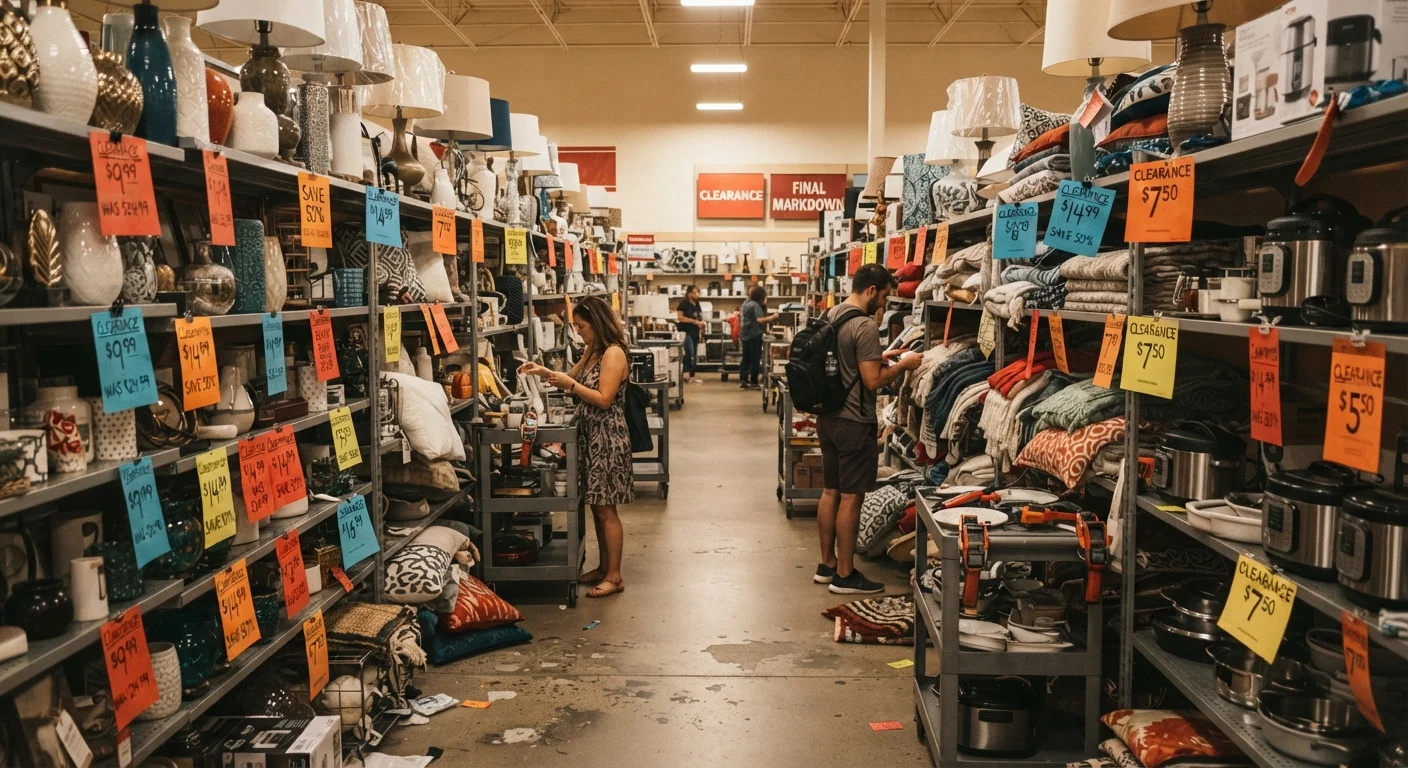
Photo: SaverSteals.com | Explore More. Shop Smarter. editorial
—— In This Article
Key Takeaways
- Clearance labels signal that a product will not be restocked, not simply that it is on temporary discount.
- Three common clearance triggers are end-of-season rotation, product discontinuation, and floor display retirement.
- Clearance prices at home goods retailers can vary significantly between stores carrying the same item.
- Inspect clearance home goods carefully — floor models and open-box items may show cosmetic wear.
- Return policies on clearance merchandise are frequently more restrictive than on regular-priced goods.
Why Retailers Create Clearance Sections
Clearance sections exist because retailers operate on planned inventory cycles. A home goods store orders merchandise months in advance based on seasonal demand forecasts, and when those forecasts don't match actual sales — or when a product line is simply being phased out — the retailer needs a fast, structured way to recover shelf space and recoup costs.
This is fundamentally different from a promotional markdown, which is a temporary incentive applied to items the store intends to keep selling. Clearance is a one-way exit for that product from the store's regular inventory. Understanding this distinction helps shoppers interpret what a clearance tag actually signals about availability, pricing depth, and the likelihood of finding the same item again.
For home décor and improvement shoppers in particular, this matters because home goods stores rotate seasonal inventory aggressively. A lamp collection introduced for spring may be cleared in late summer to make way for fall accent pieces — even if individual units sold reasonably well. The markdown reflects the retailer's scheduling, not necessarily a product flaw.
Clearance Is Not the Same as an Outlet
Clearance sections within a regular store sell inventory that was originally stocked at that location and is now being phased out. Outlet stores, by contrast, may carry goods manufactured specifically for the outlet channel or returned merchandise processed through a separate supply chain. The two terms are often confused but describe meaningfully different inventory origins. For more on this distinction in another product category, see how clearance and promotional discounts differ for toys.
The Three Main Types of Clearance at Home Goods Stores
Not every clearance tag originates from the same trigger. Recognizing the type of clearance can help you assess the item more accurately before buying.
End-of-Season Rotation
This is the most common form at home goods retailers. Seasonal décor — think outdoor cushions, holiday tableware, or garden planters — gets marked down as the relevant season closes. The products are typically in new condition and fully functional. The only reason for the discount is timing: the store needs shelf room for the incoming seasonal assortment.
Discontinued or Replaced Product Lines
When a manufacturer discontinues a product or a retailer decides not to reorder a line, remaining units move to clearance. This can affect anything from a specific paint color to an entire furniture collection. These items may still be widely available during the clearance window, but once they're gone, replacements won't arrive. If you're furnishing a room incrementally and need matching pieces, this type of clearance warrants caution. See our guide on clearance vs. sale tags for furniture shoppers for a closer look at how these signals affect larger purchases.
Floor Models and Display Units
Stores periodically retire display pieces — an assembled bookcase used on a showroom floor, a rug laid out for texture demonstrations, or a lamp wired for in-store lighting. These items are typically priced lower than standard clearance because they've experienced handling wear. Inspect them carefully before purchasing: check for scratches, missing hardware, or structural stress from assembly and disassembly.
3–4x
Typical inventory turnover cycles per year at major home goods retailers
Home goods retailers generally plan inventory in quarterly or seasonal cycles, meaning clearance rotations are a regular, structural part of their merchandising calendar rather than exceptional events.
20–70%
Typical clearance markdown range at home goods stores
Industry retail analysts observe that clearance markdowns at home goods chains often start around 20% and can deepen to 70% or more as items age on the clearance floor without selling.
Final sale
Return status on many clearance home goods items
A significant portion of clearance merchandise at home goods retailers is designated final sale, meaning standard return policies do not apply — a key factor to confirm before purchase.
How Clearance Pricing Actually Works
Retailers don't apply a uniform discount percentage to clearance items. Pricing is typically governed by internal markdown schedules — automated or manager-directed — that progressively reduce the price over time if units aren't selling. A piece that starts at 20% off may reach 50% or more if it remains on the clearance floor for several weeks.
Because markdown timing varies by location and inventory level, the same item may carry different clearance prices at different store locations within the same chain. This is worth knowing if you have flexibility to check multiple nearby stores, though it's rarely worth a long drive for a modest price difference.
Clearance pricing also intersects with other discount programs differently than regular pricing. Coupons, loyalty rewards, and store-wide promotional events may or may not apply to clearance items depending on retailer policy. Confirming this at checkout — rather than assuming — prevents surprises.
For a broader look at how clearance mechanics play out across different product categories, the comparison in outlet stores vs. clearance sections for sports gear offers a useful parallel framework.
What to Check Before Buying Clearance Home Goods
Clearance merchandise in the home goods category warrants a more deliberate inspection than regular stock, not because the products are inherently inferior, but because the context of how they ended up on clearance affects what condition they may be in.
Photograph the Tag and the Product Together
Before bringing a clearance home goods item to checkout, photograph the price tag alongside the product label or model number. This creates a clear record if any pricing discrepancy appears at the register, and it helps you verify compatibility with accessories or matching pieces you may purchase later.
- Packaging integrity: Boxes that have been opened, resealed, or visibly damaged may indicate missing parts. Count components against the package contents list before leaving the store.
- Return policy confirmation: Ask a store associate or check posted signage about return eligibility. Many retailers mark clearance items as final sale, which eliminates recourse if the item has a defect discovered at home.
- Matching stock needs: For anything requiring multiple units — cabinet hardware, decorative tiles, or matching storage containers — verify that enough clearance stock is available at that moment. Restocking will not happen.
- Compatibility with your space: Clearance items are sold as-is. Measure doorways, wall space, and existing furniture arrangements before purchasing larger clearance pieces like rugs, shelving, or lighting fixtures.
Shoppers who are building out a furniture savings strategy will find clearance sections most useful when they've done spatial planning in advance rather than shopping opportunistically.
Frequently Asked Questions

Home & Garden Editorial Team
Home & Garden Editorial Team is the collective byline for our editorial team and contributor network. Articles published under this byline or an editorial pen name are researched, written, and reviewed according to our editorial standards for clarity, consistency, and independence before publication.
View author profile