
Reading a Furniture Price Tag: Markups, MSRPs, and What 'Was' Prices Mean
Furniture pricing uses its own language. Understand what MSRP, 'was' prices, and percentage-off claims actually communicate.
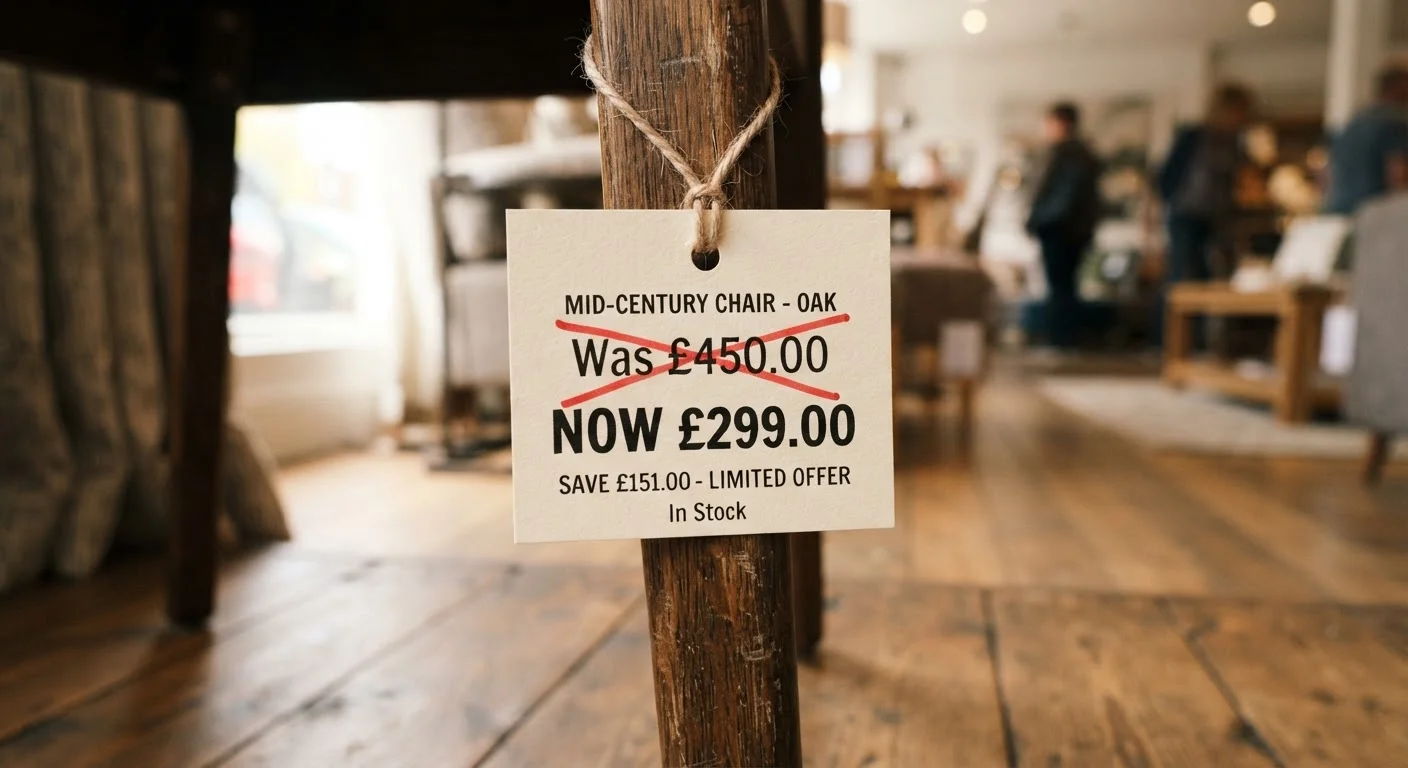
Photo: SaverSteals.com | Explore More. Shop Smarter. editorial
—— In This Article
Key Takeaways
- MSRP is a manufacturer's suggestion, not a standard market price - many retailers routinely price below or above it.
- 'Was' prices are only meaningful if the item genuinely sold at that price for a substantial period.
- High percentage-off claims often reflect inflated reference prices, not real savings.
- Floor samples, discontinued lines, and genuine clearance carry different pricing logic than promotional sales.
- Knowing these distinctions puts you in a stronger position when negotiating in-store.
Why Furniture Pricing Has Its Own Language
Walk into a furniture showroom and you'll see prices that seem to have been set, slashed, and recalculated multiple times before a tag was attached. That's not an accident. Furniture retail operates with unusually high markups - often 200-400% over wholesale cost - which creates room for layered pricing tactics that can obscure what you're actually paying relative to market value.
Understanding a few key terms cuts through most of the confusion. The main ones to recognize: MSRP, 'was' prices, 'compare at' prices, and percentage-off claims. Each tells you something different, and none of them reliably tells you whether a price is genuinely competitive.
For a broader look at how these markup structures work across home categories, the markup patterns in home décor article covers the underlying margin logic in useful detail.
200-400%
Typical furniture markup over wholesale cost
Industry estimates from retail analysts consistently place furniture among the highest-markup consumer categories, creating wide variability between what items cost to produce and what they sell for.
~60%
Furniture sold 'on sale' at any given time
Consumer research and retail surveys suggest the majority of furniture floor inventory carries a promotional price at any given point, raising questions about what constitutes the true regular price.
MSRP: A Suggestion, Not a Standard
MSRP - Manufacturer's Suggested Retail Price - is set by the manufacturer as a recommended selling price. The key word is suggested. Retailers are not obligated to honor it, and in furniture they frequently don't. Some price below MSRP as a competitive strategy; others price above it for perceived premium positioning.
The practical problem: when a retailer advertises '40% off MSRP,' that percentage is measured against a figure that may have little relationship to what any retailer actually charges. If no one sells a sofa at MSRP, then a 40% markdown from that figure doesn't represent 40% savings in any meaningful sense.
Use MSRP as a rough orientation point, not a true anchor. It tells you something about the manufacturer's pricing intent - no more.
Check Multiple Retailers Before Accepting a Reference Price
Before treating any 'was' price or MSRP as a valid benchmark, search for the same item at two or three other sources. If the 'sale' price matches the going rate elsewhere, the reference price is doing marketing work, not informational work. This takes under five minutes and is the single most reliable way to validate a furniture discount claim.
What 'Was' Prices Are Really Saying
A 'was' price (also written as 'originally' or shown as a crossed-out figure) is meant to show that an item has been marked down from a prior price. The implied message is: you're getting a deal compared to what this cost before.
That message is only valid if the item actually sold at the 'was' price for a meaningful period. FTC guidelines hold that a former price must be genuine - but policing this is largely reactive. In practice, some retailers set an inflated 'was' price at launch specifically to make a planned discount look larger.
A reliable signal: if a piece has been 'on sale' every time you've checked over several weeks or months, the 'was' price is likely decorative. The promoted price is effectively the real price.
The same logic applies across retail categories. The sports gear pricing guide covers how 'was/now' and 'compare at' labels work in that vertical, and the pattern is strikingly similar.
Percentage-Off Claims and Reference Price Inflation
A '50% off' banner is attention-grabbing, but the number only matters if the reference price is real. Furniture is one of the retail categories most associated with reference price inflation - artificially high starting prices set to make markdown percentages look dramatic.
To evaluate a percentage-off claim: look up the same or equivalent item at two or three other retailers. If the 'sale' price matches or exceeds what others charge without a markdown, the percentage is largely cosmetic.
Also watch for how the reference price is described. 'Was $1,200' (a former in-store price), 'MSRP $1,200,' and 'compare at $1,200' are three distinct claims. The furniture pricing myths article breaks down why these distinctions matter for shoppers trying to separate real discounts from marketing noise.
Using This Knowledge at the Point of Purchase
Recognizing pricing tactics doesn't just protect you from overpaying - it gives you a negotiating foundation. In-store furniture pricing is often more flexible than the tag implies, and knowing that a 'was' price may be inflated gives you a reasonable basis to ask for a different number.
It also shapes how you interpret clearance tags differently from promotional sale tags. Clearance typically signals genuine inventory reduction pressure; a promotional sale may simply be the retailer's standard operating mode. The clearance vs. sale tag guide explains exactly how to read each label and what it means for your position.
If you're ready to act on this in a showroom, the in-store negotiation guide covers which approaches tend to create actual movement on price - and which don't. And if retail pricing feels consistently opaque, used furniture operates under different pricing dynamics entirely, with its own evaluation criteria worth understanding.
Frequently Asked Questions

Furniture Editorial Team
Furniture Editorial Team is the collective byline for our editorial team and contributor network. Articles published under this byline or an editorial pen name are researched, written, and reviewed according to our editorial standards for clarity, consistency, and independence before publication.
View author profile