
Emergency Fund vs. Paying Down Debt: Where Should Your Extra Dollar Go?
Should you save first or tackle debt? Understand the trade-offs so you can make a confident, informed choice for your situation.
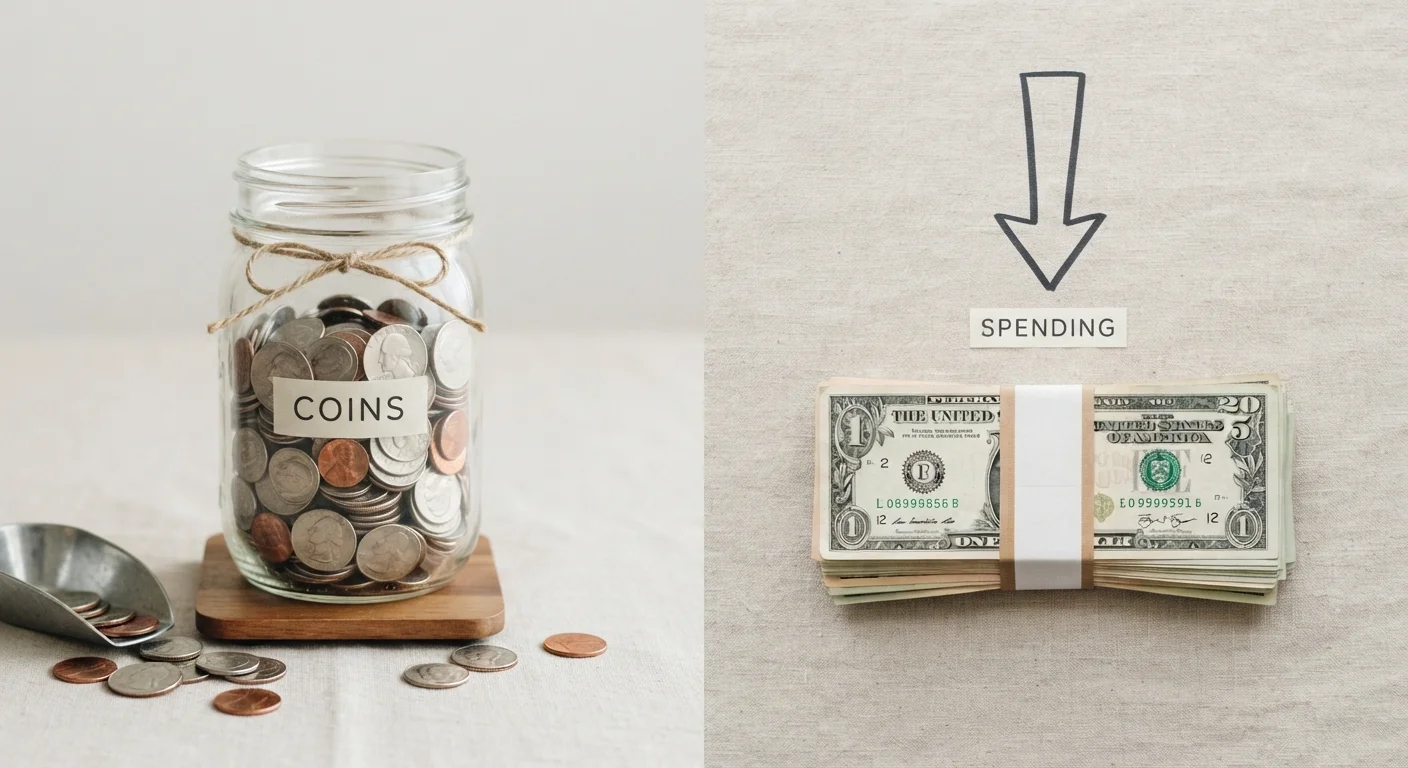
Photo: SaverSteals.com editorial
—— In This Article
Key Takeaways
- High-interest debt (typically above 7–8%) often costs more than you can reliably earn by saving, making payoff a financial priority.
- Without any emergency fund, an unexpected expense forces many people to take on new, costly debt — undoing payoff progress.
- A small starter emergency fund of $500–$1,000 provides meaningful protection before shifting focus to aggressive debt repayment.
- The math favors debt payoff for high-rate balances, but personal stability and risk tolerance also matter in the decision.
- Many financial planners suggest a hybrid approach: save a minimal cushion first, then concentrate extra dollars on debt.
The Core Tension: Safety vs. Cost
When extra money appears — a tax refund, a bonus, or simply a month where expenses ran low — a familiar dilemma surfaces: should that money go toward building an emergency fund or eliminating debt? The question matters because both choices have real, measurable consequences.
Paying down debt, particularly high-interest debt, produces a guaranteed return equal to the interest rate you avoid paying. If your credit card charges 22% APR, every dollar applied to that balance is effectively a 22% return. No standard savings account matches that. On the other hand, carrying no liquid savings means that the next car repair or medical bill could force you back into debt — erasing the progress you made.
This is not a purely mathematical problem. It involves your income stability, your existing balances, your interest rates, and your personal risk tolerance. For a grounded foundation on how savings and debt interact, see this introduction to saving and debt.
| Criterion | Emergency Fund | Paying Down Debt |
|---|---|---|
| Primary benefit | Liquidity and financial security | Reduced interest costs |
| Return on your dollar | Savings account yield (typically low) | Equal to the debt's interest rate |
| Risk if skipped | New debt from unexpected expenses | Ongoing compounding interest charges |
| Best when | No cash buffer exists; income is unstable | High-interest balances; stable income |
| Time to benefit | Immediate protection once funded | Cumulative over months and years |
| Flexibility | Funds remain accessible | Paid principal cannot be easily retrieved |
When the Math Favors Debt Payoff
Financial educators generally suggest that if your debt's interest rate exceeds what you could reasonably expect to earn in a savings vehicle, paying down that debt first is the more efficient use of your money. High-interest consumer debt — credit cards, personal loans, payday loans — typically falls into this category.
The mechanism is straightforward: interest compounds against you every month you carry a balance. Reducing that principal faster limits the total interest you pay over time, which directly increases your net worth. For readers looking at how to structure payoff once that decision is made, the debt avalanche and snowball methods offer two well-established frameworks.
~40%
Americans who couldn't cover a $400 emergency
Federal Reserve surveys have consistently found that a significant share of U.S. adults would struggle to handle a small unexpected expense without borrowing or selling something.
20%+
Average credit card APR in recent years
The Federal Reserve tracks average credit card interest rates, which have risen notably in recent years, making high-rate balances increasingly expensive to carry.
3–6 months
Expenses: recommended full emergency fund target
This widely cited guideline comes from financial planning professionals and consumer financial education organizations, though individual needs vary.
The case for aggressive debt payoff weakens as interest rates drop. A federal student loan at 4.5% or a fixed mortgage below 5% represents a different calculation — especially if you have no liquid savings at all.
Why a Minimal Emergency Fund Comes First
Most personal finance practitioners recommend establishing at least a small emergency fund — often cited as $500 to $1,000 — before concentrating heavily on debt payoff. The rationale is behavioral and practical: without any cushion, a single unexpected expense pushes many people to borrow again, often at high rates, negating months of payoff effort.
Think of a starter emergency fund as debt payoff insurance. It doesn't have to be the full three-to-six months of expenses that a complete emergency fund eventually targets. The goal at this stage is simply to break the cycle where emergencies feed debt. Once that baseline is in place, the surplus can shift decisively toward debt elimination.
If building that cushion feels impossible on your current budget, building an emergency fund on a tight budget offers practical guidance for doing so incrementally.
What Counts as an Emergency?
An emergency fund is meant for genuinely unexpected, necessary expenses — not discretionary spending or planned costs. Common examples include a sudden car repair, an unplanned medical bill, or covering essential living expenses after a job loss. Keeping this definition clear helps prevent the fund from being depleted for non-emergencies, which would undermine its purpose entirely.
A Hybrid Path: Doing Both at Once
For many households, the choice isn't binary. Splitting extra dollars — directing a portion to a savings account and the rest to debt — can provide meaningful progress on both fronts simultaneously. This approach accepts a slower payoff pace in exchange for growing financial stability.
For example, someone with $300 of monthly surplus might send $100 to savings and $200 to their highest-rate debt. The savings grows slowly, but the debt shrinks consistently. Over time, as debt balances fall and minimum payments decrease, more dollars become available to accelerate either goal.
This balanced strategy is worth considering when your income is variable, your debt rates are moderate, or your work situation feels uncertain. Managing debt and savings at the same time walks through how to structure a plan that makes real progress on both without sacrificing one entirely.
This article is for general informational and educational purposes only and does not constitute personalized financial, tax, or legal advice. Consult a qualified financial professional before making decisions based on your individual circumstances.

Finance Editorial Team
Finance Editorial Team is the collective byline for our editorial team and contributor network. Articles published under this byline or an editorial pen name are researched, written, and reviewed according to our editorial standards for clarity, consistency, and independence before publication.
View author profile