
Your Monthly Budget Health Check
Use this end-of-month checklist to review your spending, adjust category limits, and carry useful lessons into the next budget cycle.
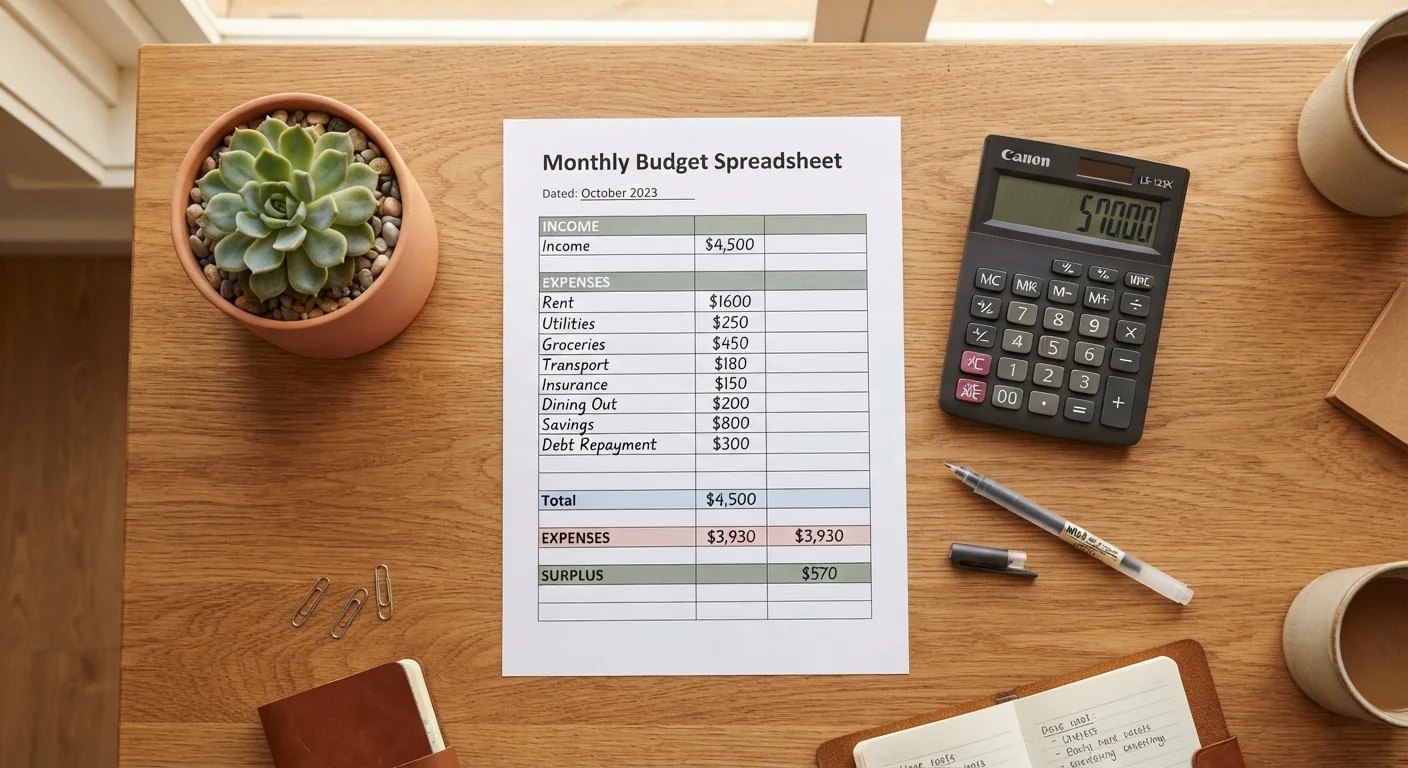
Photo: SaverSteals.com editorial
—— In This Article
Key Takeaways
- Reviewing your budget at month-end reveals spending patterns before they become costly habits.
- Comparing actual spending to planned amounts is the fastest way to find where money is slipping away.
- Adjusting category limits based on real data makes your next month's budget more accurate.
- Irregular expenses caught now can be planned for using sinking funds next cycle.
- A monthly review keeps savings goals on track and prevents debt from quietly accumulating.
Why a Monthly Budget Review Matters
Writing a budget is only half the work. What separates people who make steady financial progress from those who don't is the habit of looking back — honestly and regularly — at how the month actually unfolded versus how they planned it. A monthly review closes the feedback loop that makes budgeting genuinely useful.
Think of this checklist as a structured debrief, not a punishment. The goal isn't to feel guilty about an overspent category; it's to gather reliable data so your next month's plan is sharper. If you're new to the process, our step-by-step guide to building your first monthly budget walks you through setting up the foundation this checklist assumes you already have.
This review works best done within the first two or three days of a new month, while the previous month is still fresh. Set aside 30 to 60 minutes, gather your bank and credit card statements, and work through the items below.
Avoid Skipping Months — Even Rough Ones
It can be tempting to skip the review after a particularly difficult or overspent month, but those are exactly the months where a review is most valuable. Missing a review means carrying unexamined habits into the next cycle, which makes course-correction harder. Even a 15-minute abbreviated review is far better than none at all.
What You'll Need Before You Start
Having the right tools in front of you makes the review faster and more accurate. Gather everything listed below before you begin.
Bank and credit card statements
Provides the actual transaction data needed to compare against your planned budget for each category.
Your written or digital budget from last month
Serves as the baseline plan you'll compare actual spending against to identify surpluses and deficits.
Budgeting app or spreadsheet
Used to record adjusted category limits and carry updated figures into next month's plan.
List of recurring subscriptions
Helps you systematically verify every recurring charge and spot price changes or unused services.
Debt payoff tracker
Lets you record current balances and measure month-over-month progress toward debt reduction goals.
The Monthly Budget Health Check
Work through each group in order. Items marked must are non-negotiable for a meaningful review. Should items add important nuance, and nice-to-have items build longer-term financial awareness.
Income Verification
Spending vs. Plan
Fixed and Recurring Bills
Savings and Debt Progress
Irregular and Upcoming Expenses
Next Month Setup
If you find yourself consistently overspending the same categories month after month, it may be worth reading about the patterns that cause budgets to break down mid-month — most issues trace back to a small number of predictable causes.
Irregular or annual expenses that catch you off guard are a signal to explore sinking funds, which spread the cost of predictable but infrequent bills across multiple months so they never blindside you.
This article provides general financial information and education. It is not personalised financial advice. Consult a qualified financial adviser for guidance specific to your situation.
Carrying Lessons Into Next Month
A budget review is only as useful as the changes it drives. Before you close your statements and move on, write down one or two concrete adjustments you'll make to next month's plan — a revised category limit, a new savings transfer, or a subscription you'll finally cancel.
For a comprehensive framework covering budgeting methods, expense categories, and how to adapt your plan over time, the Personal Budgeting Complete Reference is a useful companion resource. And if intentional spending is a goal alongside budgeting, strategies for shopping smarter can help you spend more deliberately on everyday purchases.
Your Budget Should Reflect Your Real Life
If you find yourself adjusting the same categories downward every single month without lasting success, that category's original limit may simply be unrealistic. A workable budget is built on honest numbers, not aspirational ones. Persistent overspending in a category is often a signal to raise its limit and trim elsewhere — not a personal failure.

Finance Editorial Team
Finance Editorial Team is the collective byline for our editorial team and contributor network. Articles published under this byline or an editorial pen name are researched, written, and reviewed according to our editorial standards for clarity, consistency, and independence before publication.
View author profile