
Fixed vs. Variable Expenses: What the Difference Means for Your Budget
Fixed and variable costs behave differently each month. Learn how to account for both so your budget holds up under real-life conditions.
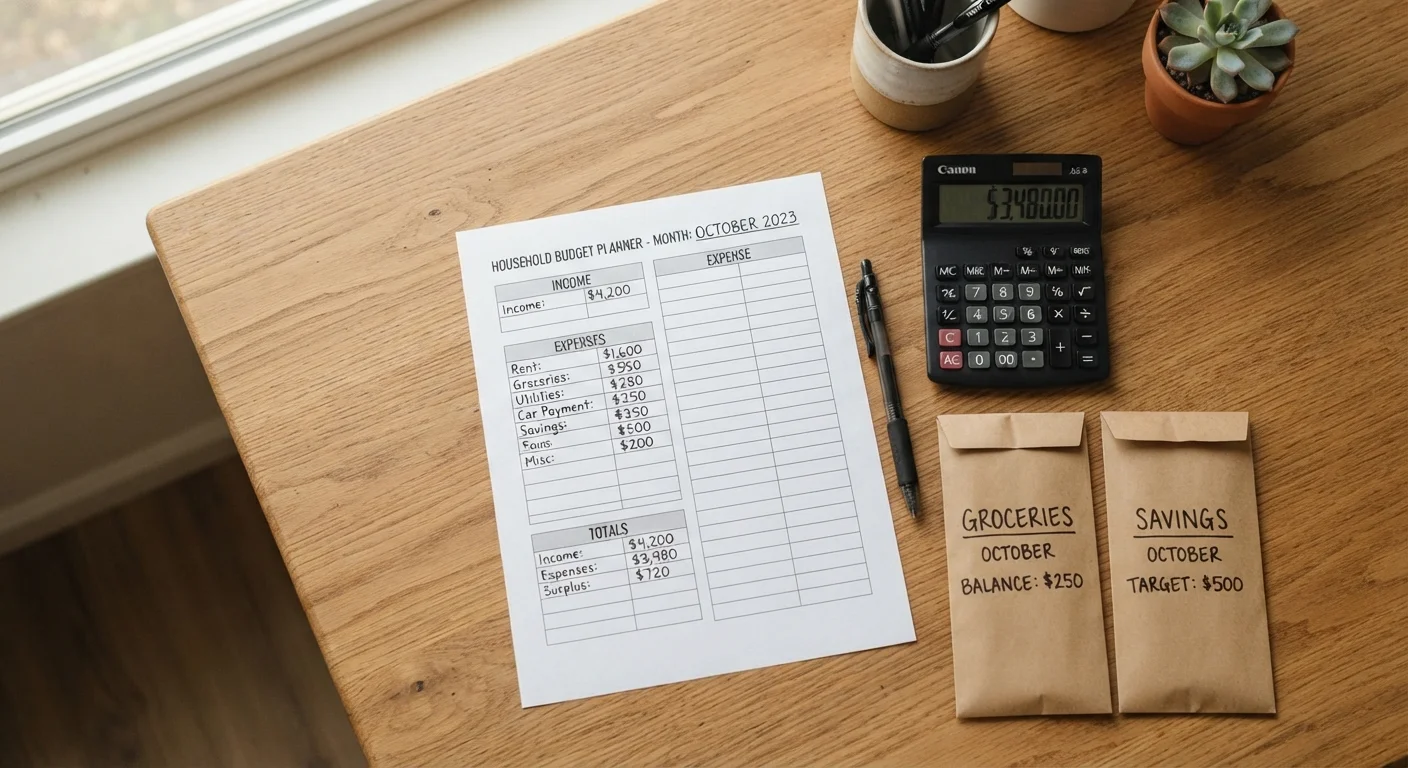
Photo: SaverSteals.com editorial
—— In This Article
Key Takeaways
- Fixed expenses stay the same each billing cycle, making them easier to plan for in advance.
- Variable expenses change month to month and represent your primary lever for spending adjustments.
- Most households carry a mix of both types, and budgeting for each requires a different approach.
- Tracking variable spending is essential because small fluctuations compound significantly over time.
- Semi-variable expenses — like utility bills — share characteristics of both categories and need careful handling.
Defining the Two Expense Types
Every dollar leaving your account each month falls into one of two broad categories: fixed or variable. Understanding which is which is the starting point for any budget that actually holds up under real-life conditions.
Fixed expenses are costs that remain the same amount from one billing cycle to the next. Your rent or mortgage payment, a car loan installment, and a health insurance premium are classic examples. Once you know the number, it does not change — barring a contract renegotiation or a refinance. This predictability makes them straightforward to enter into a budget and easy to automate.
Variable expenses, by contrast, shift in amount each month based on consumption, choices, or circumstances. Groceries, gasoline, dining out, utility bills, and clothing are typical examples. The category exists, but the dollar figure inside it moves — sometimes within a narrow band, sometimes dramatically.
A third category worth naming is semi-variable expenses — costs that have a fixed base component but fluctuate beyond it. A mobile phone plan with a predictable base rate but variable data-overage charges is a common example. For budgeting purposes, treating the base as fixed and estimating the overage as variable is generally the most practical approach.
Don't Overlook Annual Fixed Costs
Some fixed expenses are billed annually rather than monthly — car registration fees, certain insurance premiums, and subscription renewals are common examples. Because they do not appear in most monthly budget views, they can catch households off guard. Dividing each annual fixed cost by twelve and setting that amount aside monthly is a straightforward way to treat them like any other predictable expense.
Side-by-Side Comparison
Seeing both expense types compared directly clarifies how differently they behave — and why each demands a different budgeting strategy.
| Criterion | Fixed Expenses | Variable Expenses |
|---|---|---|
| Amount each month | Stays the same | Changes based on usage or choices |
| Predictability | High — easy to plan precisely | Low to moderate — requires estimation |
| Examples | Rent, car loan, insurance premium | Groceries, gas, dining, utilities |
| Flexibility to reduce | Low — locked in by contract or commitment | High — reducible through daily choices |
| Best budgeting method | List and automate payment | Track, average, and set monthly limits |
| Risk if income drops | High — obligation does not shrink | Lower — spending can be cut quickly |
One important nuance: a fixed expense is not necessarily a permanent one. A subscription you cancel or a loan you pay off converts to zero, freeing up room in the budget. Likewise, a variable expense like groceries has a floor — you cannot reduce it to nothing — but it does give you adjustment room that fixed costs typically do not.
How to Budget for Each Type
The practical approach to fixed expenses is simple: list them all, total them up, and treat that sum as your budget floor. These costs will clear your account regardless of what else happens in the month, so knowing the exact number prevents overcommitting remaining income.
Variable expenses require a different method. Because the amounts fluctuate, budgeters typically use one of two approaches: historical averaging (looking at the last three to six months of spending in a category and using the average as your target) or zero-based allocation (assigning a specific dollar amount to each category at the start of every month based on current priorities). Both approaches benefit from consistent tracking — the tool you use matters less than the habit itself. For guidance on tracking systems, see envelope budgeting vs. digital tracking apps.
Once you have mapped your spending, organizing expenses into clear categories helps you spot patterns and set realistic limits for each variable line item.
~33%
Average share of income spent on housing
The U.S. Bureau of Labor Statistics Consumer Expenditure Survey consistently shows housing as the largest single fixed expense for American households.
60%+
Of adults who do not track variable spending monthly
Multiple national surveys on financial habits suggest a majority of Americans do not actively monitor month-to-month discretionary spending, making variable costs a common source of budget overruns.
Putting It All Together for a Resilient Budget
A budget that treats all expenses the same way will almost always fail. Fixed costs need to be fully funded first; variable costs need to be actively managed. The gap between those two is where financial flexibility — or fragility — lives.
A practical sequencing for any budget review: start with total monthly take-home income, subtract all fixed obligations, then allocate the remainder across variable categories in order of priority. Anything left becomes savings or debt repayment. This structure also surfaces risk: if your fixed expenses consume more than 50–60% of take-home pay, your variable budget and savings capacity are under meaningful pressure.
For households where housing costs are a dominant fixed expense, it is worth understanding how lease structure influences that fixed commitment. Fixed-term versus month-to-month lease arrangements affect both the predictability and flexibility of your single largest line item.
After you have built out your budget, running a regular review keeps it accurate. A monthly budget health check helps you confirm whether variable spending stayed within limits and identify categories that need recalibration going into the next cycle.
This article is for general informational and educational purposes only and does not constitute personalised financial advice. Consult a qualified financial professional regarding decisions specific to your circumstances.

Finance Editorial Team
Finance Editorial Team is the collective byline for our editorial team and contributor network. Articles published under this byline or an editorial pen name are researched, written, and reviewed according to our editorial standards for clarity, consistency, and independence before publication.
View author profile