
Your First Time Buying Used Toys: A Family-Friendly Starting Point
New to secondhand toy shopping? This guide walks families through where to look, what to inspect, and how to shop with confidence.
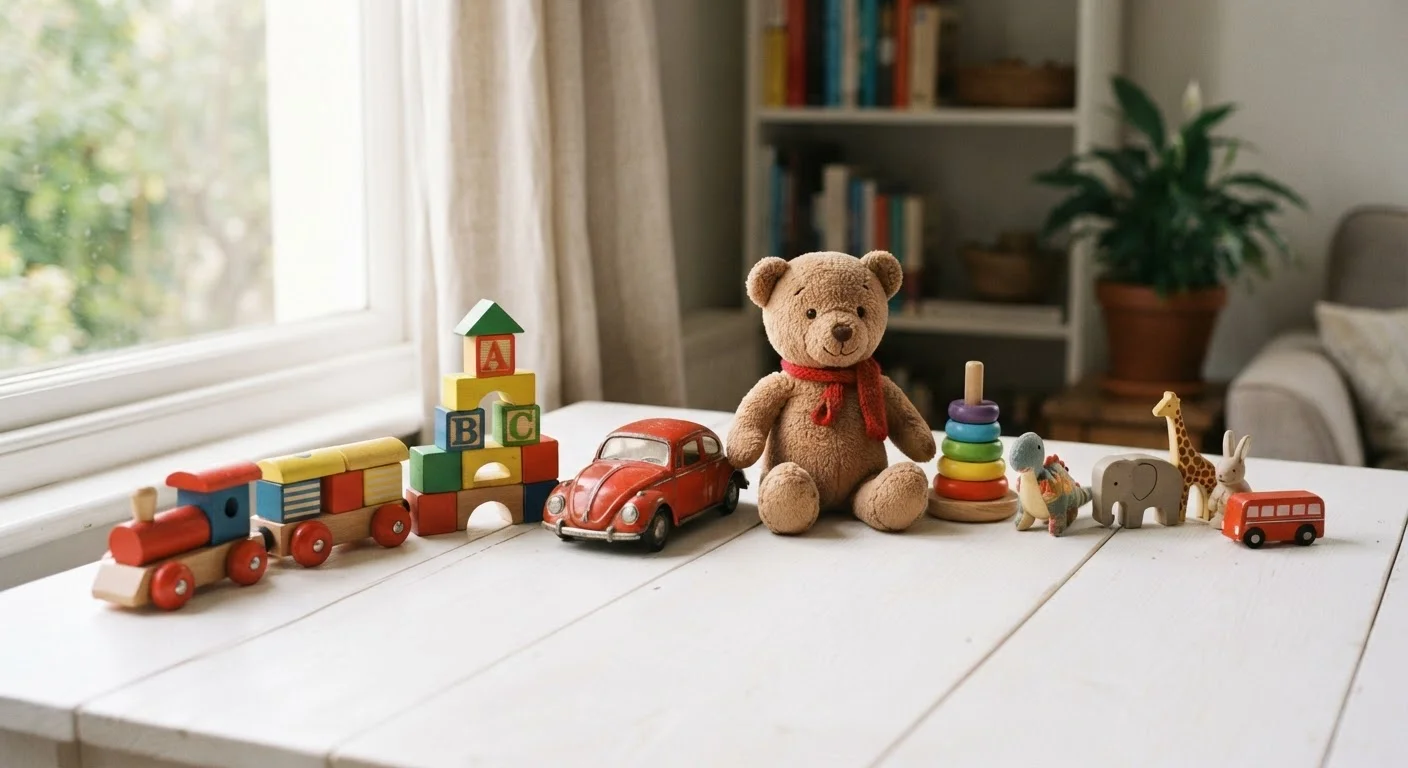
Photo: SaverSteals.com | Explore More. Shop Smarter. editorial
—— In This Article
Key Takeaways
- Secondhand toys can be a sound choice when you know which safety checks to run.
- Local sales, thrift stores, and online marketplaces each have distinct trade-offs worth understanding.
- Recalls, missing parts, and worn materials are the three most important things to check before buying.
- Honest pricing and clear descriptions make selling faster and build buyer trust.
- Developing a simple inspection routine makes secondhand shopping faster with each trip.
Why Families Shop Secondhand for Toys
Children outgrow toys quickly. A puzzle that captivates a four-year-old for three weeks may sit untouched by month two. That rapid turnover is one reason secondhand toys represent a practical option for many families — the financial logic is straightforward, but it's worth understanding the full picture before diving in.
Used toys generally cost a fraction of retail price and reduce the volume of plastic heading to landfills. At the same time, they come with real considerations: no manufacturer warranty, possible missing pieces, and the occasional safety concern. Our article on the real trade-offs of buying secondhand toys covers both sides in detail. The goal of this guide is simpler: give you a working foundation so your first secondhand toy purchase is a confident one.
CPSC recall database
A searchable list maintained by the U.S. Consumer Product Safety Commission of products that have been recalled due to safety hazards. You can search it for free at cpsc.gov.
Choking hazard
Any small part or piece that could be swallowed or lodged in a young child's airway. Toys intended for children under three must not contain parts small enough to fit inside a standard toilet paper roll.
Completeness
Whether a toy includes all of its original parts and components. A set missing key pieces may be unsafe, non-functional, or significantly reduced in value.
Play wear
Normal, expected signs of use on a toy — light surface scratches, fading, or minor scuffs — that don't affect function or safety. Distinct from damage that makes a toy unsafe.
Community swap group
An informal, often neighborhood-based group (typically on social media) where families exchange or sell used items, including toys, directly with one another.
Where to Start Looking
First-time secondhand shoppers often feel unsure where to begin. The short answer: start close to home and low-stakes. Neighborhood garage sales and local community swap groups on social platforms let you see items in person, ask questions, and walk away if something feels off — all without shipping costs or return headaches.
Thrift stores are another reliable starting point. They tend to sort toys into one area, prices are usually fixed and modest, and staff often pull items that are clearly broken. If you've never navigated one, our companion piece your first trip to a thrift store gives a useful walkthrough of what to expect.
Online marketplaces expand your selection considerably but require more discipline — you're relying on photos and descriptions, so you can't physically handle the toy first. For a direct comparison of both approaches, see online marketplaces vs. local sales. For a broader map of where families reliably find quality used toys, this sourcing guide is a useful next read.
Start With One Channel First
Trying to monitor garage sales, thrift stores, and three online platforms simultaneously can feel overwhelming. Pick one sourcing channel for your first few purchases and learn its rhythms before expanding. Most experienced secondhand shoppers have one or two go-to channels rather than using all of them at once.
What to Inspect Before You Buy
A quick, consistent inspection routine protects your family and helps you avoid buyer's remorse. Before handing over any money, run through these key areas:
- Recall status: Search the toy on the CPSC website (cpsc.gov). This takes under two minutes and is non-negotiable for older or unfamiliar items.
- Structural integrity: Check for cracked plastic, loose joints on action figures, detached wheels on ride-ons, and anything that could splinter or snap under normal play pressure.
- Small parts: For children under three, any piece that fits inside a standard toilet paper roll is a choking hazard. Be strict about this.
- Completeness: Board games and building sets lose value — and safety — when pieces are missing. Count key components before committing.
- Surface condition: Mold, heavy discoloration, or chewed-up edges on soft toys are reasons to pass.
Our dedicated checklist at safety checks every family should run on a used toy walks through this process step by step, including how to handle electronic toys and battery compartments.
Don't Skip the Recall Check on Older Toys
Toys made before 2008 predate stricter federal safety standards that limited lead content in paint and restricted phthalates in plastics. If you can't verify a toy's manufacture date, treat it as higher risk and check its recall status carefully before purchasing. When in doubt, pass on it.
Selling Used Toys: The Basics
If you're clearing out toys your children have outgrown, a few simple practices help you sell faster and honestly. Accurate descriptions and fair pricing matter more than elaborate photography or lengthy listings.
Condition is the biggest variable. A toy described as "good" should genuinely mean no missing parts, no structural damage, and normal play wear only. Overstating condition erodes trust and leads to disputes. Our guide on writing honest, effective descriptions when selling used toys provides a reliable framework for communicating condition clearly.
On pricing, a useful general benchmark is 25–50% of current retail for items in clean, complete condition — though age, collectibility, and local demand all shift that range. For structured guidance, pricing a used toy fairly offers category-by-category reference points.
Building Confidence as a Secondhand Shopper
Like most practical skills, secondhand toy shopping gets easier with repetition. Your first few purchases will take longer as you get used to inspecting items and looking up recalls. By your fifth or sixth, the routine becomes quick and almost automatic.
A few habits that help newcomers build confidence faster:
- Keep a short mental checklist (or a note on your phone) of the key inspection points so you don't have to recall them under pressure.
- Set a clear budget ceiling before you browse — it reduces decision fatigue when you're surrounded by options.
- Start with lower-stakes categories like wooden puzzles, building blocks, or outdoor equipment, where wear is easy to assess and recall history is often minimal.
- Track what you pass on and why — over time you'll develop reliable instincts about what represents good value versus what's not worth the risk.
Secondhand toy shopping isn't about hunting for perfection. It's about applying a consistent, informed approach so that the toys you bring home are safe, functional, and genuinely useful to your family.
Frequently Asked Questions

Toys Editorial Team
Toys Editorial Team is the collective byline for our editorial team and contributor network. Articles published under this byline or an editorial pen name are researched, written, and reviewed according to our editorial standards for clarity, consistency, and independence before publication.
View author profile