
The Real Trade-Offs of Buying Secondhand Toys for Children
Used toys save money and reduce waste, but they come with real considerations around safety and completeness. A balanced look at both sides.
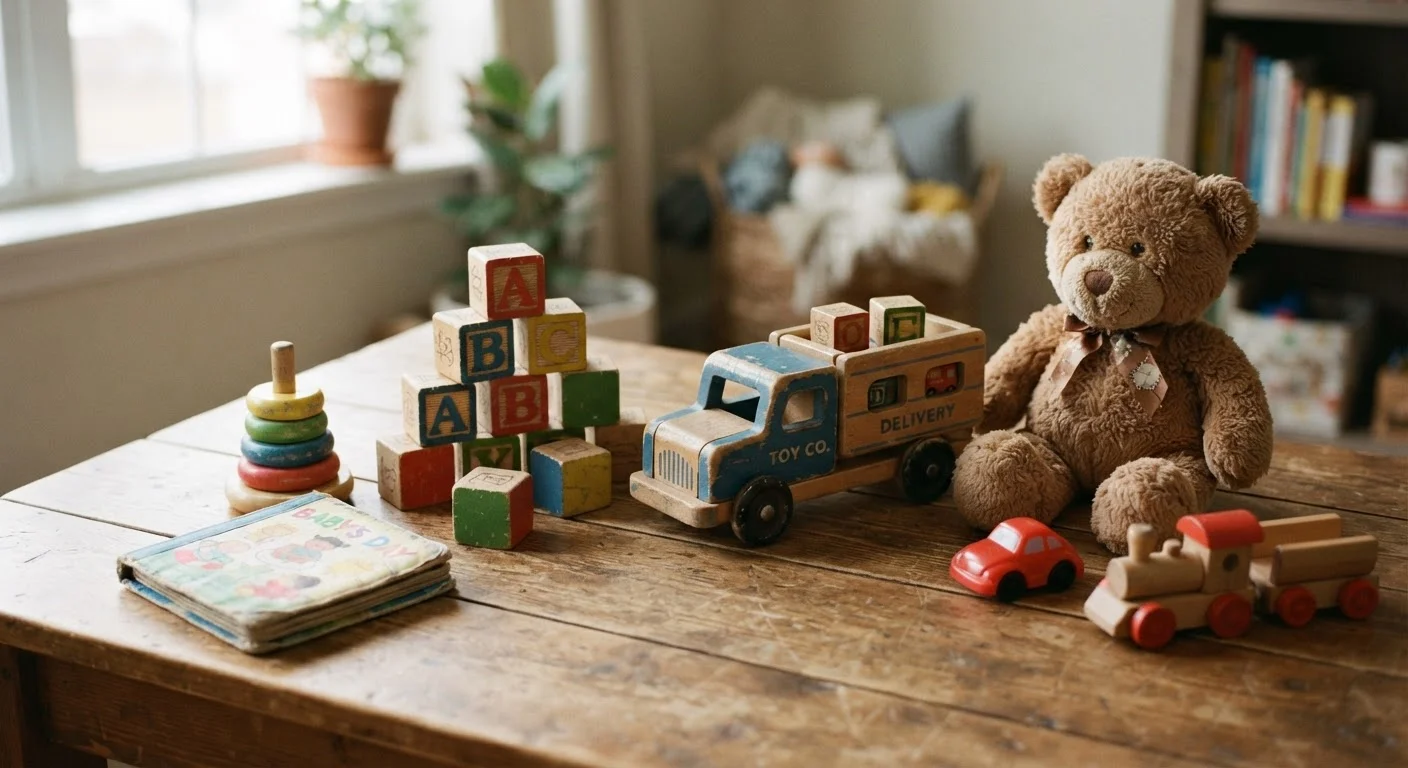
Photo: SaverSteals.com | Explore More. Shop Smarter. editorial
—— In This Article
Key Takeaways
- Secondhand toys can cost significantly less than new, but savings vary widely by source and condition.
- Safety checks — including recall verification — are non-negotiable before any used toy reaches a child.
- Missing pieces, worn finishes, and unknown history are common and real drawbacks of the secondhand market.
- Certain toy categories carry higher risk secondhand and warrant extra scrutiny or avoidance.
- Buying used supports waste reduction, but families should weigh environmental gains against safety trade-offs.
Significantly lower cost than buying new retail
Used toys commonly sell for 30–70% less than their original retail price, depending on condition and source. This discount can be especially meaningful for toys children are likely to outgrow quickly.
Reduces material waste and extends product life
Keeping a toy in use rather than in a landfill has a measurable environmental benefit. For families who prioritize reducing consumption, secondhand purchasing aligns with that goal practically.
Lower financial stakes for uncertain interest
Children's play interests shift rapidly. Buying a secondhand version of a toy a child is curious about — before committing to a full retail purchase — limits potential regret if interest fades within weeks.
Durable toys often hold up well through multiple owners
Many well-constructed toys from reputable manufacturers remain fully functional after years of use. For classic play categories like wooden blocks or simple vehicles, secondhand quality can closely match new.
Access to discontinued or hard-to-find items
The secondhand market sometimes surfaces toys that are no longer in production but still highly desirable — including specific puzzle sets, older building systems, or regional items that are simply unavailable new.
Recalled items may circulate without warning
Safety recalls do not automatically remove toys from secondhand circulation. Buyers must independently check the CPSC recall database, as sellers are often unaware a product was recalled.
Incomplete sets reduce play value and resale potential
Board games, puzzle sets, and construction toys frequently arrive missing pieces. Sellers may not notice or disclose missing components, leaving buyers with a product that cannot be used as intended.
Unknown usage history creates uncertainty
Without knowing how a toy was stored, cleaned, or used, buyers cannot assess whether it was exposed to hazardous conditions, heavy stress, or inappropriate use that may have affected its integrity.
Higher time cost to source and verify safely
Responsible secondhand toy shopping involves checking recalls, inspecting condition in person where possible, and researching unfamiliar items. That due diligence takes time that a straightforward retail purchase does not.
Infant and toddler categories carry elevated risk
Toys designed for the youngest children face the strictest safety standards and the hardest use. Worn, cracked, or deformed items in this category can present choking or injury hazards that are not immediately obvious.
Why the Secondhand Toy Market Is Worth Taking Seriously
The used toy market is large, active, and diverse — spanning garage sales, charity shops, online marketplaces, and community swap groups. Families who engage with it thoughtfully can stretch a toy budget considerably further than retail prices allow. But the market is also unregulated in ways that new retail is not, which means the responsibility for safety and quality verification falls squarely on the buyer.
Understanding both sides of that equation — the genuine savings potential and the real risks — is the starting point for anyone considering this route. For a broader look at where to search, see where families actually find good secondhand toys.
Significantly lower cost than buying new retail
Used toys commonly sell for 30–70% less than their original retail price, depending on condition and source. This discount can be especially meaningful for toys children are likely to outgrow quickly.
Reduces material waste and extends product life
Keeping a toy in use rather than in a landfill has a measurable environmental benefit. For families who prioritize reducing consumption, secondhand purchasing aligns with that goal practically.
Lower financial stakes for uncertain interest
Children's play interests shift rapidly. Buying a secondhand version of a toy a child is curious about — before committing to a full retail purchase — limits potential regret if interest fades within weeks.
Durable toys often hold up well through multiple owners
Many well-constructed toys from reputable manufacturers remain fully functional after years of use. For classic play categories like wooden blocks or simple vehicles, secondhand quality can closely match new.
Access to discontinued or hard-to-find items
The secondhand market sometimes surfaces toys that are no longer in production but still highly desirable — including specific puzzle sets, older building systems, or regional items that are simply unavailable new.
The Real Drawbacks Families Should Anticipate
The advantages of secondhand toy shopping are real, but so are the friction points. The most commonly underestimated issues fall into three areas: safety history, completeness, and the time cost of doing it properly.
Recalled items may circulate without warning
Safety recalls do not automatically remove toys from secondhand circulation. Buyers must independently check the CPSC recall database, as sellers are often unaware a product was recalled.
Incomplete sets reduce play value and resale potential
Board games, puzzle sets, and construction toys frequently arrive missing pieces. Sellers may not notice or disclose missing components, leaving buyers with a product that cannot be used as intended.
Unknown usage history creates uncertainty
Without knowing how a toy was stored, cleaned, or used, buyers cannot assess whether it was exposed to hazardous conditions, heavy stress, or inappropriate use that may have affected its integrity.
Higher time cost to source and verify safely
Responsible secondhand toy shopping involves checking recalls, inspecting condition in person where possible, and researching unfamiliar items. That due diligence takes time that a straightforward retail purchase does not.
Infant and toddler categories carry elevated risk
Toys designed for the youngest children face the strictest safety standards and the hardest use. Worn, cracked, or deformed items in this category can present choking or injury hazards that are not immediately obvious.
Recalled toys present perhaps the most serious concern. A recalled product can appear in a secondhand listing without any indication it was ever pulled from shelves — because the original owner may not have known, or simply didn't act. The Consumer Product Safety Commission (CPSC) maintains a searchable recall database, and cross-referencing any used toy against it before purchase is a step families should treat as mandatory. Our guide on toy recalls and secondhand markets explains exactly how that system works.
Which Toy Categories Carry the Most Risk Secondhand
Not every toy category carries equal risk when bought used. Some warrant extra scrutiny; others are generally lower stakes.
- Infant and toddler toys: These are used by children most vulnerable to choking hazards, and they face the heaviest wear. Soft toys can harbor allergens; hard toys may have stress fractures not visible at first glance.
- Ride-on toys and scooters: Structural integrity is difficult to assess without use. Hidden cracks in plastic or worn wheel bearings can create fall risks.
- Sets with many small parts: Puzzles, building sets, and games with numerous components are frequently sold with missing pieces. Confirm counts before buying, or factor in replacement costs.
- Electronic toys: Battery compartments may be corroded; internal wiring is impossible to inspect. These require functional testing before purchase.
- Toys predating modern safety standards: Items manufactured before federal toy safety standards were updated may contain materials — including certain paints — that would not pass current requirements.
For a structured inspection process covering these and other concerns, safety checks every family should run on a used toy provides a practical checklist.
~6,000
CPSC toy-related recalls since 1973
The U.S. Consumer Product Safety Commission has issued thousands of toy-related recalls across its history, underscoring why checking recall status is a necessary step before purchasing any used toy.
40%+
Typical secondhand toy discount vs. retail
While specific savings vary by item and condition, resale platforms and charity shop data consistently show used toys priced at substantial discounts relative to current retail equivalents.
Making a Confident Decision
The secondhand toy market rewards preparation. Families who go in with clear criteria — knowing which categories they will and won't consider, which checks they'll always run, and where they prefer to source — consistently report better outcomes than those who browse without a framework.
Condition labeling in secondhand listings varies widely. Terms like "gently used" or "good condition" mean different things to different sellers. What 'gently used' actually means is worth reading before interpreting any listing description literally.
If your goal is simply reducing toy spending — and secondhand shopping feels like too much effort — there are other approaches worth considering. Ways to cut toy spending without compromising on quality or safety covers timing strategies and other approaches that don't require the same level of inspection work. And for anyone ready to commit fully to the secondhand approach, the complete lifecycle of a secondhand toy walks through every stage from sourcing to reselling or donating.
When to Skip Secondhand Entirely
Some toy categories are generally better purchased new: car seats and safety restraints adapted for play, helmets incorporated into ride-on sets, and any item where structural failure would directly cause injury. For these, the inability to verify full integrity history makes new — with a manufacturer warranty and verifiable production date — the more defensible choice. This isn't about being risk-averse; it's about applying scrutiny proportionally.

Toys Editorial Team
Toys Editorial Team is the collective byline for our editorial team and contributor network. Articles published under this byline or an editorial pen name are researched, written, and reviewed according to our editorial standards for clarity, consistency, and independence before publication.
View author profile