
Online Marketplaces vs. Local Sales: Finding Used Toys in Each Setting
Online platforms offer wide selection; local sales let you inspect before buying. Understand the trade-offs so you shop where it makes sense.
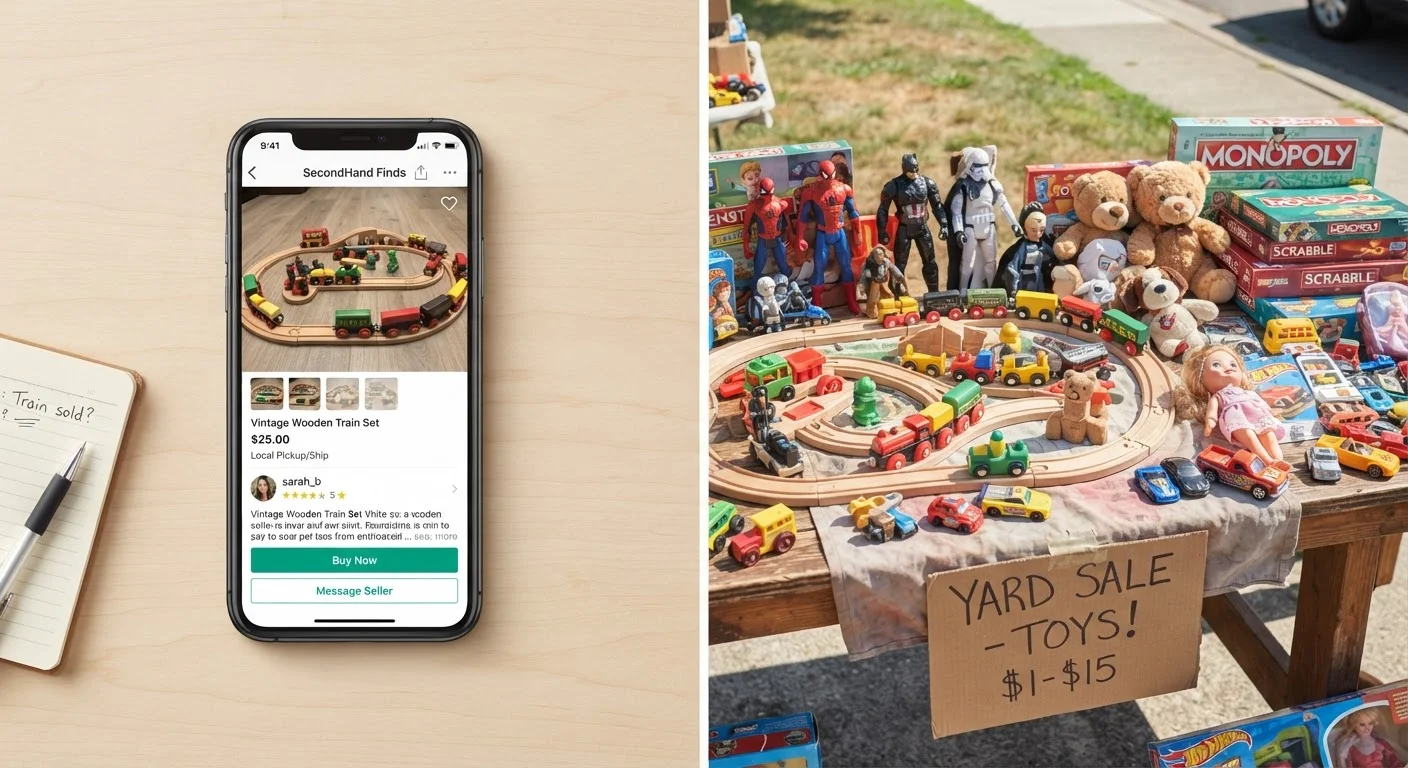
Photo: SaverSteals.com | Explore More. Shop Smarter. editorial
—— In This Article
Key Takeaways
- Online marketplaces offer broader inventory but photos may not reveal hidden damage or missing parts.
- Local sales — yard sales, Facebook Marketplace meetups, thrift stores — let you inspect toys before committing.
- Shipping costs on bulky or heavy toys can erode any price advantage found online.
- Safety recalls are your responsibility to check regardless of which channel you use.
- Sellers face different fee structures and timing considerations depending on the platform or venue chosen.
What Each Channel Actually Offers
Online marketplaces aggregate listings from sellers nationwide — sometimes globally — meaning a toy that no one in your zip code owns might be three clicks away. That breadth is genuinely useful when you need something specific. The downside is that you're trusting the seller's photos and description entirely. Even well-intentioned listings underrepresent condition problems: a cracked battery compartment, a missing puzzle piece, or a worn-down fabric surface rarely photograph clearly.
Local sales operate differently. A yard sale, neighborhood app meetup, or thrift shop visit puts the item in your hands before money changes hands. You can test electronic functions, count puzzle pieces, squeeze plush toys for unusual stiffness, and ask the seller questions directly. What you lose is selection — you're limited to what happens to be available within a reasonable drive on a given day.
If you're new to buying secondhand toys and unsure where to start, see our family-friendly starting point guide for a fuller orientation before comparing channels.
| Criterion | Online Marketplaces | Local Sales |
|---|---|---|
| Inventory breadth | National/global selection | Limited to local supply |
| Condition inspection | Photos and descriptions only | Hands-on before purchase |
| Shipping costs | Added to buyer or priced in | None for local pickup |
| Seller fees | Platform percentage (varies) | None or consignment cut |
| Transaction speed | Days to weeks (shipping) | Same day possible |
| Buyer protections | Platform dispute process | Minimal; cash is final |
| Best for large/bulky items | Poor — high shipping cost | Good — easy local pickup |
| Price negotiability | Limited; offer features vary | Often flexible in person |
Costs, Fees, and Hidden Variables
The sticker price is rarely the full cost on either channel. Online platforms typically charge sellers a percentage of the final sale price — often ranging from roughly 5% to 15% depending on the platform — which sellers frequently bake into their asking price. As a buyer, shipping is your main hidden variable. A $12 toy that costs $9 to ship isn't the deal it appears to be, and dimensional weight pricing means bulky items like play kitchens or foam activity mats can be expensive to send regardless of how light they are.
Local transactions carry their own friction. Getting to a sale takes time and fuel. Thrift stores price conservatively but rarely negotiate. Private sellers at meetups are often more flexible, but you may spend time on unproductive trips when items aren't as described. Factor that time cost honestly.
~10–15%
Typical seller fee range on major resale platforms
Platform fee structures vary; always check current terms before listing, as rates change and category-specific fees may apply.
5,000+
Toy-related recalls tracked by CPSC since 1973
The U.S. Consumer Product Safety Commission publishes a searchable recall database at cpsc.gov covering decades of product safety actions.
Payment method also matters locally. Cash-only sellers are common at yard sales, while app-based meetups increasingly use digital payment tools — each introduces its own risks around scams or disputes. Online platforms generally provide more structured buyer protection, though policies vary and claiming a refund for a misrepresented item still takes effort.
Safety Checks: Non-Negotiable in Both Settings
Secondhand toys carry one risk that neither channel eliminates for you: recalls. The U.S. Consumer Product Safety Commission (CPSC) maintains a publicly searchable recall database at cpsc.gov. Before finalizing any used toy purchase — online or local — run the product name and model through that database. Recalls aren't uncommon in the toy category, and a recalled item can pose genuine hazards regardless of how good the price is.
Beyond recalls, inspect for age-appropriateness relative to the children in your home. Small parts that weren't a hazard for the previous owner's older child may be a choking risk for your toddler. Check that any electronic toys don't have corroded battery compartments, which can leak and cause harm. Soft toys should be checked for loose button eyes or detachable decorations.
Online buyers should specifically request photos of battery compartments, hinges, and seams — areas sellers routinely skip. Local buyers should bring a flashlight to yard sales; examining items in natural light reveals a lot more than indoor artificial lighting. For more on what to look for regardless of channel, our used toy inspection checklist covers the key steps in detail.
Selling Used Toys: Which Channel Fits Your Situation
If you're on the selling side, the decision hinges on three factors: item size, how quickly you want the money, and how much effort you're willing to invest. Online platforms reward patient sellers willing to photograph items thoroughly, write accurate descriptions, and handle shipping. Listings stay live until sold, and national reach means you're not dependent on local demand. If a toy has collector interest or belongs to a series with dedicated fans, online platforms often yield higher returns.
Local channels — yard sales, neighborhood selling apps with local pickup, consignment shops — move inventory faster with less administrative effort. You don't pack boxes or queue at a post office. The trade-off is lower prices on average and reliance on whoever happens to be looking locally that week. Consignment shops take a percentage cut but handle the selling entirely.
Whatever channel you use, listing quality matters more than most sellers expect. Common reasons used toy listings stall — vague condition descriptions, inadequate photos, and pricing out of step with the market — apply equally online and locally. For hands-on guidance on writing descriptions that actually convert, see how to write honest and effective used toy descriptions.
The same channel-evaluation logic applies beyond toys. If you're weighing these trade-offs for tools or sporting goods, our comparison of online auctions versus local resale for used tools covers parallel considerations.

Toys Editorial Team
Toys Editorial Team is the collective byline for our editorial team and contributor network. Articles published under this byline or an editorial pen name are researched, written, and reviewed according to our editorial standards for clarity, consistency, and independence before publication.
View author profile