
Why Your Dishwasher Isn't Getting Dishes Clean—and What to Check
Cloudy glasses and food residue after a full cycle are often caused by fixable issues. Learn the most common reasons and how to address each one.
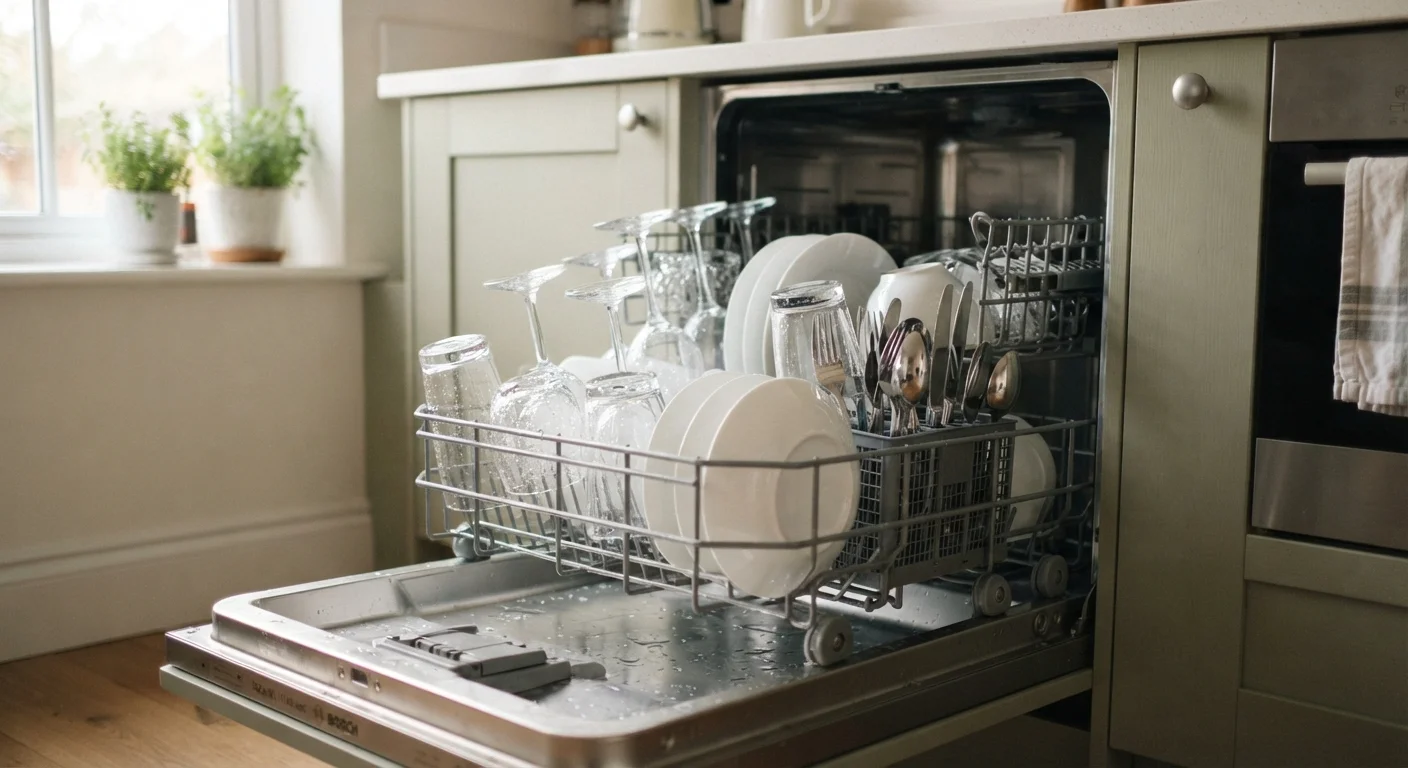
Photo: SaverSteals.com editorial
—— In This Article
Key Takeaways
- Cloudy glasses and food residue after a cycle are usually caused by fixable, maintenance-related issues.
- Hard water deposits, a dirty filter, and improper loading are among the most common culprits.
- Using the wrong amount or type of detergent can undermine even a well-maintained machine.
- Regular, simple upkeep—not expensive repairs—resolves most dishwasher performance problems.
Why Your Dishwasher Isn't Doing Its Job
A dishwasher that leaves dishes looking worse than before the cycle is one of the more frustrating appliance problems in the kitchen. The good news: most causes aren't mechanical failures. They're maintenance oversights or everyday habits that quietly sabotage cleaning performance. Understanding what's actually happening inside the machine makes it much easier to fix—and to prevent the problem from coming back.
Below are the most common mistakes that lead to poor dishwasher results, along with what causes each one and how to address it. For a broader look at which kitchen appliances are genuinely worth keeping, see which appliances earn their place.
Skipping or neglecting the dishwasher filter.
Why it happens: Many people don't realize modern dishwashers have a manual filter that requires regular cleaning. Unlike older self-cleaning models, today's quieter machines rely on a removable filter that traps food debris—and it fills up faster than most users expect.
Overloading or improperly arranging dishes.
Why it happens: It's tempting to cram in as much as possible, and many people load dishes based on available space rather than water flow. Blocked spray arms and nested items mean water and detergent never reach every surface.
Using too much—or too little—detergent.
Why it happens: People often assume more detergent means cleaner dishes, or they eyeball amounts without measuring. Both excess and insufficient detergent cause problems: too much leaves a chalky residue; too little fails to break down grease and food.
Pre-rinsing dishes until they're spotless before loading.
Why it happens: The intuition is that clean dishes go in for a final rinse. But most dishwasher detergents contain enzymes that require food particles to activate and work effectively. Fully rinsed dishes give those enzymes nothing to bind to.
Ignoring hard water mineral buildup inside the machine.
Why it happens: Hard water deposits accumulate gradually on the interior walls, spray arms, and heating element. Because the change happens slowly, many users attribute cloudy glasses or white film to detergent issues rather than mineral scale.
Choosing the wrong wash cycle for the load.
Why it happens: The default or quick cycle is convenient and often the go-to choice. But lighter cycles use less water, lower temperatures, and shorter run times—which isn't adequate for heavily soiled pots, pans, or dishes with stuck-on food.
Maintenance Habits That Make a Real Difference
Fixing the mistakes above will resolve most cleaning failures, but a consistent upkeep routine keeps problems from returning. Run a hot-water rinse cycle once a month using a dishwasher cleaner or a cup of white vinegar placed in a bowl on the bottom rack—this helps dissolve mineral buildup and grease inside the tub and spray arms. Check the spray arm holes every few weeks and use a toothpick to clear any that are blocked.
~30%
Of dishwasher complaints linked to filter neglect
Appliance repair technicians commonly cite a clogged or uncleaned filter as one of the leading causes of poor dishwasher cleaning performance reported by homeowners.
85%
Of U.S. homes affected by hard water
The U.S. Geological Survey estimates that roughly 85 percent of American homes have hard water, making mineral buildup a widespread contributor to cloudy dishes and appliance wear.
If your home has hard water, consider using a rinse aid regularly. Rinse aid lowers water's surface tension so it sheets off dishes rather than forming droplets that leave spots and film. It's especially effective for glassware. Hard water is one of the most underappreciated contributors to poor results—something worth keeping in mind if you've already addressed loading, detergent, and filter issues without improvement. Pair appliance upkeep with a broader approach to home cleanliness: building a home cleaning routine that sticks can help you keep maintenance tasks from slipping through the cracks. And if you're curious about which popular cleaning methods actually hold up, household cleaning myths worth knowing is worth a read.
Don't Ignore a Blocked Spray Arm
If the spray arm can't rotate freely or its holes are clogged, water distribution is severely compromised and no amount of good detergent or correct loading will compensate. Before running a cycle, take five seconds to spin each spray arm by hand. If it's stiff or catches on a utensil, reposition the load before you start.

Shopping Editorial Team
Shopping Editorial Team is the collective byline for our editorial team and contributor network. Articles published under this byline or an editorial pen name are researched, written, and reviewed according to our editorial standards for clarity, consistency, and independence before publication.
View author profile