
Small Appliances That Earn Their Counter Space (And Ones That Don't)
Not every appliance deserves a permanent spot on your counter. Here's a practical look at which ones genuinely simplify cooking and which add clutter.
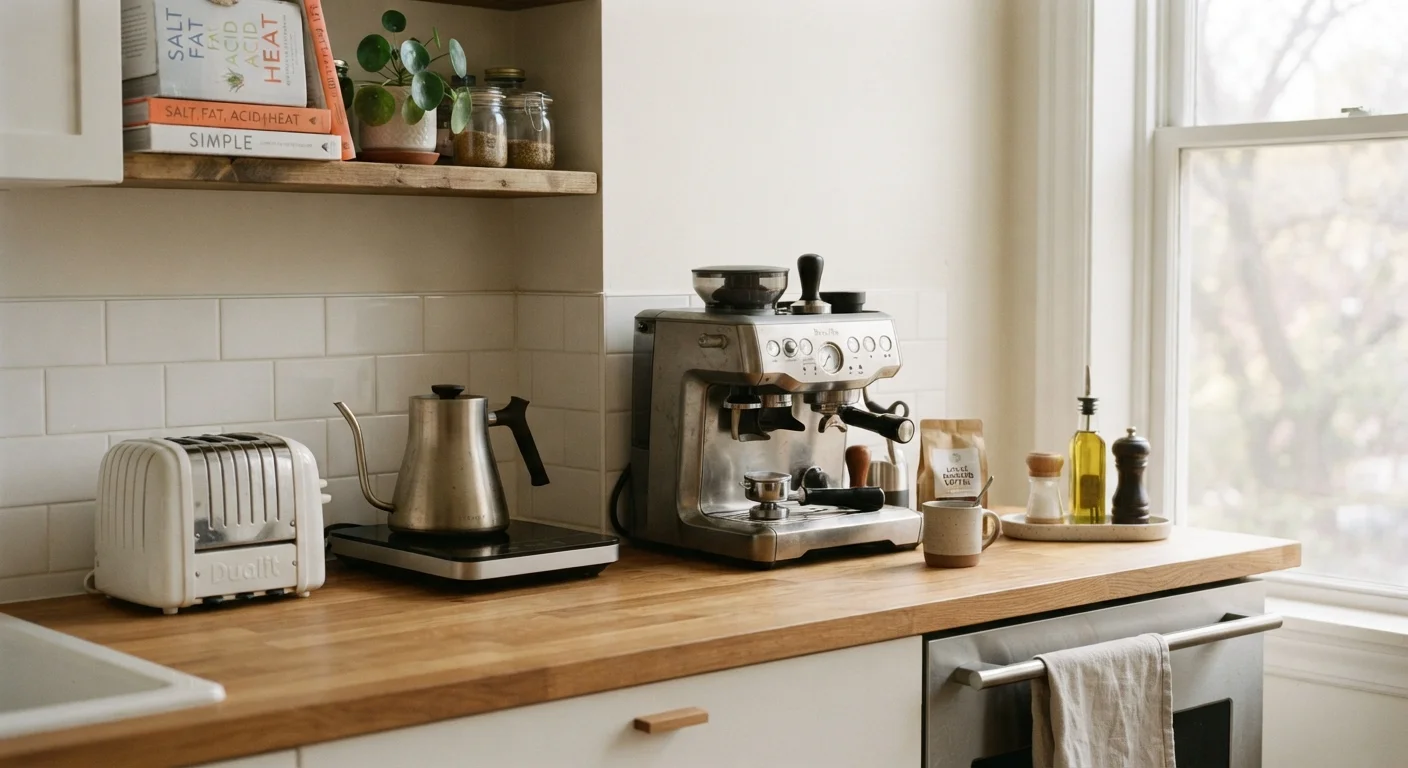
Photo: SaverSteals.com editorial
—— In This Article
Key Takeaways
- Appliances used multiple times a week justify counter space; occasional-use items belong in a cabinet.
- Versatility matters more than novelty — one tool that does three jobs beats three single-purpose gadgets.
- Energy draw, cleaning effort, and storage footprint are hidden costs worth factoring into any appliance decision.
- Some appliances marketed as time-savers often add steps rather than remove them.
- Honest self-assessment of actual cooking habits is more useful than aspirational purchasing.
The Real Question Behind Every Appliance Purchase
Counter space in most American kitchens is genuinely limited. Every appliance sitting on it competes with the practical work of meal prep, and clutter has a way of making cooking feel harder than it needs to be. Yet the average household accumulates small appliances steadily — gifts, impulse buys, purchases driven by a single recipe — and few ever get evaluated honestly against how much they actually contribute.
The framework here isn't about which appliance is universally good or bad. It's about a more useful question: does this specific tool fit how you actually cook? Frequency of use, cleaning overhead, and whether the appliance genuinely replaces a slower or harder method are the filters worth applying. For a broader look at spending intentionally on home goods, the Smart Shopping hub covers practical strategies across categories.
Smart Appliances Add Another Layer
Wi-Fi-enabled and app-connected kitchen appliances have become more common, but they carry considerations beyond basic utility. Subscription features, hub compatibility, and software support timelines can affect long-term value in ways that aren't obvious at purchase. Our article on the hidden costs of smart home devices covers this in more detail.
Appliances That Tend to Earn Their Spot
Electric Kettle
If your household drinks tea, pour-over coffee, or uses instant anything, an electric kettle is one of the clearest cases for permanent counter placement. It boils water significantly faster than a stovetop pot, draws less energy per use, and requires almost no cleaning. The footprint is small and the utility is daily for most users who own one.
The case against it is simply redundancy — if you already have a drip coffee maker with a hot-water function you actually use, a separate kettle may not add much. But for households that don't, it's difficult to argue with.
An electric kettle boils water faster, uses less energy, and earns its spot with almost zero maintenance.
Toaster Oven (Convection Style)
A convection toaster oven is one of the more versatile small appliances available. It toasts, roasts, reheats, and in smaller households can fully replace the full-size oven for most tasks — at a fraction of the preheat time and energy. Reheating leftovers in a toaster oven produces far better texture than a microwave for most foods.
The trade-off is size. A capable convection model takes up meaningful counter real estate. For households where the main oven sees heavy use and counter space is genuinely at a premium, it may not make sense. But for smaller kitchens where the full oven feels like overkill for daily cooking, a convection toaster oven can genuinely reduce how often the big oven runs.
A convection toaster oven can replace your full-size oven for most daily tasks at a fraction of the preheat time.
Immersion Blender
The immersion blender (also called a stick blender) earns its keep not because it's flashy but because it removes friction. Blending soups, sauces, and dressings directly in the pot or bowl eliminates the transfer step — and the risk of hot liquid expanding inside a countertop blender. It stores in a drawer rather than on a counter, which means it earns its keep without demanding permanent space.
Countertop blenders do things immersion blenders can't — high-speed smoothies, crushing ice — so they're not interchangeable. But for everyday cooking, most households reach for the stick blender more often.
Blend soups directly in the pot — no transfer, no spills, no cleanup of a full blender jar.
Single-Function Gadgets (Egg Cookers, Quesadilla Makers, etc.)
This category earns its reputation as counter clutter. Appliances designed to perform exactly one narrow task — cooking eggs in a specific way, making a single type of food item — almost always lose to a pan or basic cookware once the novelty fades. They rarely save meaningful time, they're awkward to clean, and the output rarely justifies the storage footprint.
The honest test: could you achieve the same result with a pan and three minutes of attention? In most cases with single-function gadgets, the answer is yes. These are the items most likely to migrate from counter to cabinet to donation box.
If a pan and three minutes of attention produces the same result, the gadget isn't earning its place.
Air Fryer
The air fryer has earned a genuine place in many households — it circulates hot air rapidly to crisp food without the mess of oil frying, and it preheats faster than a full oven. For reheating fried foods, cooking frozen items, or roasting vegetables quickly, it genuinely delivers on its core promise for many users.
That said, it's worth being realistic: an air fryer is essentially a compact convection oven. Households that already own a convection toaster oven may find significant overlap. The question isn't whether air fryers work — most do — but whether yours would genuinely add capability you don't already have. Owning both a convection toaster oven and an air fryer often means duplicating function at the cost of two large appliances on the counter.
An air fryer delivers real results, but check whether you already own a convection toaster oven doing the same job.
Coffee Maker (Drip or Capsule)
For daily coffee drinkers, a coffee maker is nearly always a justified permanent fixture. The question is which type matches your actual habits. Drip makers brew larger quantities efficiently and tend to have a lower cost-per-cup. Capsule machines offer speed and minimal cleanup but generate more waste and carry a higher ongoing cost per serving.
Neither is universally better — the right choice depends on how many people you're serving, how much variety you want, and how much you care about cleanup. What rarely makes sense is owning both simultaneously unless they serve genuinely different purposes in your household.
For daily coffee drinkers, the real question isn't whether to own a coffee maker — it's which type fits your actual routine.
The 30-Day Use Test
Before committing an appliance to permanent counter space, track how often you reach for it over 30 days. If it's used fewer than three or four times in that window, it's a cabinet item at best — not a counter resident. This same test works well for appliances already on your counter that you're questioning.
Making the Call — and Keeping What You Keep in Good Shape
Once you've decided an appliance earns its place, treat it accordingly. Small appliances that run hot, cycle frequently, or handle liquids have specific wear patterns worth understanding — keeping vents clear, descaling heating elements, and not overloading motors adds years of reliable use. Our guide on extending the life of consumer electronics applies many of the same principles to kitchen tech.
For the appliances that don't make the cut, the honest move is to store them out of the way or let them go entirely. A cabinet audit once or twice a year — asking whether you've reached for something in the past few months — is a reliable check. And if you're evaluating whether to stock up on accessories, cleaning supplies, or replacement parts, the logic in what's worth buying in bulk translates well to the appliance world too. Keep what works hard for you; everything else is just overhead.

Shopping Editorial Team
Shopping Editorial Team is the collective byline for our editorial team and contributor network. Articles published under this byline or an editorial pen name are researched, written, and reviewed according to our editorial standards for clarity, consistency, and independence before publication.
View author profile