
The Hidden Costs of Owning Smart Home Devices
Subscriptions, hub requirements, and compatibility gaps add up after the initial purchase. Here's what smart home ownership really involves.
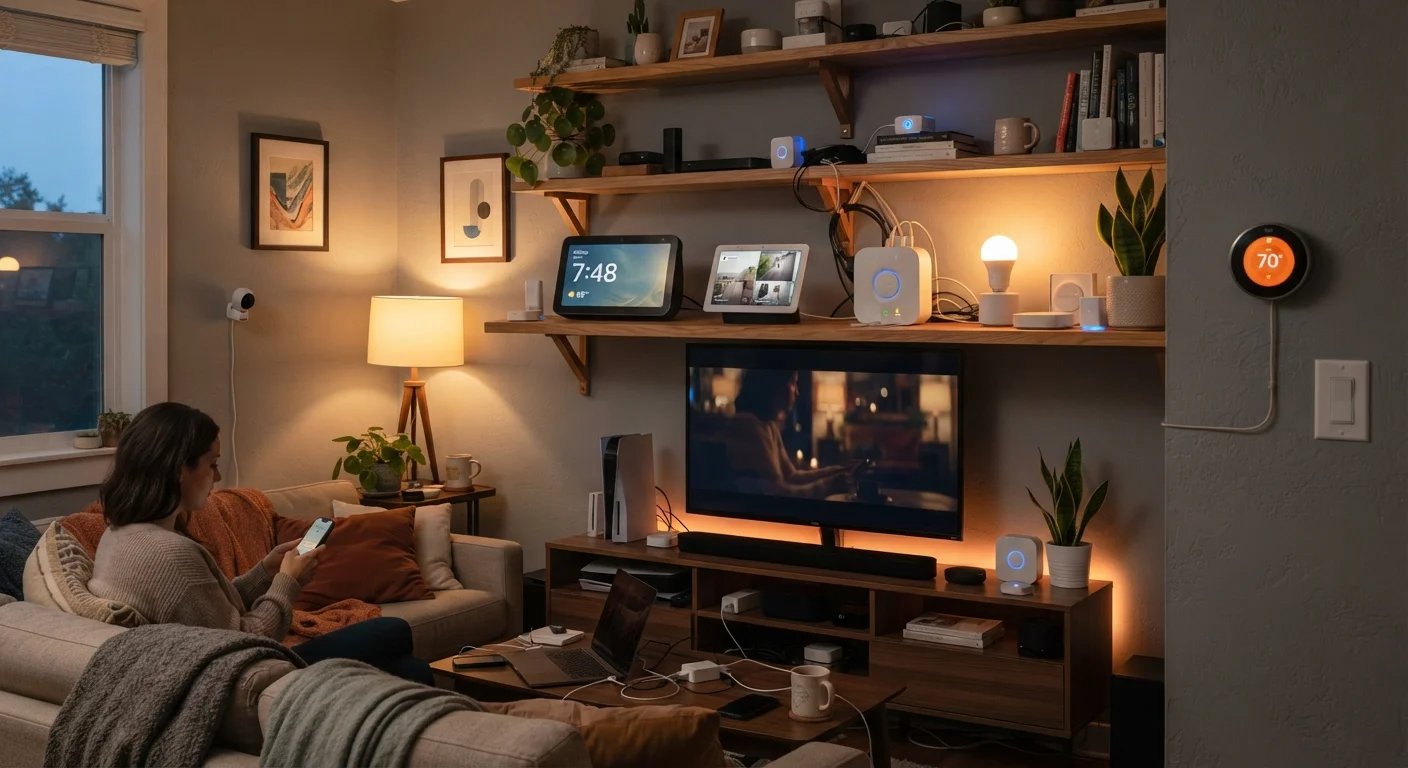
Photo: SaverSteals.com editorial
—— In This Article
Key Takeaways
- The sticker price of smart home devices rarely reflects the true long-term cost of ownership.
- Many devices require paid subscriptions to unlock core features like cloud storage or remote access.
- Ecosystem lock-in can force you to replace compatible devices when a platform shuts down or changes.
- Hub requirements, router upgrades, and installation costs add to the upfront investment.
- Interoperability has improved with standards like Matter, but gaps still exist across brands.
Genuine convenience through automation
Scheduling lights, thermostats, and locks around your routine reduces repetitive manual tasks and can improve daily comfort without ongoing effort.
Potential for measurable energy savings
Smart thermostats can reduce heating and cooling costs by adjusting temperatures automatically based on occupancy, though actual savings vary significantly by household and climate.
Remote monitoring and access
Being able to check door locks, cameras, or appliances from anywhere via a smartphone app provides peace of mind, particularly for frequent travelers.
Improved accessibility for some users
Voice-controlled and automated devices can meaningfully assist people with mobility limitations or disabilities, reducing dependence on physical controls.
Recurring subscription fees erode value
Many devices gate their most useful features — cloud storage, advanced automations, remote access — behind monthly or annual fees that accumulate across a multi-device home.
Ecosystem lock-in limits future flexibility
Investing heavily in one manufacturer's ecosystem makes switching costly, and platform discontinuations can render hardware partially or fully non-functional.
Hub and infrastructure costs add up quickly
Protocol hubs, mesh routers, and potential electrical work can add hundreds of dollars to the real cost of a setup beyond the device prices themselves.
Privacy and data exposure concerns
Smart devices collect behavioral data — when you're home, your routines, voice activity — and the extent of data sharing varies widely between manufacturers.
Reliability depends on internet connectivity
Most cloud-dependent smart devices stop responding or lose features during internet outages, which undermines the reliability advantage over conventional devices.
What the Price Tag Doesn't Tell You
Walk into any electronics section and smart home devices look like straightforward purchases: a video doorbell for $80, a smart thermostat for $130, a security camera for $60. What those tags don't communicate is that many of these products are effectively entry points into ongoing financial relationships.
Subscription fees are the most common hidden cost. Video doorbells and security cameras, for example, often store footage locally for only 24–72 hours unless you pay for cloud storage plans — which typically run $3–$10 per device per month, or more for multi-camera households. Smart locks may charge for remote access features. Some robot vacuums require paid app tiers for mapping and scheduling.
This mirrors a pattern seen in other consumer categories. Just as subscription services require careful evaluation before you commit, smart home subscriptions deserve the same scrutiny — especially when they compound across multiple devices.
$168/yr
Average annual cost of a single-camera cloud plan
Based on common tiered subscription pricing from major video doorbell and security camera manufacturers, typically ranging $3–$15 per month per device.
30+
Smart home platforms discontinued since 2015
Industry analysts have tracked dozens of smart home platform shutdowns over the past decade, leaving connected hardware without cloud support.
Hub Requirements and Infrastructure Costs
Not every smart device connects directly to your Wi-Fi. Many use Zigbee or Z-Wave radio protocols, which require a separate hub device to act as a bridge to your home network. Hubs typically cost $50–$150, and some ecosystems require their own proprietary hub rather than a universal one.
Beyond hubs, your existing router may become a bottleneck. A household with 20–30 connected devices can strain a basic router, leading to dropped connections and unreliable automations. Upgrading to a mesh Wi-Fi system — often recommended for smart home reliability — adds another $150–$400 to the picture.
Installation is another variable. Smart switches, dimmers, and thermostats often require a neutral wire in the wall, which older homes may lack. Hiring an electrician to assess or rewire adds labor costs that dwarf the device price. These infrastructure considerations are similar in spirit to the hidden financial layers explored in understanding the full cost of renting — the headline number rarely captures the complete picture.
The Matter Standard: What It Changes
Matter is an interoperability standard developed by the Connectivity Standards Alliance with participation from major tech companies. Devices certified for Matter are designed to work across different ecosystems — Apple, Google, Amazon, and others — without requiring manufacturer-specific bridges. While this reduces lock-in risk for new purchases, it does not retroactively update older devices, and not all product categories are yet covered by the standard. Checking for Matter certification is a reasonable step when evaluating new smart home hardware.
Pros and Cons of Smart Home Ownership
Smart home technology offers genuine advantages, but they come paired with real trade-offs. Understanding both sides helps you prioritize which devices are worth the investment.
Genuine convenience through automation
Scheduling lights, thermostats, and locks around your routine reduces repetitive manual tasks and can improve daily comfort without ongoing effort.
Potential for measurable energy savings
Smart thermostats can reduce heating and cooling costs by adjusting temperatures automatically based on occupancy, though actual savings vary significantly by household and climate.
Remote monitoring and access
Being able to check door locks, cameras, or appliances from anywhere via a smartphone app provides peace of mind, particularly for frequent travelers.
Improved accessibility for some users
Voice-controlled and automated devices can meaningfully assist people with mobility limitations or disabilities, reducing dependence on physical controls.
Recurring subscription fees erode value
Many devices gate their most useful features — cloud storage, advanced automations, remote access — behind monthly or annual fees that accumulate across a multi-device home.
Ecosystem lock-in limits future flexibility
Investing heavily in one manufacturer's ecosystem makes switching costly, and platform discontinuations can render hardware partially or fully non-functional.
Hub and infrastructure costs add up quickly
Protocol hubs, mesh routers, and potential electrical work can add hundreds of dollars to the real cost of a setup beyond the device prices themselves.
Privacy and data exposure concerns
Smart devices collect behavioral data — when you're home, your routines, voice activity — and the extent of data sharing varies widely between manufacturers.
Reliability depends on internet connectivity
Most cloud-dependent smart devices stop responding or lose features during internet outages, which undermines the reliability advantage over conventional devices.
For more context on how device quality and longevity factor in, see our guide to extending consumer electronics lifespan.
Ecosystem Lock-In and Platform Risk
Perhaps the most underappreciated long-term risk of smart home ownership is platform dependency. When you build around a single manufacturer's ecosystem — or a voice assistant platform — your devices' continued functionality depends on that company staying solvent and keeping the service active.
Several smart home platforms have been discontinued in recent years, leaving users with hardware that lost key features or stopped working entirely. There's no consumer protection guarantee that a manufacturer will maintain cloud services for any given product indefinitely.
The emerging Matter standard, backed by major tech companies, aims to improve cross-platform compatibility, but adoption is still rolling out and not all existing devices are eligible for updates. Buyers who diversify carefully and favor Matter-certified devices where possible carry lower ecosystem risk. This kind of deliberate, informed purchase approach aligns with the core principles of smart shopping — knowing the long-term implications before you commit.
Making Smart Choices Before You Buy
The most effective way to control smart home costs is to audit the full ownership picture before purchasing any device. Ask: Does this device require a hub? Does full functionality require a subscription? What happens to my data and device if the company closes or changes its terms?
Prioritize devices that offer meaningful local control — functionality that doesn't depend entirely on a manufacturer's cloud servers. Check whether devices carry Matter or Thread certification for broader compatibility. And resist the urge to automate everything at once; a phased approach lets you evaluate real-world value before expanding your ecosystem.
The home essentials category is a useful frame here — smart devices should solve real problems in your household, not just add complexity. Similar judgment applies when evaluating which appliances genuinely earn their place in your home.
This article provides general consumer information and education. Costs, subscription terms, and platform availability vary by product and manufacturer and are subject to change. Verify current terms directly with device manufacturers before purchasing.

Shopping Editorial Team
Shopping Editorial Team is the collective byline for our editorial team and contributor network. Articles published under this byline or an editorial pen name are researched, written, and reviewed according to our editorial standards for clarity, consistency, and independence before publication.
View author profile