
Indoor vs. Outdoor Cats: Weighing the Long-Term Trade-Offs
An honest look at the health, behavioral, and safety differences between keeping cats indoors versus allowing outdoor access.
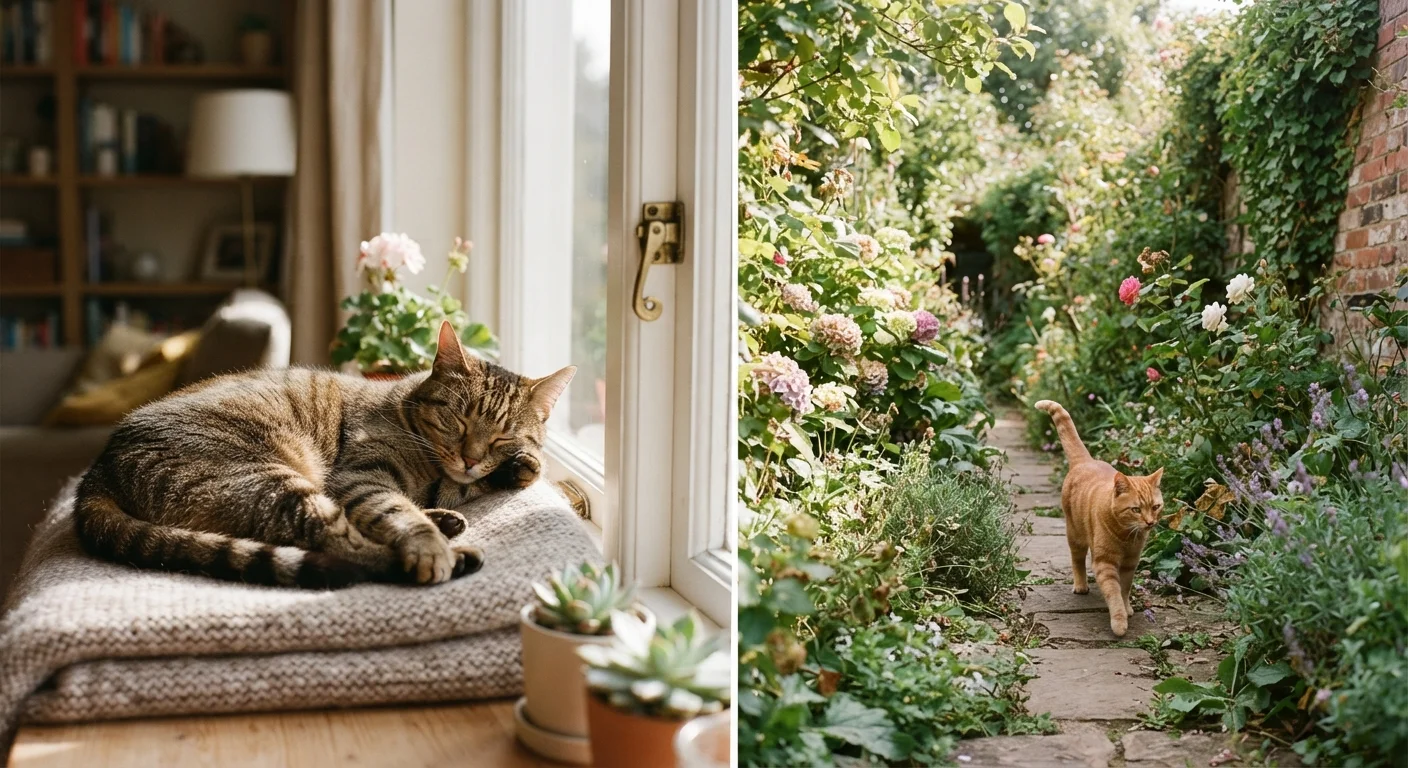
Photo: SaverSteals.com editorial
—— In This Article
Key Takeaways
- Indoor cats typically live longer due to reduced exposure to predators, traffic, and disease.
- Outdoor access can support natural behaviors but brings real safety and health risks.
- Environmental enrichment can meaningfully close the quality-of-life gap for indoor-only cats.
- Your local environment — urban, suburban, or rural — should heavily influence your decision.
- Regular veterinary checkups are important regardless of which lifestyle you choose.
Significantly reduced risk of traumatic injury
Indoor cats avoid cars, predators, and fights with other animals — among the leading causes of injury and premature death in free-roaming cats.
Lower exposure to infectious disease and parasites
Diseases like FeLV, FIV, and upper respiratory infections spread through contact with other cats; indoor cats have far less opportunity for exposure.
Easier to monitor health changes
When a cat stays home, owners are more likely to notice changes in appetite, litter box habits, or behavior — early warning signs that something may be wrong.
No risk of getting lost or stolen
Indoor cats can't wander into unfamiliar territory, become disoriented, or be taken in by well-meaning strangers who assume they're strays.
Longer average lifespan
While exact figures depend on the study, veterinary consensus is consistent: cats with outdoor access face a meaningfully higher risk of shortened lives due to external hazards.
Higher risk of injury from traffic and predators
Even in suburban neighborhoods, cars and wildlife pose real dangers. Rural areas add coyotes and birds of prey to the threat landscape.
Greater exposure to parasites and illness
Fleas, ticks, intestinal parasites, and communicable viruses are all more accessible to cats that spend time outside, requiring more frequent preventive care.
Impact on local wildlife populations
Free-roaming domestic cats are documented predators of birds and small mammals; this is a genuine ecological consideration for owners in areas with vulnerable wildlife.
Harder to track health changes
A cat that spends hours outside may sustain an injury or develop an illness that owners don't notice until the situation is more advanced.
Why This Decision Matters More Than Most Owners Realize
The indoor-versus-outdoor question might seem straightforward, but it's one of the most consequential choices a cat owner makes. It shapes your cat's lifespan, behavioral health, and daily quality of life — sometimes in ways that aren't obvious until problems emerge.
There's no universal answer. What's right for a confident, healthy cat in a rural area may be completely wrong for a timid cat in a city. Understanding the real trade-offs — not just the conventional wisdom — helps you make a decision you can feel good about. For a broader look at how the two lifestyles compare across multiple dimensions, see our deep dive into the indoor-outdoor debate.
This Is General Information, Not Veterinary Advice
Every cat is different. Factors like age, health status, temperament, and local environment all affect which lifestyle is safest and most enriching for your individual pet. Use this article as a starting point for thinking through the trade-offs, but discuss specific decisions — especially if your cat has existing health conditions — with a licensed veterinarian.
The Case for Keeping Cats Indoors
Indoor living removes a long list of hazards that contribute to injury and early death in cats. Traffic, predators, toxins, and contagious diseases are all dramatically reduced when a cat stays inside. Veterinary and wildlife organizations in the U.S. generally report that indoor cats live significantly longer on average than cats with outdoor access — though exact figures vary by study and population.
Significantly reduced risk of traumatic injury
Indoor cats avoid cars, predators, and fights with other animals — among the leading causes of injury and premature death in free-roaming cats.
Lower exposure to infectious disease and parasites
Diseases like FeLV, FIV, and upper respiratory infections spread through contact with other cats; indoor cats have far less opportunity for exposure.
Easier to monitor health changes
When a cat stays home, owners are more likely to notice changes in appetite, litter box habits, or behavior — early warning signs that something may be wrong.
No risk of getting lost or stolen
Indoor cats can't wander into unfamiliar territory, become disoriented, or be taken in by well-meaning strangers who assume they're strays.
Longer average lifespan
While exact figures depend on the study, veterinary consensus is consistent: cats with outdoor access face a meaningfully higher risk of shortened lives due to external hazards.
That said, the indoor life isn't without its challenges. Boredom, lack of physical exercise, and stress-related behaviors like overgrooming can emerge when a cat's environment doesn't provide enough stimulation. The good news is that thoughtful enrichment — puzzle feeders, vertical climbing space, window perches, and interactive play — can address most of these gaps. Designing a pet-friendly home is also worth thinking through as part of creating a truly enriching indoor space.
The Case for Outdoor Access
Cats evolved as hunters, and outdoor environments offer stimulation that's genuinely difficult to replicate inside: variable scents, textures, temperatures, and the opportunity to express predatory instincts. For some cats — particularly those with high energy or bold temperaments — outdoor time may reduce stress behaviors and support emotional balance.
Higher risk of injury from traffic and predators
Even in suburban neighborhoods, cars and wildlife pose real dangers. Rural areas add coyotes and birds of prey to the threat landscape.
Greater exposure to parasites and illness
Fleas, ticks, intestinal parasites, and communicable viruses are all more accessible to cats that spend time outside, requiring more frequent preventive care.
Impact on local wildlife populations
Free-roaming domestic cats are documented predators of birds and small mammals; this is a genuine ecological consideration for owners in areas with vulnerable wildlife.
Harder to track health changes
A cat that spends hours outside may sustain an injury or develop an illness that owners don't notice until the situation is more advanced.
The risks, however, are significant and worth naming clearly. Beyond traffic and predators, outdoor cats face exposure to parasites, infectious diseases like feline leukemia virus (FeLV) and feline immunodeficiency virus (FIV), and encounters with toxic plants or substances. Because cats often hide signs of illness, injuries or infections picked up outside may go unnoticed until they become serious. Learning to recognize when your cat may be hiding illness is especially important for owners who allow outdoor access.
Finding a Middle Ground
For many cats and owners, a managed hybrid approach offers the best of both worlds. Secure outdoor enclosures — often called "catios" — allow cats to experience fresh air, sunlight, and natural stimuli without the dangers of free roaming. Leash training is another option some cats adapt to well, though it requires patience and a calm temperament.
2–5x
Lifespan difference: indoor vs. outdoor cats
Veterinary sources, including the American Veterinary Medical Association, consistently note that indoor cats live substantially longer on average than outdoor or indoor-outdoor cats, though exact multipliers vary by study.
~1.3–4B
Birds killed annually by free-roaming cats in the U.S.
A widely cited 2013 study published in Nature Communications estimated that free-roaming cats — including pets — kill billions of birds and small mammals in the U.S. each year.
Whatever you choose, the key is matching the environment to your cat's individual personality. A shy, anxious cat may find outdoor spaces overwhelming rather than enriching. Understanding your cat's body language is a foundational skill here — learning to read your cat's cues can help you gauge whether outdoor time is genuinely positive for them or a source of stress.
If you're questioning assumptions you've held about what cats need, common myths about pet behavior is worth reading — many widely held beliefs about feline independence and outdoor necessity don't hold up under scrutiny.
This article is for general informational purposes only and does not constitute veterinary advice. Consult a licensed veterinarian for guidance specific to your cat's health, history, and circumstances.

Pets Editorial Team
Pets Editorial Team is the collective byline for our editorial team and contributor network. Articles published under this byline or an editorial pen name are researched, written, and reviewed according to our editorial standards for clarity, consistency, and independence before publication.
View author profile