
Crate Training vs. Free-Roaming: Which Suits Your Dog?
Compare confinement and free-roaming approaches to managing dogs at home—benefits, drawbacks, and factors that influence the right fit.
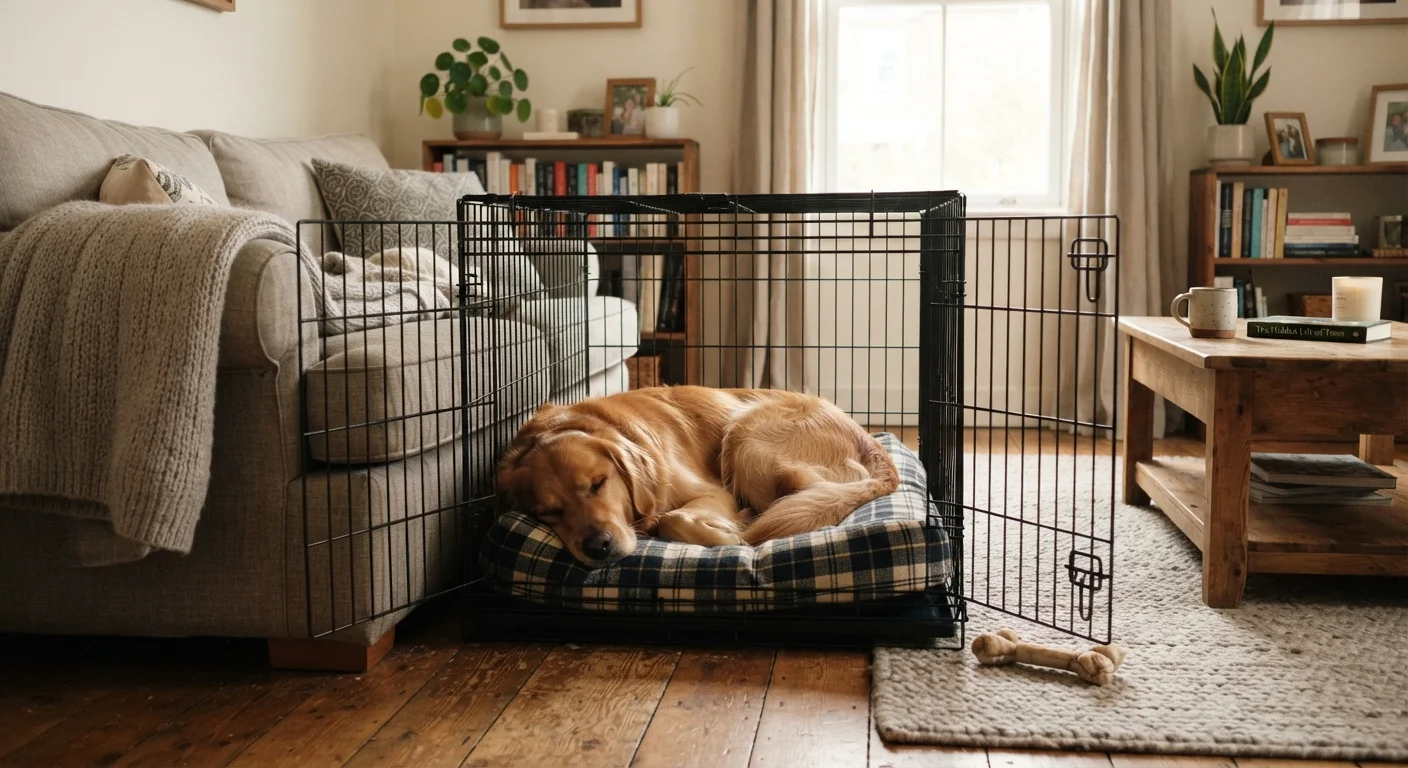
Photo: SaverSteals.com editorial
—— In This Article
Key Takeaways
- Crate training leverages a dog's natural denning instinct and can reduce anxiety and accidents during housetraining.
- Free-roaming works best for calm, well-trained adult dogs in fully pet-proofed homes.
- A dog's age, breed tendencies, and anxiety level are key factors in choosing the right approach.
- Many owners use a hybrid strategy — crating when unsupervised, free-roaming when home.
- Neither method is universally superior; the goal is your dog's safety and emotional wellbeing.
Understanding the Two Approaches
When it comes to managing your dog's time at home — especially when you're away — owners generally land in one of two camps: crate training, which confines a dog to a designated enclosure for part of the day, or free-roaming, which allows the dog access to some or all of the home unsupervised.
Neither approach is inherently harsh or indulgent. Each carries real benefits and genuine trade-offs. What works for a 10-week-old Labrador puppy will look very different from what suits a five-year-old rescue greyhound. Understanding both options — and knowing which variables matter most — is the real starting point. See our overview of how dogs learn for useful context on how management shapes behavior over time.
The Case for Crate Training
Dogs are descended from den-dwelling animals, and many adapt naturally to a well-introduced crate. When crate training is done gradually and positively — never as punishment — the crate can become a calm, self-selected retreat rather than a source of stress.
Key benefits
- Housetraining support: Dogs instinctively avoid soiling their sleeping area, making crates one of the most effective housetraining tools available.
- Safety during unsupervised periods: Chewing electrical cords, ingesting household items, or escaping through an open door are real risks for untrained dogs left alone.
- Anxiety management: Some dogs — particularly those prone to overstimulation — settle more easily in a contained, quiet space.
- Consistency: A predictable environment supports daily routines that reduce behavioral stress.
Introduce the Crate Gradually
Never place a dog in a crate for the first time and leave immediately. Spend several days building positive associations — tossing treats inside, feeding meals near or in the crate, and sitting nearby while the dog rests. A dog that chooses the crate on its own is a dog that finds it genuinely comfortable.
The main risks with crating are overuse and under-preparation. Adult dogs should generally not be crated for more than four to five hours at a stretch during the day. Puppies need more frequent breaks. Always build positive associations with the crate before asking your dog to spend extended time inside.
The Case for Free-Roaming
Allowing a dog to move freely through the home can support independence, reduce boredom, and strengthen the dog's confidence — provided the conditions are right. Free-roaming is most appropriate for adult dogs who are reliably housetrained, not destructive, and living in a properly pet-proofed space.
Key benefits
- Physical comfort: Dogs can stretch, change resting spots, and access water freely.
- Mental stimulation: Access to windows, scents, and varied environments reduces boredom during alone time.
- Bonding environment: Dogs that are trusted with house freedom often develop a calmer, more secure relationship with their owners.
Free-Roaming Isn't a Shortcut
Skipping the training phase and simply leaving a dog loose in the home often leads to accidents, property damage, and — in the worst cases — injury to the dog. Free-roaming should be earned progressively, not assumed from day one. If your dog is struggling with alone time, consult a certified professional trainer before abandoning a structured management plan.
Free-roaming is not appropriate for every dog. Puppies, dogs with separation anxiety, and those with a history of destructive behavior are poor candidates without significant prior training. In multi-pet households — such as homes with both cats and dogs — unsupervised access to one another can also introduce stress or conflict. See our guide on cats and dogs sharing a home for more on managing this dynamic.
Key Factors That Shape the Right Choice
There is no single correct answer — the best approach depends on several intersecting variables.
| Crate Training | Free-Roaming | |
|---|---|---|
| Best suited for | Puppies, dogs in housetraining, anxious dogs | Calm, trained adult dogs |
| Safety during alone time | High — limits access to hazards | Depends on pet-proofing level |
| Housetraining support | Strong — leverages natural instinct | Relies on prior training being solid |
| Physical comfort over long periods | Limited — requires regular breaks | High — full movement and water access |
| Boredom and stimulation | Lower unless enrichment is provided | Higher — varied environment |
| Ease of introduction | Requires gradual positive training | Requires reliable prior training |
| Risk of destructive behavior | Low — confined space | Higher without solid training |
Your dog's age is one of the most decisive factors. Puppies almost always benefit from crate training during the housetraining period. As covered in our look at matching life stage to the right dog, senior dogs with established calm temperaments often transition easily to free-roaming, while high-drive young adults may need a longer managed phase. Owners who spend most of the day at home have more flexibility than those away for long stretches — an important consideration for solo pet owners building their routines.
A Hybrid Approach: The Middle Path
Many experienced dog owners land on a hybrid strategy: crating when away or overnight, and allowing supervised freedom when home. This approach lets dogs gradually earn trust and independence while keeping safety guardrails in place during higher-risk periods.
The transition typically looks like this: start with a crate as the default, introduce short free-roaming periods while you're present and can observe behavior, and slowly expand both duration and access as the dog demonstrates reliability. Pairing this with a consistent pet lifestyle framework — regular feeding, exercise, and social time — makes the process far smoother. The training method you use alongside either approach will also shape outcomes significantly.
This article is for general informational purposes only and does not constitute professional veterinary or behavioral advice. For concerns about your individual dog's anxiety, health, or behavior, consult a qualified veterinarian or certified animal behaviorist.

Pets Editorial Team
Pets Editorial Team is the collective byline for our editorial team and contributor network. Articles published under this byline or an editorial pen name are researched, written, and reviewed according to our editorial standards for clarity, consistency, and independence before publication.
View author profile