
Metal Tiers Explained: What Bronze, Silver, Gold, and Platinum Plans Actually Mean
ACA metal tiers aren't about quality — they're about cost-sharing split. Learn what each tier means for premiums and out-of-pocket costs.
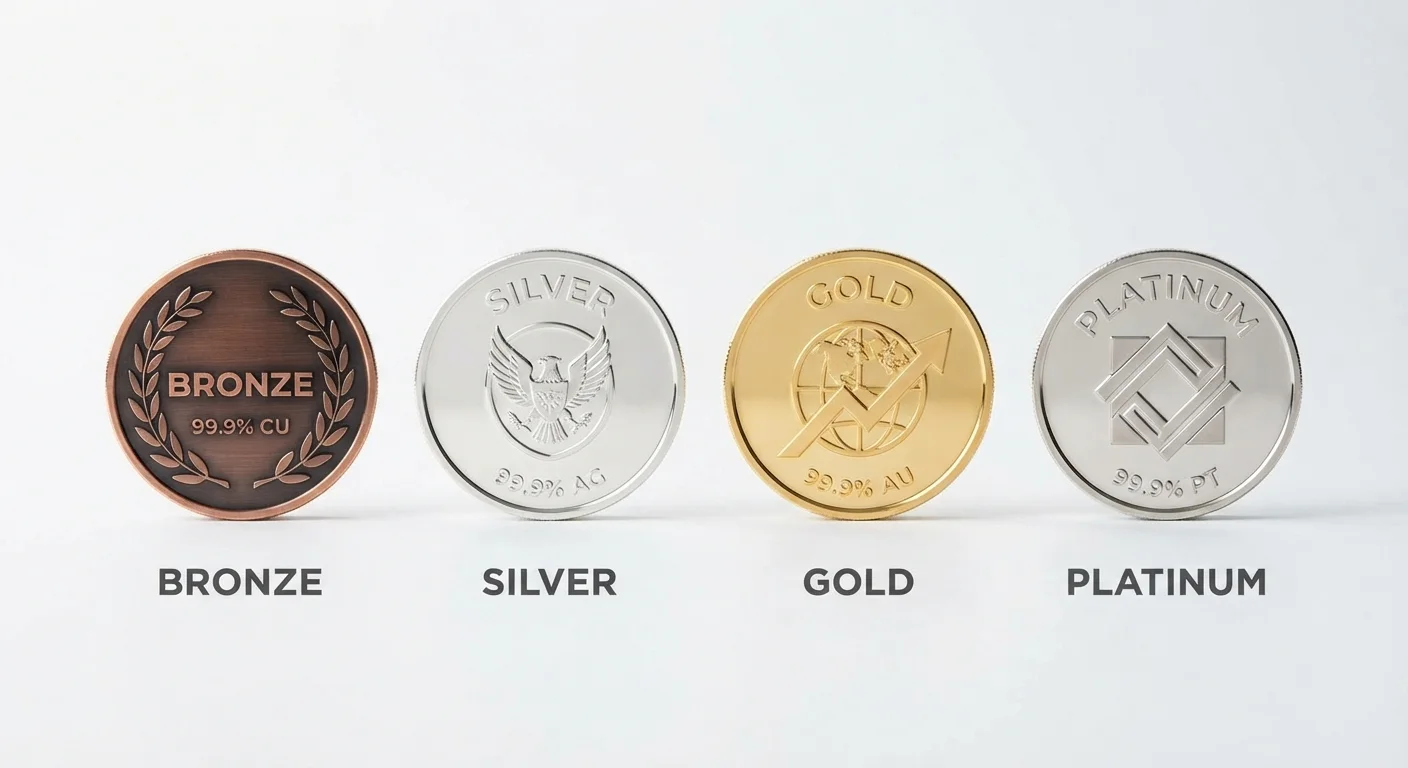
Photo: SaverSteals.com editorial
—— In This Article
Key Takeaways
- Metal tiers describe cost-sharing ratios, not the quality of coverage or care.
- Higher-tier plans (Gold, Platinum) typically charge more in monthly premiums but less when you use care.
- Lower-tier plans (Bronze, Catastrophic) have lower premiums but higher out-of-pocket costs at time of service.
- Silver plans are the only tier eligible for Cost-Sharing Reductions (CSRs) if you qualify by income.
- Choosing the right tier depends on how much healthcare you expect to use, not just which premium fits your budget.
- Always read the actual Summary of Benefits before enrolling — actuarial values are averages, not individual guarantees.
The Core Idea: It's About Cost-Sharing, Not Quality
When you shop for health insurance on the ACA marketplace, every plan carries one of four metal labels: Bronze, Silver, Gold, or Platinum. A common misconception is that Platinum means superior doctors or more covered services. It doesn't. The metal name tells you one specific thing: how total average medical costs are split between the insurance company and you.
This split is measured by actuarial value (AV) — the estimated percentage of covered medical expenses the plan pays for a typical population. The higher the AV, the more the insurer covers on average, and the less you pay when you actually use care. In exchange, you pay a higher monthly premium to hold that plan.
~60%
Actuarial value of Bronze plans
Bronze plans pay roughly 60% of average covered medical costs, leaving approximately 40% to the enrollee through deductibles, copays, and coinsurance.
~90%
Actuarial value of Platinum plans
Platinum plans cover roughly 90% of average covered costs, offering the lowest out-of-pocket exposure at the cost of the highest monthly premium.
Silver only
Tier eligible for Cost-Sharing Reductions
Under the ACA, Cost-Sharing Reductions (CSRs) are available exclusively on Silver-tier marketplace plans for qualifying income levels.
Understanding this trade-off is the foundation of choosing a tier that fits your situation. For a deeper look at how individual cost-sharing components work, see our explainer on deductibles, copays, and coinsurance.
What Each Tier Actually Looks Like
Bronze (~60% AV)
Bronze plans carry the lowest monthly premiums in the marketplace. The trade-off is a high deductible and significant cost-sharing when you receive care. These plans work best for people who are generally healthy, use minimal services, and want protection against major or catastrophic expenses rather than routine care costs.
Silver (~70% AV)
Silver plans sit in the middle. They are the only tier eligible for Cost-Sharing Reductions (CSRs) — federal subsidies that can lower your deductible, copays, and out-of-pocket maximum if your household income qualifies. For many marketplace shoppers who qualify for CSRs, a Silver plan can provide value that rivals a Gold plan at a lower sticker premium.
Gold (~80% AV)
Gold plans have higher premiums than Bronze or Silver but lower out-of-pocket costs when you use care. If you anticipate frequent doctor visits, ongoing prescriptions, or regular specialist care, the premium investment in a Gold plan can save money over the year compared to a lower tier with high deductibles.
Platinum (~90% AV)
Platinum plans pay the highest share of covered costs on average. They carry the highest monthly premiums of the four standard tiers. These plans are most financially advantageous for people with significant, predictable medical needs where keeping out-of-pocket costs low throughout the year matters most.
The Silver Tier Exception: Cost-Sharing Reductions
Silver plans deserve special attention because of their unique role in the marketplace. If your household income falls within qualifying ranges set by the ACA, you may be eligible for Cost-Sharing Reductions applied exclusively to Silver plans. These CSRs reduce the out-of-pocket costs you face — not just the premium — which can meaningfully change the plan's real-world value.
CSRs Are Applied Automatically — If You Qualify
You don't apply for Cost-Sharing Reductions separately. When you enroll in a Silver plan through the marketplace and your income qualifies, CSRs are factored into your plan's cost-sharing structure automatically. Your eligibility is determined based on the household income information you provide during enrollment. If your income changes during the year, updating your marketplace application can affect your CSR level.
Even if two people have the same Silver plan, their effective coverage experience can differ substantially based on whether they receive CSRs and at what level. This is why evaluating a plan solely on its metal label, without checking for subsidy eligibility, can lead to an incomplete picture.
How to Think About Tiers When Choosing a Plan
The right tier for you depends on two interconnected factors: your expected healthcare use and your financial comfort with uncertainty. A low premium is only a bargain if the cost-sharing you'd face during care doesn't exceed what you saved.
Run the Numbers Before Choosing a Tier
Add up your estimated annual premium for each tier, then estimate what you'd pay in deductibles, copays, and coinsurance based on your typical healthcare use. The tier with the lowest total — premium plus expected out-of-pocket — is likely your best financial fit. Don't forget to check whether an HSA-eligible Bronze or Silver plan could let you set aside pre-tax dollars to offset cost-sharing.
Think through a realistic scenario: if you have a chronic condition requiring regular care, calculate your likely annual costs under a Bronze plan's high deductible versus a Gold plan's higher premium. Similarly, as outlined in our article on why your premium alone doesn't tell you a plan's true cost, the monthly payment is only one part of the financial picture.
Also consider that metal tiers don't address provider networks, drug formularies, or specific covered services — all of which vary by plan. When you're ready to compare options during open enrollment, our structured approach to comparing health plans can help you evaluate the full picture systematically.
This article provides general information about ACA health insurance structures and is not personalized insurance, financial, or legal advice. Coverage terms, eligibility, and costs vary by plan and provider. Always review the actual Summary of Benefits and Coverage document and consult a licensed insurance professional for guidance specific to your situation.
Frequently Asked Questions

Insurance Editorial Team
Insurance Editorial Team is the collective byline for our editorial team and contributor network. Articles published under this byline or an editorial pen name are researched, written, and reviewed according to our editorial standards for clarity, consistency, and independence before publication.
View author profile