
Why Your Premium Alone Doesn't Tell You What a Health Plan Will Cost
A low premium can mask a high true cost. Learn how to factor in deductibles, coinsurance, and out-of-pocket limits when sizing up a plan.
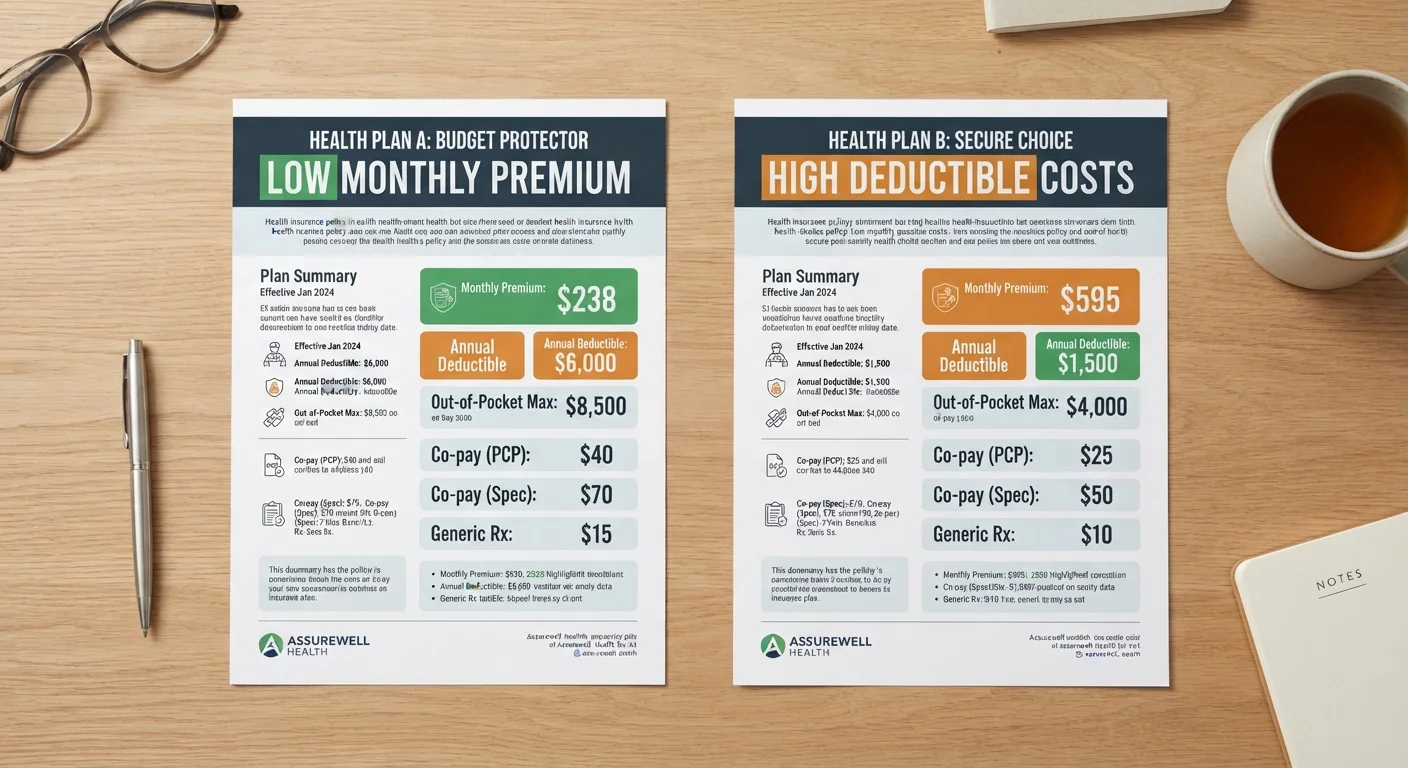
Photo: SaverSteals.com editorial
—— In This Article
Key Takeaways
- Your monthly premium is only one of several costs that determine what a health plan actually charges you.
- Deductibles, coinsurance percentages, and out-of-pocket maximums can dramatically shift your total annual expense.
- A plan with a lower premium often carries a higher deductible, meaning you pay more when you actually use care.
- Always calculate a worst-case annual cost scenario before choosing a plan, not just the monthly premium.
- Network restrictions can add unexpected costs even when you think you have coverage.
The Premium Is Just the Entry Price
When comparing health plans, the monthly premium gets most of the attention — and it's easy to understand why. It's the number that shows up first, repeats every month, and feels tangible in a way that other costs don't. But treating the premium as the total cost of a plan is one of the most common and consequential mistakes consumers make during open enrollment.
Health insurance costs are layered. The premium buys you access to coverage; what you pay when you actually use that coverage is a separate matter entirely. Understanding how coverage actually works — from deductibles to coinsurance to out-of-pocket limits — is essential before you can make a meaningful comparison between plans.
Think of it this way: two plans might both cost $300 per month. But one might carry a $1,500 deductible and 20% coinsurance, while the other has a $5,000 deductible and 40% coinsurance. The premium is identical; the potential annual cost is not.
$1,763
Average individual deductible for employer-sponsored plans
According to the Kaiser Family Foundation's 2023 Employer Health Benefits Survey, the average annual deductible for single coverage in employer plans was approximately $1,763.
$9,450
ACA out-of-pocket maximum for individual plans
For plan years covered under ACA rules, the out-of-pocket maximum for individual coverage sets a federal ceiling on what you can be required to pay for covered in-network services.
43%
Workers enrolled in high-deductible health plans
The Kaiser Family Foundation's 2023 survey found that roughly 43% of covered workers were enrolled in a high-deductible health plan paired with a savings option.
Common Mistakes That Inflate Your Real Cost
The gap between what people expect to pay and what they actually pay often comes down to a handful of predictable errors. Each one is avoidable once you know what to look for.
Choosing a plan based solely on the monthly premium amount.
Why it happens: The premium is the most visible number during enrollment — it appears front and center on comparison tools and feels like the clearest apples-to-apples figure.
Underestimating how quickly a high deductible adds up after a single medical event.
Why it happens: Many people enroll in a high-deductible plan assuming they are healthy and won't need significant care, overlooking the possibility of an unexpected injury, illness, or diagnostic procedure.
Confusing coinsurance with a copay, leading to surprise bills after major services.
Why it happens: Copays are flat fees that feel predictable, while coinsurance is a percentage of the allowed amount — which may be far higher than expected for a specialist visit, imaging, or surgical procedure.
Ignoring whether your preferred providers and prescriptions are covered in-network.
Why it happens: Shoppers often compare plans on cost structure alone, assuming their current doctors will be covered, without verifying network participation before enrolling.
Overlooking the out-of-pocket maximum when evaluating catastrophic risk.
Why it happens: Consumers focus on day-to-day costs and may not realize that the out-of-pocket maximum is the true ceiling on what they could pay in a worst-case year.
For a deeper look at how each cost-sharing element works individually, see this breakdown of deductibles, copays, and coinsurance. And if you're concerned about whether certain services will cost you anything before the deductible, preventive care coverage rules are worth reviewing separately.
Always Read the Summary of Benefits and Coverage
Every ACA-compliant health plan is required to provide a Summary of Benefits and Coverage (SBC) — a standardized document that lists deductibles, copays, coinsurance rates, and out-of-pocket limits in a consistent format. This document is your most reliable tool for comparing plans side by side. Do not rely on marketing summaries or enrollment brochures alone; the SBC contains the binding details that determine what you will actually pay.
How to Build a Realistic Cost Estimate
The most effective way to evaluate a health plan is to model two scenarios: a low-use year and a high-use year. In a low-use year, your cost is roughly 12 times the monthly premium plus any copays for routine visits. In a high-use year — an injury, a chronic condition flare, or a surgery — your cost could approach the full out-of-pocket maximum plus the annual premium.
Adding those two numbers together gives you a ceiling: the most you could possibly pay under that plan in a given year. Compare that ceiling across the plans you're considering, not just the monthly premium. A plan that saves you $50 per month in premium but raises your potential ceiling by $3,000 is not necessarily the better financial choice.
It's also worth remembering that the same logic applies in other insurance contexts. In auto insurance, choosing a higher deductible lowers your premium — but raises your out-of-pocket cost after a claim. The trade-off structure is similar, and the principle of looking beyond the headline number holds in both cases.
Common Health Insurance Myths Can Be Costly
Assumptions like 'I'm young and healthy so I won't need much care' or 'the cheapest plan is always the smartest choice' lead many people into coverage gaps they don't discover until a bill arrives. Review common health insurance myths that influence enrollment decisions before you commit to a plan.
This article provides general information about health insurance cost structures and is not personalized financial or insurance advice. Coverage terms, costs, and plan structures vary by insurer, state, and individual circumstances. Always read the Summary of Benefits and Coverage document for any plan you're considering, and consult a licensed insurance professional for guidance specific to your situation.

Insurance Editorial Team
Insurance Editorial Team is the collective byline for our editorial team and contributor network. Articles published under this byline or an editorial pen name are researched, written, and reviewed according to our editorial standards for clarity, consistency, and independence before publication.
View author profile