
Hydration Beyond Water: How Food Contributes to Your Daily Fluid Intake
Many foods contribute significantly to daily hydration. Explore how fruits, vegetables, soups, and other foods factor into your fluid balance.
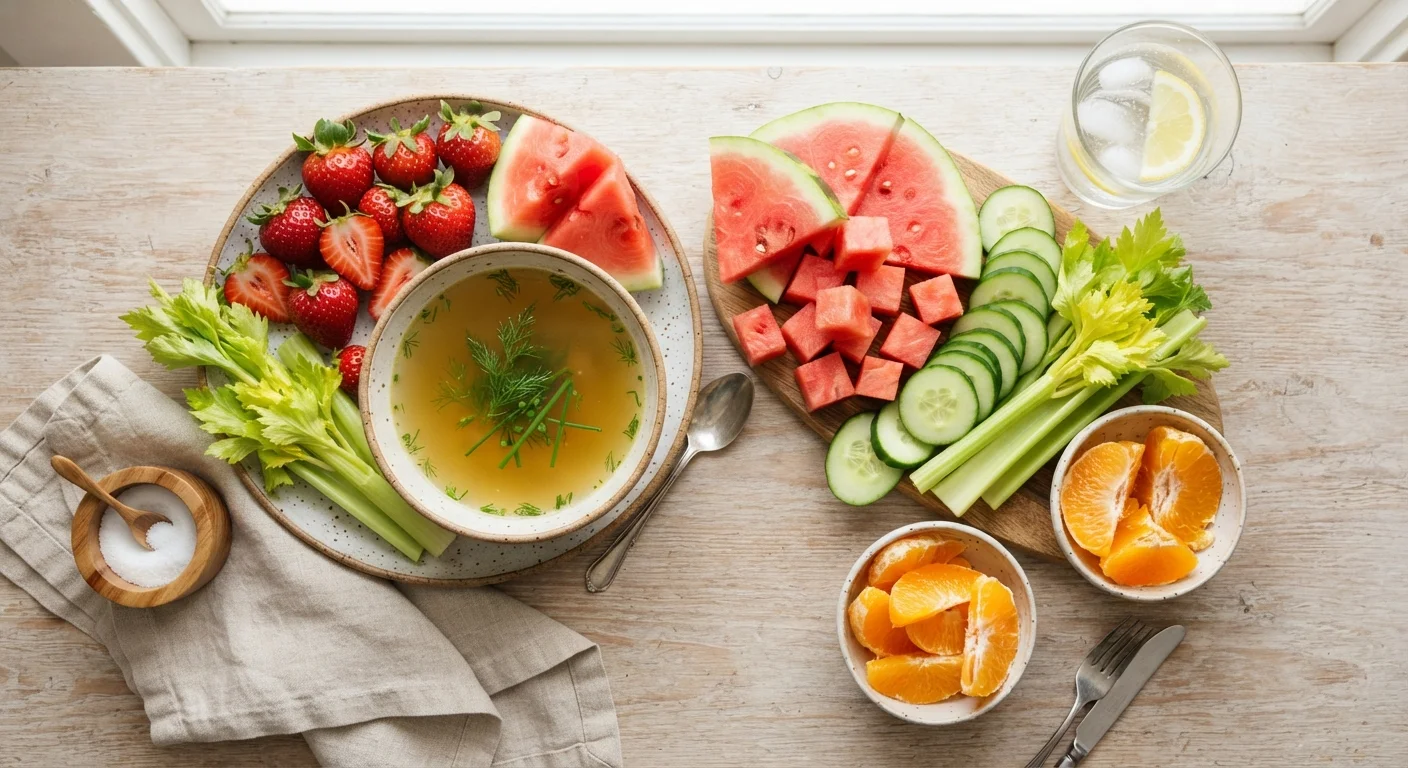
Photo: SaverSteals.com editorial
—— In This Article
Key Takeaways
- Food contributes an estimated 20% of total daily fluid intake for most adults.
- Fruits and vegetables with very high water content include cucumber, lettuce, celery, tomatoes, and watermelon.
- Soups, broths, and stews are among the most efficient food-based sources of hydration.
- Eating a variety of whole, minimally processed foods naturally supports fluid balance.
- Individual fluid needs vary based on body size, activity level, climate, and health status.
Why Food-Based Fluids Matter
Most conversations about hydration focus exclusively on beverage intake — water, sports drinks, herbal teas. But the foods on your plate are quietly doing hydration work too. According to nutritional research, the average adult obtains roughly 20% of their daily fluid intake from food, and for people who eat abundant fruits and vegetables, that figure can climb higher.
This matters because it reframes hydration as something that happens across your entire diet, not just at the water fountain. Understanding how food contributes to fluid balance can help you make smarter choices about what you eat — particularly when you're trying to support overall wellness. It also challenges some long-standing oversimplifications, like the idea that everyone needs exactly eight glasses of water per day. As our piece on nutrition myths science has moved past explores, fluid needs are far more individual than that rule suggests.
~20%
Daily fluid intake from food for typical adults
Established nutritional research consistently estimates that food contributes roughly one-fifth of total daily fluid intake in adults following a mixed diet.
96%
Water content of cucumber by weight
USDA nutritional data shows cucumber ranks among the highest water-content foods commonly consumed in the American diet.
73%
Water content of the human body
The U.S. Geological Survey notes that the adult human body is approximately 60–73% water, underlining why consistent fluid intake from all sources matters.
The Most Hydrating Foods You Can Eat
Water content in food is measured as a percentage of total weight. Foods above 90% water by weight are considered highly hydrating. Some of the leaders include:
- Cucumber: approximately 96% water
- Iceberg lettuce and celery: around 95–96% water
- Tomatoes and zucchini: roughly 94–95% water
- Watermelon and strawberries: approximately 91–92% water
- Cantaloupe and peaches: around 88–90% water
Beyond raw produce, soups and broths are among the most practical hydrating foods in the American diet. A bowl of vegetable or chicken broth delivers fluid alongside electrolytes like sodium and potassium — a combination that can support fluid retention in the body more effectively than plain water alone in some contexts.
How Cooking and Processing Change the Picture
The water content of any food isn't fixed — it shifts with how that food is prepared. Cooking methods have a meaningful impact:
- Boiling and poaching tend to preserve or even add moisture to foods like grains and legumes.
- Roasting and grilling drive off water through evaporation, concentrating flavor but reducing hydration value.
- Frying replaces surface moisture with oil, dramatically cutting water content.
Ultra-processed foods — crackers, chips, shelf-stable snacks — tend to have very low water content and often contain high levels of sodium, which can increase the body's overall fluid demands. Choosing whole, minimally processed foods isn't just about nutrients; it also naturally supports hydration. For a broader look at how food choices affect nutrient intake, our vitamins and minerals reference guide is a useful companion resource.
Build Hydration Into Your Meals
Start meals with a broth-based soup or a water-rich salad to front-load your fluid intake before the main course. Pairing high-water fruits like melon or berries with breakfast is another low-effort way to increase your food-based hydration throughout the day.
Putting It All Together: Food as Part of Your Fluid Strategy
Dietary hydration from food is a complement to, not a replacement for, drinking fluids throughout the day. That said, building your meals around water-rich foods is a practical, evidence-supported way to support overall hydration — especially useful on hot days, during illness, or when increased activity raises fluid needs.
Individual requirements depend on many factors: body weight, activity level, climate, age, and underlying health conditions. Pregnant and breastfeeding individuals, older adults, and those with chronic health conditions should discuss their specific fluid needs with a qualified healthcare provider rather than relying on general guidelines.
The simplest takeaway is this: a diet abundant in fruits, vegetables, legumes, and broth-based dishes naturally moves you toward better hydration — no tracking required.
“Hydration is not just about drinking water. The foods we choose — particularly fruits, vegetables, and broths — play a meaningful role in meeting the body's daily fluid needs.”
— National Academy of Medicine, U.S. body that establishes Dietary Reference Intakes, including adequate intake values for total water from all sources
This article is for general informational and educational purposes only. It is not a substitute for professional medical advice, diagnosis, or treatment. Always consult a qualified healthcare provider with questions about your health or nutritional needs.
Frequently Asked Questions

Health Editorial Team
Health Editorial Team is the collective byline for our editorial team and contributor network. Articles published under this byline or an editorial pen name are researched, written, and reviewed according to our editorial standards for clarity, consistency, and independence before publication.
View author profile