
Evaluating Fabric Quality When Shopping Discounted Clothing
A low price means little if the garment wears out quickly. Learn to assess fabric weight, weave, and care labels before committing to a sale purchase.
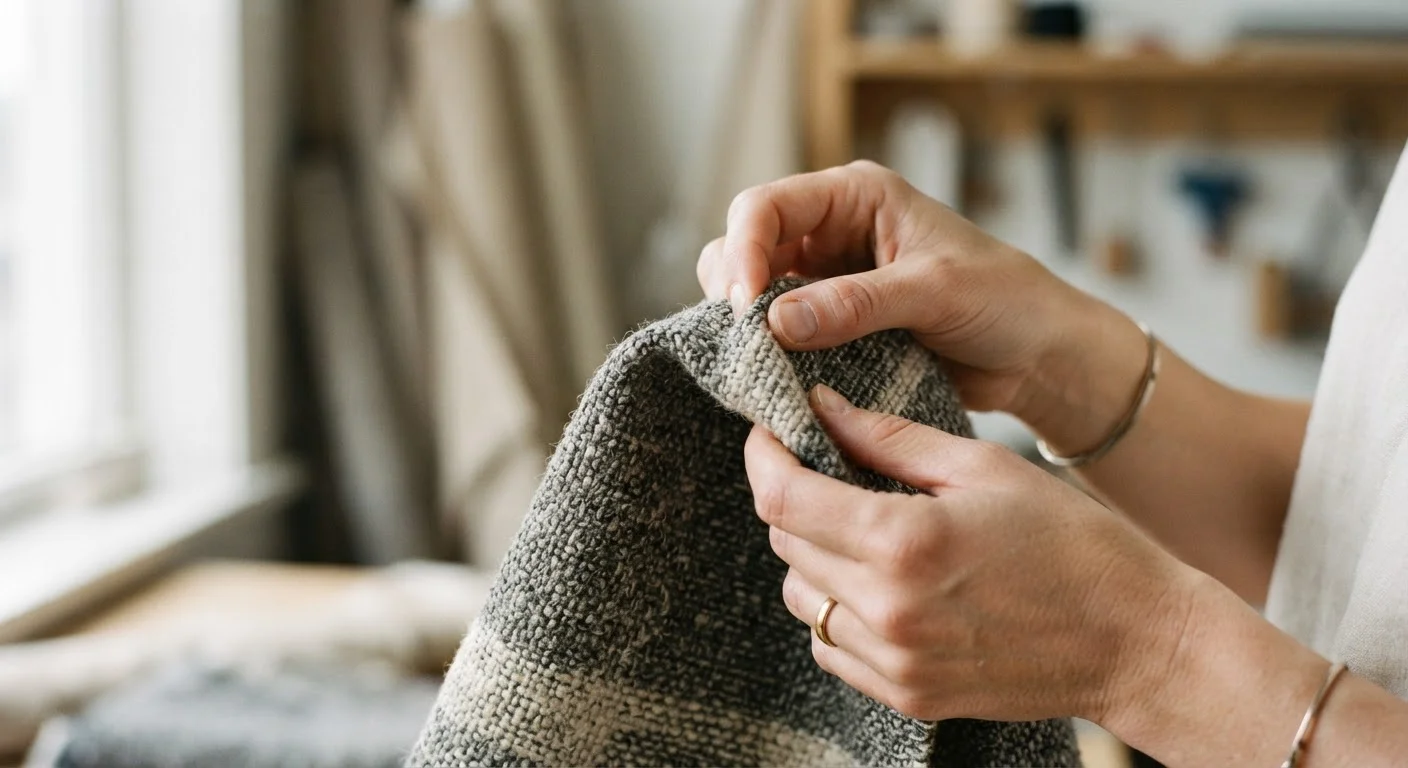
Photo: SaverSteals.com | Explore More. Shop Smarter. editorial
—— In This Article
Key Takeaways
- Fabric weight and weave density are reliable indicators of garment durability at any price point.
- Care labels reveal hidden long-term costs — dry-clean-only items can erode a discount quickly.
- Fiber content matters: natural and long-staple synthetic fibers generally outlast cheap blends.
- Simple physical tests — stretch, scrunch, pill check — take under a minute and work in-store or on arrival.
- A low sticker price only represents value if the garment holds up through repeated wear and washing.
Why Fabric Assessment Matters at the Point of Sale
A marked-down price on a garment that wears out after five washes is not a saving — it is a delayed full-price purchase of a replacement. Understanding how to read fabric quality quickly and accurately is one of the most transferable skills in practical clothes shopping, and it applies equally to clearance rails, flash sales, and secondhand apps.
Most fabric quality signals are visible or tactile and require no specialist equipment. The challenge is knowing what to look for before price anchoring — the psychological effect of a discount — clouds your judgment. Running a consistent physical check every time removes that bias.
If you want to understand why certain garments end up on sale in the first place, our article on how retailers price and discount clothing gives useful background. Knowing that context helps you distinguish genuine surplus from clearance of unsellable stock.
Apply This to Secondhand Shopping Too
These same fabric checks are equally useful at thrift stores and on resale apps, where garments have already had a first life. For a full condition checklist covering seams, zippers, and staining, see our guide before buying secondhand clothing.
The checks described in the steps below take between five and fifteen minutes total, and can be adapted for both in-store and online shopping contexts.
Online Purchases Limit Physical Testing
When buying discounted clothing online, you cannot feel the fabric before it arrives. Check the fiber content and fabric weight listed in the product description, read return policies carefully, and treat delivery as your first real opportunity to run these tests. A retailer that does not accept returns on sale items shifts all the risk to you.
What to Do Before and After Running These Checks
These fabric checks work best as part of a wider purchase evaluation, not as a standalone filter. Before you assess fabric quality, confirm that the garment fits the practical brief: the right size, a returns policy you can live with, and a total landed cost you have actually calculated.
Our pre-purchase checklist for sale clothing covers those surrounding factors in a structured format that pairs well with the fabric steps above.
After your checks, the decision framework is straightforward: if the fabric passes the weight, weave, pilling, and care label tests, and the construction is solid, the garment is likely to deliver reasonable longevity. If it fails two or more checks, the discount rarely justifies the purchase — particularly for high-frequency wear items like basics and workwear.
For secondhand and resale purchases specifically, these same steps apply directly. The secondhand clothing hub has additional guidance on where to shop and what to expect from pre-owned garments across different price tiers.
What you will need
Care label / product description
Lists fiber content, fabric weight (sometimes), and washing instructions — the single most information-dense tag on any garment.
Adequate lighting
Good light reveals pilling, loose threads, thin patches, and uneven weave density that are easy to miss in dim fitting rooms or product photos.
Smartphone with zoom camera
Useful for reading fine print on care labels in poor lighting or for zooming into fabric texture in online product images.
Read the fiber content label first
Before anything else, find the care label — usually sewn into an interior seam or at the back neckline — and read the fiber breakdown. The label is legally required in the US to list the percentage of each fiber present.
As a general guide: higher percentages of natural fibers (cotton, wool, linen) or long-staple synthetics (nylon, higher-denier polyester) tend to indicate better durability than blends heavy in recycled filler fibers or generic 'other fibers' listings. A vague or incomplete label is itself a warning sign.
Check the fabric weight by feel
Hold the fabric between two fingers and assess its substance. Heavier fabric — meaning more grams of material per square meter — generally indicates a denser, more durable weave. Thin, tissue-like fabric in a category that demands durability (workwear, denim, outerwear) is a red flag regardless of price.
For knits like T-shirts and sweatshirts, a fabric that feels insubstantial or nearly transparent when held up to light is likely to pill or distort quickly after washing.
Examine the weave or knit structure
Hold the fabric up to a light source and look at the structure. For woven fabrics (shirts, trousers, jackets), you want to see a consistent, tight grid with no gaps or irregularities. Loose weaves let air and moisture through faster and are more prone to snagging.
For knit fabrics (T-shirts, knitwear, jersey), pull the fabric gently in multiple directions and watch how it recovers. Good recovery — returning to its original shape without distortion — indicates an adequate spandex or elastic fiber content and consistent stitch tension.
Test for pilling resistance
Rub a small area of the fabric briskly against itself for five to ten seconds, then inspect the surface. If tiny fiber balls (pills) form immediately, the fabric has low pilling resistance — a common issue with low-grade polyester blends and loosely spun cotton.
Pilling is mostly cosmetic but accelerates with washing, and heavily pilled garments look worn out quickly regardless of how clean they are.
Review the care instructions for ongoing cost
Check the washing instructions on the care label before committing. Machine-washable, tumble-dry-friendly garments have the lowest lifetime maintenance cost. Hand-wash-only or dry-clean-only items carry ongoing time or financial costs that can significantly reduce the effective value of a sale price.
This matters especially for frequently worn pieces. A garment you wear twice a week has very different maintenance economics from something worn occasionally. For a broader look at how these factors add up, see our guide on costs that quietly inflate a clothing bargain.
[important_callout]Inspect the construction details
Fabric quality and garment construction are related but separate. Even good fabric can be poorly assembled. Check seam allowances (wider is more durable), stitch density (more stitches per inch means stronger seams), and whether stress points like pockets and armholes are reinforced.
For a structured approach to evaluating overall garment condition — particularly useful for secondhand purchases — our secondhand clothing condition checklist applies the same logic to pre-owned items.

Clothing Editorial Team
Clothing Editorial Team is the collective byline for our editorial team and contributor network. Articles published under this byline or an editorial pen name are researched, written, and reviewed according to our editorial standards for clarity, consistency, and independence before publication.
View author profile