
What a Vehicle History Report Does and Doesn't Tell You
History reports reveal past accidents and title issues, but they have limits. Understand what these documents cover—and what they can miss.
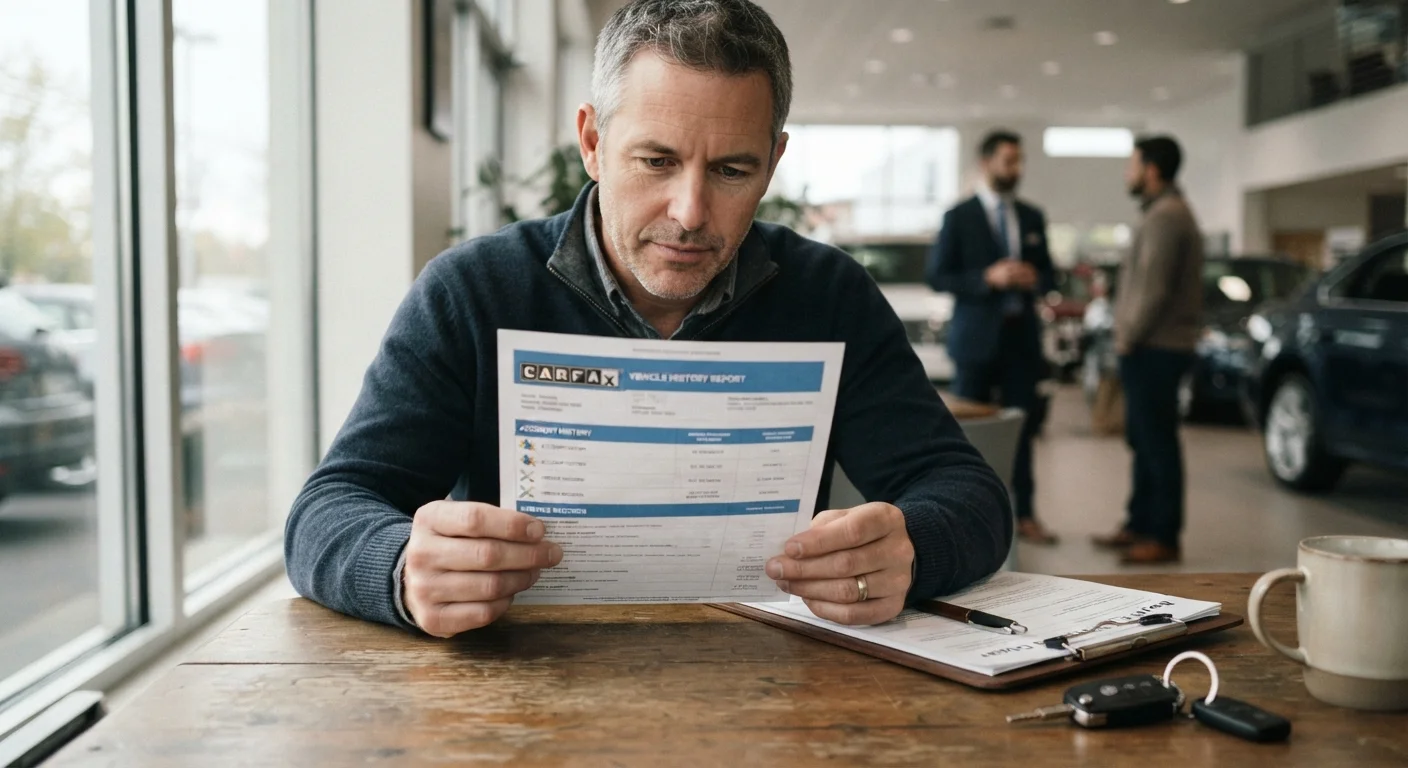
Photo: SaverSteals.com editorial
—— In This Article
Key Takeaways
- Vehicle history reports show title status, reported accidents, and odometer readings — but only what was officially documented.
- Private repairs and unreported accidents will not appear on any history report.
- A clean report does not guarantee a vehicle is problem-free — always pair it with a professional inspection.
- Lemon law buybacks, flood damage, and salvage titles are among the most important red flags a report can surface.
- Understanding a report's limitations helps you ask better questions and avoid costly surprises.
What a Vehicle History Report Actually Contains
A vehicle history report draws on data from state DMVs, law enforcement agencies, insurance carriers, auto auctions, and federal databases. When any of these sources records an event tied to a vehicle identification number (VIN), that data can be pulled into a report. Here's what typically shows up:
- Title history: How many owners the car has had, and in which states it was registered.
- Title brands: Flags like salvage, rebuilt, flood, lemon law buyback, or odometer rollback — each a serious red flag.
- Reported accidents: Collisions that were reported to police or processed through an insurance claim.
- Odometer readings: A timeline of recorded mileage, useful for spotting rollback fraud.
- Service records: Maintenance logged at dealerships or participating repair shops.
- Auction and fleet records: Whether the car was a rental, taxi, or fleet vehicle.
This is genuinely useful information. Spotting a salvage title, a lemon law buyback, or an odometer discrepancy early can save you thousands of dollars and serious headaches.
~1 in 5
Used vehicles have a hidden title problem
CARFAX has estimated that roughly one in five used vehicles has a title issue or hidden history problem that affects its value or safety.
450,000+
Flood-damaged vehicles enter the market annually
The National Insurance Crime Bureau has reported that hundreds of thousands of flood-damaged vehicles are retitled and resold each year, many without clear disclosure.
~$4,000
Average value loss from undisclosed accident
According to general industry estimates, a vehicle with a reported accident history can lose thousands of dollars in resale value compared to a clean-history comparable.
What a Vehicle History Report Cannot Tell You
Here is where many buyers make a costly mistake: treating a clean report as a clean bill of health. Reports are only as complete as the data submitted to them. Several categories of problems simply won't appear:
- Privately repaired damage: A fender-bender fixed at a cash shop with no insurance claim leaves no trace.
- Mechanical wear: A worn transmission, aging timing chain, or failing wheel bearings won't show up anywhere in a history database.
- Unreported flood damage: If a car was driven through standing water and dried out at home, that event is invisible to reporting systems.
- Poor maintenance: A car that never had its oil changed, but was never serviced at a tracked shop, can look spotless on paper.
- Current condition: Reports are backward-looking. They say nothing about what's wrong with the car today.
Think of a vehicle history report the way you might think of a credit report — it reflects what was officially recorded, not the full truth of an entity's history. Important context can exist entirely outside the record.
Always Get a Pre-Purchase Inspection
Before finalizing any used vehicle purchase, pay for an independent inspection from a mechanic who has no relationship to the seller. Even a car with a spotless history report can have serious mechanical issues that only a trained eye on the actual vehicle will catch. The cost of an inspection is minor compared to the potential cost of a major repair.
How to Use a Report as Part of a Smarter Buying Process
A vehicle history report is a starting point, not a finish line. Use it to screen out obvious problems and generate smart questions — then go further.
Pair the report with a pre-purchase inspection. A qualified, independent mechanic can put the car on a lift, test components, and identify issues no database could detect. This step is particularly important if the report shows any prior accidents, even minor ones.
Ask the seller directly. Use what the report shows — or conspicuously doesn't show — to ask pointed questions. Gaps in service records, ownership changes across multiple states, or a stretch of unknown history are all worth discussing.
Check open recalls separately. Visit the NHTSA website and enter the VIN directly. Not all reports capture the most current recall status, and an unaddressed safety recall is something you'll want to know about before taking ownership.
Understand how it connects to insurance. Vehicles with salvage or rebuilt titles can face restrictions on coverage. If you're considering a car with a branded title, review your options with an insurer before finalizing any purchase. For a broader view of how coverage types differ, see our guide on car insurance coverage differences.
Frequently Asked Questions

Travel Editorial Team
Travel Editorial Team is the collective byline for our editorial team and contributor network. Articles published under this byline or an editorial pen name are researched, written, and reviewed according to our editorial standards for clarity, consistency, and independence before publication.
View author profile