
Age-Old vs. Modern Toy Materials: How They Hold Up Secondhand
Wood, hard plastic, fabric, and electronic components age differently. See which materials tend to hold up well and which to be cautious about.
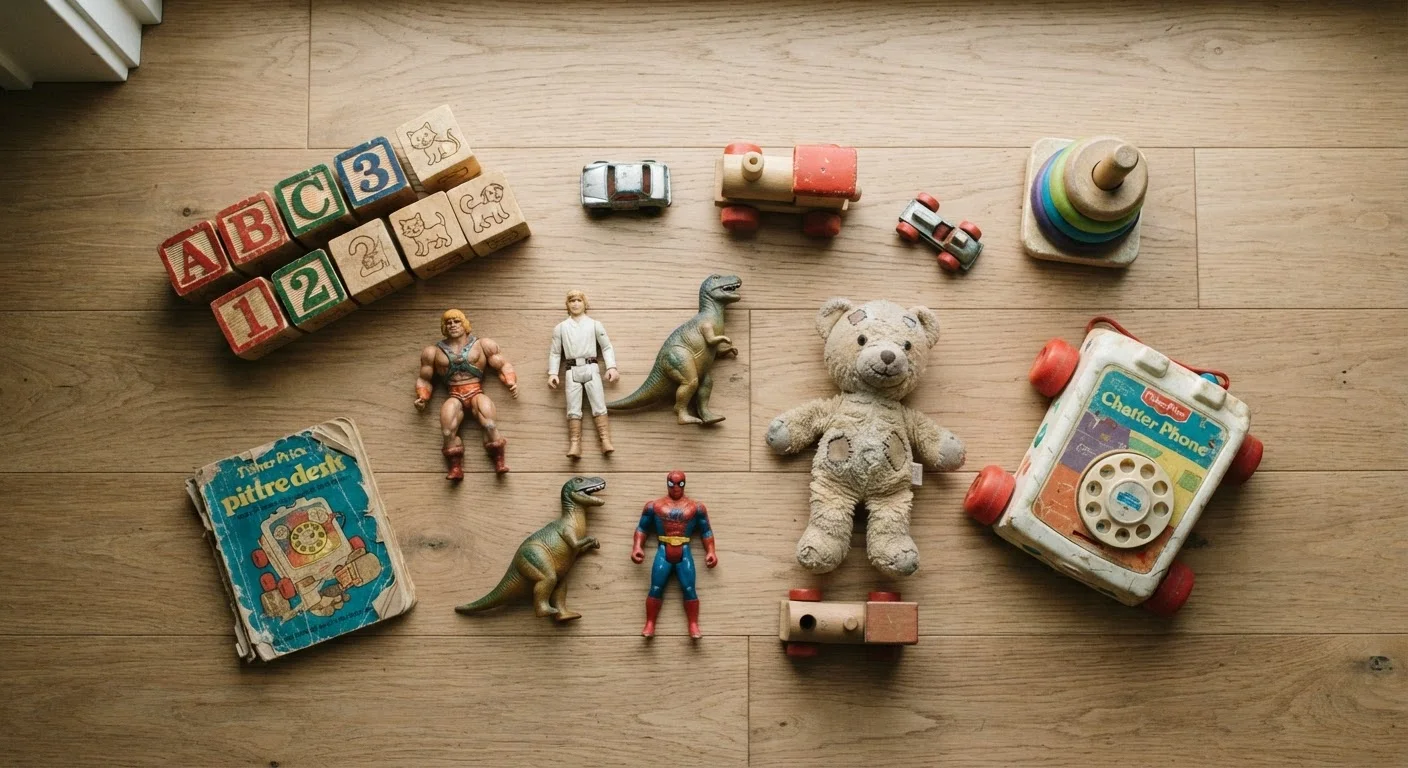
Photo: SaverSteals.com | Explore More. Shop Smarter. editorial
—— In This Article
Key Takeaways
- Solid wood toys typically outlast other materials when properly maintained, making them strong secondhand candidates.
- Hard plastic from before 2008 may contain phthalates or BPA — check manufacture dates before buying.
- Fabric toys require extra scrutiny for odor, mold, and internal fill condition that surface inspection alone won't reveal.
- Electronic toys degrade unpredictably; battery compartment corrosion is a common dealbreaker.
- Safety certification markings lose their assurance if a toy has been modified or heavily repaired.
Why Material Type Is the First Thing to Assess
When evaluating a used toy, the material it's made from tells you more than the price tag does. Different materials degrade along different timelines, show different failure modes, and carry different safety implications depending on when they were manufactured. A cracked wooden puzzle and a cracked hard plastic casing are not equivalent problems — and neither is the cleaning effort required for each.
Understanding how each major material category ages gives you a concrete framework for making quick, confident decisions at a thrift store, garage sale, or online listing. For a broader look at the trade-offs involved, see the real trade-offs of buying secondhand toys.
| Wood | Hard Plastic | Fabric/Plush | Electronic | |
|---|---|---|---|---|
| Durability over time | Very high | High (post-2008) | Moderate | Unpredictable |
| Key failure mode | Cracked joints, paint | Brittleness, yellowing | Internal mold, seam failure | Battery corrosion, circuit damage |
| Chemical safety risk | Lead paint (pre-1978) | Phthalates/BPA (pre-2008) | Flammability, PVC pellets | Battery leakage, capacitors |
| Inspection difficulty | Low | Low to moderate | Moderate to high | High |
| Cleanability | Good (surface) | Excellent | Variable by material | Limited — avoid moisture |
| Overall secondhand viability | Strong | Good with date check | Caution advised | Highest due diligence needed |
Wood: The Most Forgiving Material
Solid wood toys — blocks, shape sorters, puzzles, pull toys — are among the most resilient items in the secondhand toy market. Wood doesn't fatigue the same way plastics do, and surface wear like scratches or fading paint rarely affects structural integrity. The key inspection points are splinters, cracked joints, and the condition of any paint or finish. Peeling paint on older toys warrants caution because lead-based paint was used in some products manufactured before 1978, and certain imported toys sold through the early 2000s also had paint safety issues.
If the finish is intact and the piece is structurally sound, solid wood toys can outlast multiple owners with minimal reconditioning. Compare this to engineered wood, which swells, delaminates, and doesn't sand or refinish well — the same distinction that applies to used furniture. See why solid vs. engineered wood matters more the second time around for parallel guidance.
Hard Plastic: Know the Manufacturing Era
Hard plastic toys — action figures, building sets, ride-ons, playsets — can hold up remarkably well, but their safety profile depends heavily on when they were made. Regulatory changes in the US tightened chemical restrictions on children's products significantly around 2008, reducing permissible levels of phthalates and eliminating BPA from many toy formulations. Toys manufactured before that window carry a higher chance of containing chemicals now restricted under the Consumer Product Safety Improvement Act (CPSIA).
Visible signs of aging in hard plastic include yellowing (especially common in ABS plastic), hairline cracks, and brittleness at stress points like hinges and snap connectors. A yellowed toy isn't automatically unsafe, but brittleness is a red flag — small shards present a choking and laceration hazard. For connected guidance on safety markings that help date and verify toys, see reading the safety markings on used toys.
Dating Hard Plastic Toys Quickly
Look for a molded date stamp inside the battery compartment or on the underside of the toy — many manufacturers include production year codes. If no date is visible, check for CPSC-compliant safety marks like the ASTM F963 reference, which became more consistently applied after 2008 regulatory changes. When in doubt, prioritize toys with clear country-of-origin and certification markings over unmarked pieces.
Fabric and Stuffed Toys: Surface Condition Isn't Enough
Plush toys, cloth dolls, and fabric play mats are the category most prone to hidden defects. What looks clean on the outside can harbor mold or mildew inside the fill material, particularly if the toy was stored in a damp environment. Squeeze the toy firmly and take note of any musty odor released — this is a reliable indicator of internal moisture damage that washing alone won't fix.
Additionally, check seams for integrity and evaluate whether the fill has compressed or shifted unevenly. Pellet-filled toys require extra scrutiny; older versions sometimes used PVC pellets rather than safer alternatives. Fabric toys made for children under three should meet specific flammability standards — look for a sewn-in label confirming compliance. For cleaning approaches once you've cleared inspection, cleaning and sanitising used toys without damaging them covers fabric-specific methods in detail. Fabric durability across categories follows consistent patterns — the same logic explored in fabric types that hold up well secondhand applies here.
Electronic Toys: The Highest-Risk Category
Electronic toys introduce the most variables of any material category. Circuit boards can corrode, battery compartments are frequently damaged by leaking alkaline batteries, and speakers degrade over time. The core inspection protocol for any electronic toy is to open the battery compartment immediately — look for white or blue-green crystalline residue, which signals past leakage. Even cleaned compartments may have corroded contacts that cause intermittent failures.
Beyond battery damage, check whether charging ports (for rechargeable toys) show physical damage, and test all interactive functions before committing to a purchase. Software-dependent toys — those requiring app connectivity or firmware updates — may become non-functional if the supporting infrastructure is discontinued. Treat electronic toys as higher-risk purchases best suited to low-price listings where a partial or full failure is an acceptable outcome.
This article is for informational purposes only. Safety standards and regulations can change; consult current CPSC guidelines and manufacturer documentation when assessing specific products.

Toys Editorial Team
Toys Editorial Team is the collective byline for our editorial team and contributor network. Articles published under this byline or an editorial pen name are researched, written, and reviewed according to our editorial standards for clarity, consistency, and independence before publication.
View author profile