
Hand Tools vs. Power Tools: Which Makes More Sense to Buy Used?
Not all tools age the same way. Compare the risks and rewards of buying hand tools versus power tools on the secondhand market.
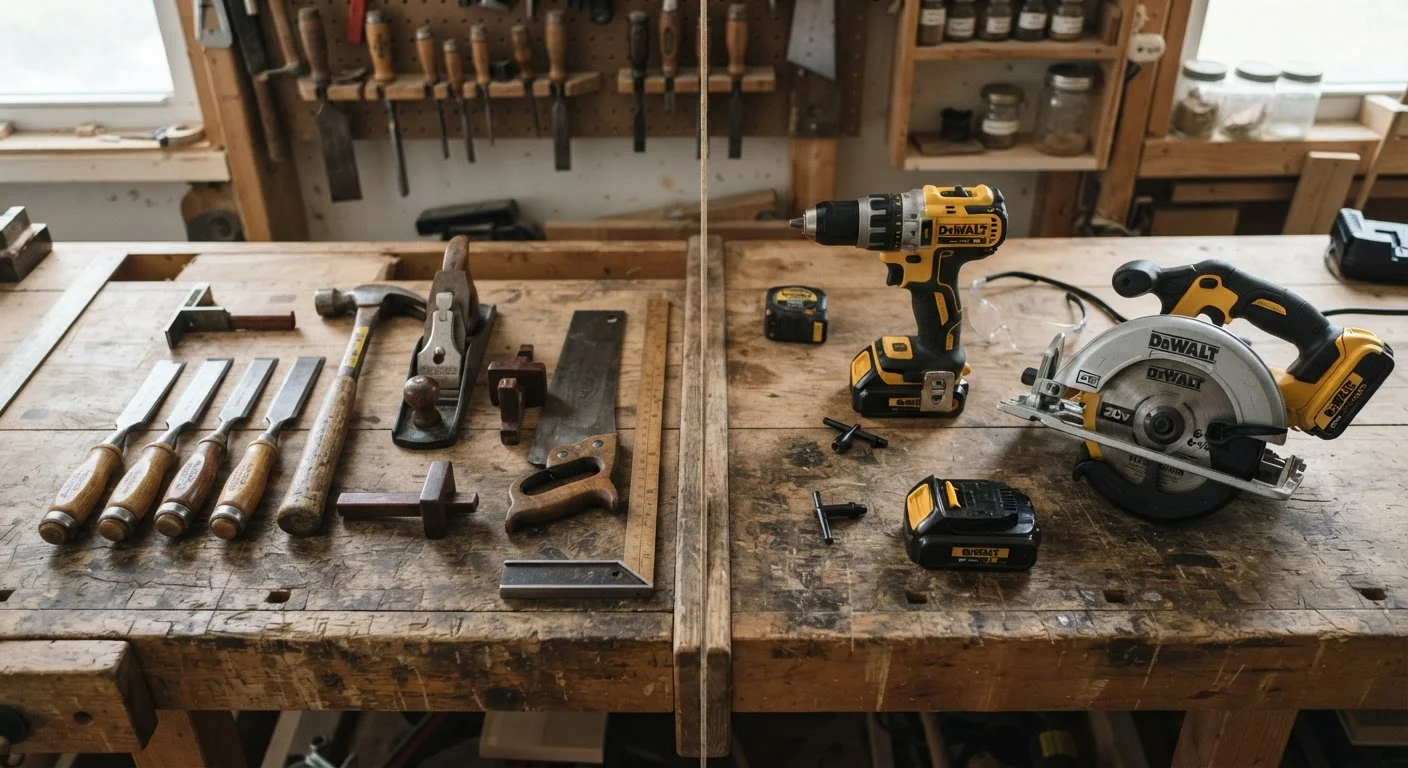
Photo: SaverSteals.com | Explore More. Shop Smarter. editorial
—— In This Article
Key Takeaways
- Hand tools generally carry lower risk when bought used because they have no motors, batteries, or electronics to fail.
- Power tools require more thorough inspection — worn brushes, dead battery cells, and damaged cords are common hidden costs.
- Auctions and resale platforms vary widely in inspection opportunity; in-person inspection reduces risk significantly.
- Older hand tools from reputable manufacturing eras can outperform newer budget-grade new tools in durability.
- For infrequent-use power tools, renting may be more economical than buying used.
Why the Tool Category Changes Everything
When you're weighing a secondhand purchase, the type of tool matters as much as its visible condition. A used hammer and a used cordless drill may look equally worn on a resale listing, but they carry fundamentally different risk profiles. Hand tools — chisels, wrenches, saws, planes — have no motors, no electronics, and no batteries. Their condition is largely what you see. Power tools, by contrast, contain components that degrade invisibly: motor brushes, wiring insulation, battery cells, and switches that may test fine cold but fail under sustained load.
This distinction shapes everything about the secondhand transaction — from where you should shop to what questions you need to ask. For a full primer on navigating the used tool market from the start, see our complete guide to buying and owning secondhand tools.
The Case for Buying Used Hand Tools
Hand tools age well when they've been stored reasonably. Surface rust on a plane body or chisel is often cosmetic — removable with mild abrasive and oil. The underlying steel, casting, or forging is typically unaffected. What you're really assessing is edge geometry, handle integrity, and any cracks in castings or forgings.
One underappreciated advantage: hand tools from certain manufacturing eras — particularly US and European-made pieces from the mid-20th century — were produced to tolerances that many budget-grade new tools don't match. This is why vintage hand planes and socket chisels attract consistent interest on the secondhand market. That said, age alone isn't a quality signal; understanding how manufacturing era and brand history affect secondhand value helps you sort the gems from the junk.
| Used Hand Tools | Used Power Tools | |
|---|---|---|
| Inspection ease | High — condition largely visible | Moderate to low — internal wear hidden |
| Hidden failure risk | Low — no motors or electronics | High — brushes, batteries, wiring |
| Suitability for online/auction purchase | Generally suitable | Risky without in-person test |
| Consumable replacement costs | Minimal — handles, edges only | Potentially significant — battery packs |
| Value retention over time | Strong for quality-era pieces | Depreciates faster, especially older platforms |
| Safety concerns when buying used | Low if no cracks or damage | Higher — cords, switches, overheating risk |
Inspection is also straightforward. You can check edge condition, test fit and feel, and spot damage without powering anything on. This makes hand tools well-suited to online resale platforms and auction lots where in-person testing isn't possible — though photos are never a complete substitute for hands-on assessment.
The Risks of Buying Used Power Tools
Power tools introduce complexity that hand tools simply don't have. The components most likely to cause problems include:
- Brushed motors: Carbon brushes wear down with use. Replacements are often inexpensive, but a tool near the end of its brush life may perform acceptably in a quick test and fail within hours of real use.
- Batteries: Lithium-ion and NiMH battery packs degrade with charge cycles. A pack that holds enough charge to complete a demo may be useless under a sustained load. Battery replacements can cost nearly as much as a new budget-tier tool.
- Cords and switches: Frayed cords or intermittent switches are safety hazards, not just inconveniences. These aren't always visible without careful inspection.
- Proprietary platforms: If the battery platform has been discontinued, replacement packs may be unavailable or priced at a premium.
Never Skip a Corded Tool Safety Check
Before purchasing any used corded power tool, inspect the full length of the cord for cuts, kinks, or repaired sections wrapped in tape. Check that the strain relief at the tool body is intact and that the plug pins are straight and unscorched. A tool with compromised wiring is a shock and fire hazard — no price discount justifies the risk.
This doesn't mean used power tools are never worth buying — it means the math needs to work even after accounting for potential part replacement. A detailed breakdown of total cost of ownership is worth reviewing before committing to a used power tool purchase.
Inspection Strategies by Purchase Channel
Where you buy significantly affects how much risk you're taking on:
- Estate sales and garage sales
- Generally allow hands-on inspection and sometimes a quick test. Best channel for used power tools if you can plug them in and run them under light load before paying.
- Online resale platforms
- Photos and seller descriptions vary wildly in accuracy. Hand tools are lower-stakes here; power tools carry meaningful risk without a return policy or in-person test.
- Auction sites and liquidation lots
- Pricing can be favorable, but lots are often sold as-is with limited inspection. Hand tools fare better in this environment; buying a power tool lot without inspection rights is speculative.
- Local classifieds and marketplace apps
- Allow meetups for inspection before purchase — the closest you can get to a private sale with some degree of vetting. Always request a demonstration of power tools under load, not just at idle.
For shoppers who've never bought a secondhand tool before, a practical starter's roadmap covers the inspection basics across all tool categories.
When Renting Beats Buying Used
For power tools you'll use once or twice, neither a used purchase nor a new purchase may be the most economical path. Tool rental from a hardware or equipment rental outlet gives you access to a maintained, tested machine without the residual ownership cost. How tool rental compares to buying on sale for one-off jobs walks through the numbers for common project scenarios.
The calculus shifts toward buying — used or otherwise — when you'll use the tool regularly. For high-frequency use, a well-inspected used power tool from a reputable channel can represent solid value. For occasional use, the hidden costs of ownership often tip the balance toward rental. Hand tools, which require no ongoing consumables, are more defensible purchases even at low frequency of use.
If you're still sorting out which used tool claims are worth taking seriously and which are overstated, common myths about buying used tools addresses the most persistent misconceptions with evidence-based perspective.

Tools Editorial Team
Tools Editorial Team is the collective byline for our editorial team and contributor network. Articles published under this byline or an editorial pen name are researched, written, and reviewed according to our editorial standards for clarity, consistency, and independence before publication.
View author profile