
How Tool Age and Brand History Affect Secondhand Value
Older doesn't always mean cheaper — or worse. Understand how manufacturing eras and brand reputation shape used tool quality and price.
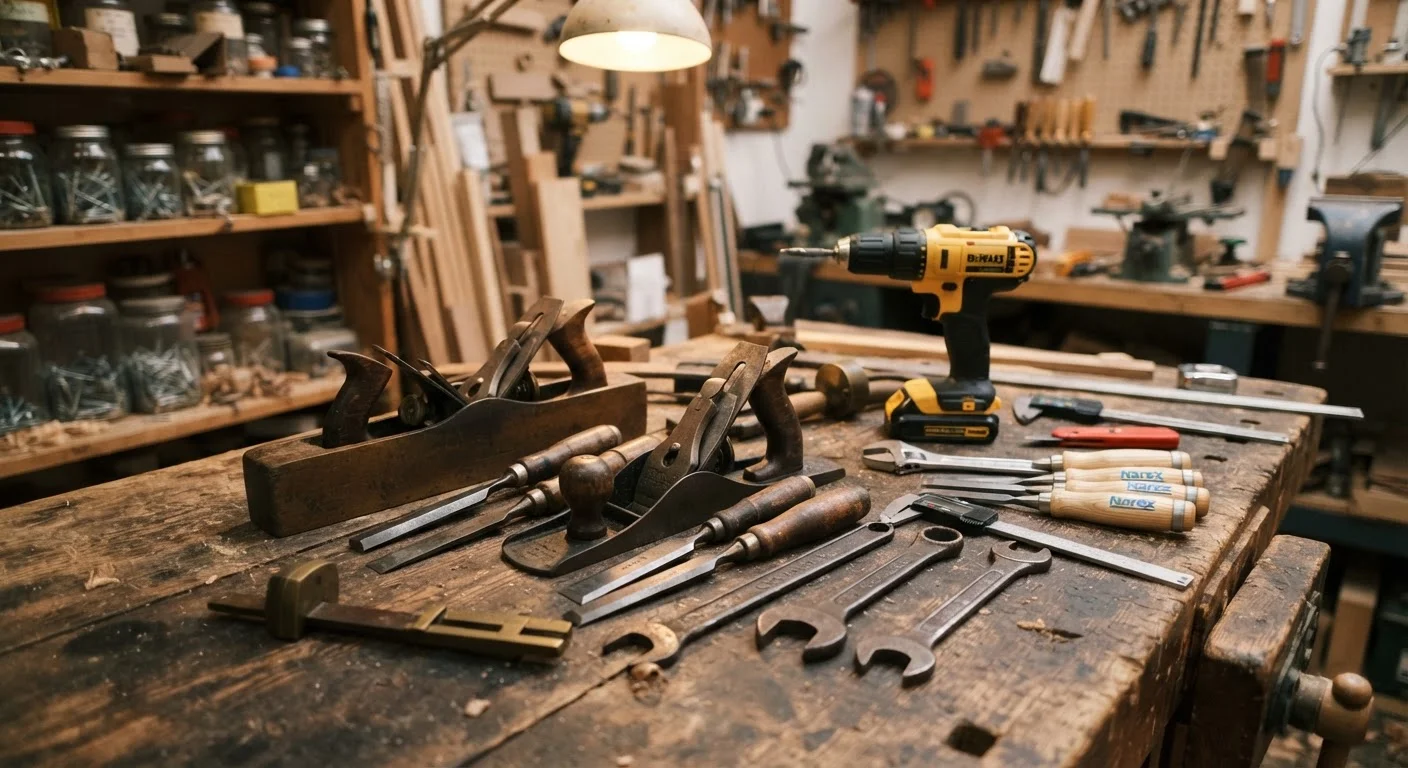
Photo: SaverSteals.com | Explore More. Shop Smarter. editorial
—— In This Article
Key Takeaways
- Older tools are not automatically cheaper — collector demand and build quality can push prices higher than expected.
- Brand history matters: ownership changes and factory relocations often mark shifts in manufacturing quality.
- Parts availability for discontinued tools directly affects their long-term usability and resale value.
- Knowing a brand's manufacturing timeline helps you identify whether a used tool is a genuine value or an overpriced relic.
- Power tools depreciate faster than most hand tools, where vintage examples often hold or gain value.
Why Age Isn't a Simple Proxy for Value
When shoppers browse secondhand tools, age tends to get treated as a discount signal. The older the tool, the lower the expected price — or so the assumption goes. In practice, the relationship is far less predictable. Some tools made 50 or 60 years ago fetch prices that rival new equivalents; others from the same era sell for next to nothing because no one wants them or parts are impossible to find.
What actually drives secondhand value is a combination of build quality at the time of manufacture, brand trajectory since then, and current demand in the resale market. Age is relevant mainly as a proxy for those factors — not as a standalone indicator. A tool made during a brand's peak manufacturing period, using better steel or tighter tolerances than what came later, can outperform and outlast newer versions. Recognising that distinction is the core skill for used tool buyers.
For a broader overview of how the used tool market is structured, see how the secondhand tool market works before diving into specific valuation factors.
Manufacturing Eras and What They Signal
Most established tool brands have gone through distinct manufacturing phases, often tied to ownership changes, factory relocations, or shifts in materials sourcing. Tool collectors and enthusiasts have documented many of these transitions in detail, and that knowledge is publicly available if you know where to look.
A common pattern: a brand builds a strong reputation for quality over decades, gets acquired by a larger conglomerate, and production gradually shifts toward lower-cost materials or overseas manufacturing. The tools made before that transition are often better constructed — heavier castings, higher-grade steel, tighter fit on moving parts — even if they look identical to post-transition models.
30–50%
Typical price premium for pre-acquisition vintage hand tools
Tool resale communities commonly observe that hand tools from a brand's pre-acquisition manufacturing period sell at notable premiums over post-transition equivalents in similar condition.
~10 years
Average window before power tool battery systems become obsolete
Industry observers note that proprietary battery platforms for cordless power tools typically see support wind down within roughly a decade of the platform's introduction, affecting long-term usability.
Serial numbers, country-of-origin markings, and patent dates stamped on tools can help you place a specific tool in its manufacturing timeline. Many collector communities maintain detailed databases that map these markings to production years, which in turn helps determine whether a particular example was made before or after a notable quality shift.
This matters practically: a used hand plane from a brand's pre-acquisition period may need only light cleanup and sharpening to outperform a current production equivalent, while a post-transition version of the same model might require more work to achieve the same result.
How Brand Reputation Shapes Resale Pricing
Brand reputation in the used tool market operates on two levels. The first is general consumer awareness — brands with household-name recognition tend to hold resale value simply because more buyers are comfortable purchasing them. The second is the more specialized knowledge held by experienced buyers: which specific production runs were exceptional, which eras to avoid, and which models within a brand's lineup were genuinely well-made versus budget-grade.
Buyers who do their research can exploit the gap between these two levels. A brand that is broadly well-regarded may have specific product lines or manufacturing periods that are overvalued relative to their actual quality — or conversely, a less-famous brand may have produced exceptional tools during a particular era that sell below their practical worth because fewer buyers know about them.
Use collector forums to map production timelines
Specialized tool collector communities — many accessible through general web searches — have documented ownership changes, production shifts, and quality variations for most major brands. Before purchasing a used tool at a price that seems either too high or suspiciously low, spend a few minutes checking whether there's a documented reason tied to its manufacturing era. This kind of targeted research takes little time and can prevent both overpaying and missing a genuine find.
It's also worth understanding that brand reputation affects parts and support availability. Tools from brands that maintained consistent designs over long periods are often easier to restore and maintain, because a larger ecosystem of replacement parts developed around them. This directly affects long-term usability — a factor that the true cost of a cheap used tool makes clear is just as important as purchase price.
Applying This Framework Before You Buy
In practice, evaluating age and brand history before a used tool purchase means doing a small amount of targeted research upfront. Start by identifying the approximate production year using any date markings, patent numbers, or model codes visible on the tool. Then check whether that date falls before or after any documented ownership or production changes for that brand.
Cross-reference completed sales — not asking prices — on resale platforms to understand what buyers are actually paying for that era of that brand. This gives you a realistic price anchor based on market behavior rather than seller optimism.
Hand tools and power tools age differently and carry different risk profiles in this analysis — comparing hand tools and power tools on the secondhand market covers those distinctions in detail. And if you want to make sure condition labels on listings match what you're actually looking at, decoding secondhand tool condition grades is a useful companion reference.
The broader context for all of this — sourcing, inspecting, and maintaining used tools — is covered in the complete guide to buying and owning secondhand tools.
Frequently Asked Questions

Tools Editorial Team
Tools Editorial Team is the collective byline for our editorial team and contributor network. Articles published under this byline or an editorial pen name are researched, written, and reviewed according to our editorial standards for clarity, consistency, and independence before publication.
View author profile