
Everything You Need to Know About Buying and Owning Secondhand Tools
A comprehensive, end-to-end resource on sourcing, inspecting, cleaning, and maintaining quality used tools on any budget.
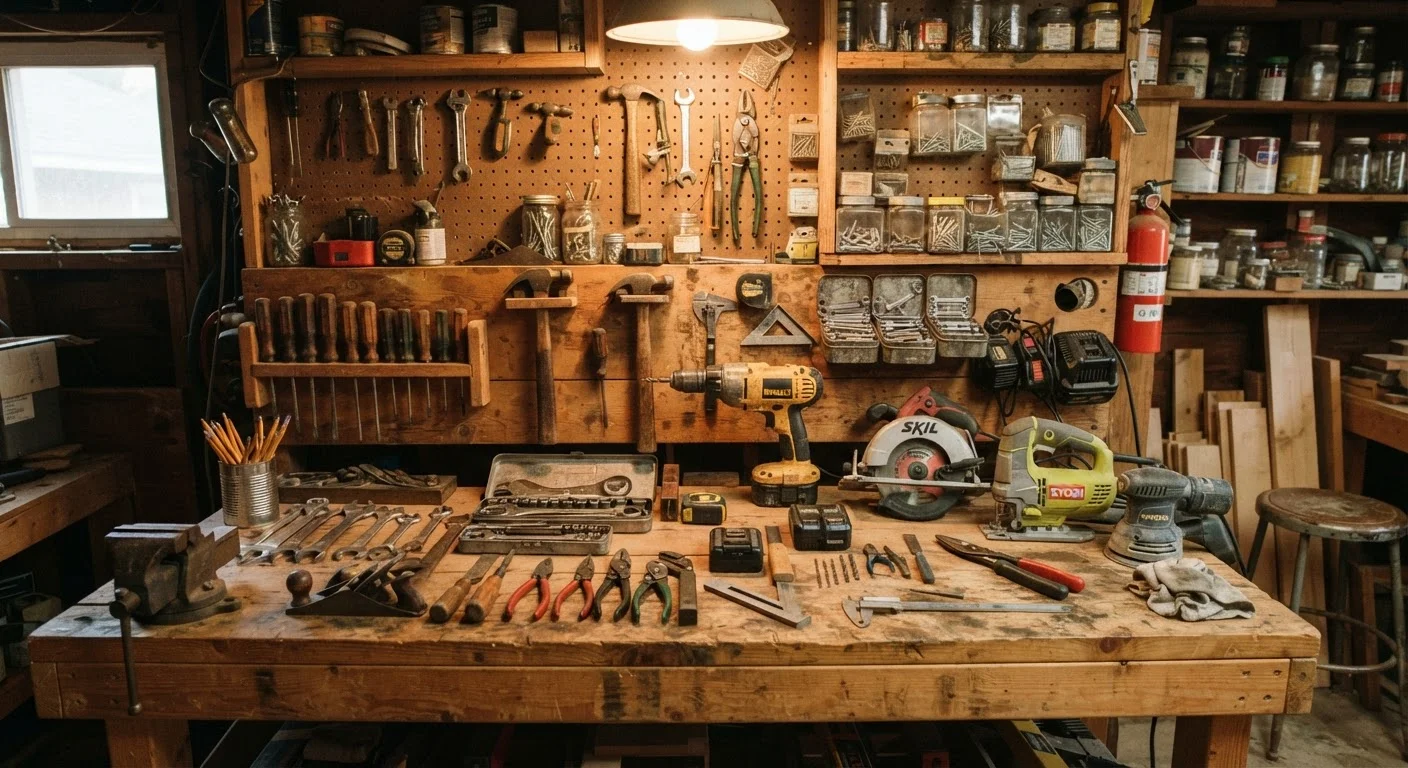
Photo: SaverSteals.com | Explore More. Shop Smarter. editorial
—— In This Article
Key Takeaways
- Knowing where to shop — estate sales, auctions, resale platforms — determines the quality and price of what you find.
- A systematic physical inspection before purchase prevents most costly mistakes with used tools.
- Online auction lots carry unique risks; reading listings critically and understanding return policies matters.
- Basic cleaning and lubrication can restore most used tools to reliable working condition.
- Consistent maintenance extends the service life of secondhand tools significantly beyond initial purchase value.
Understanding the Secondhand Tool Market
The used tool market is broader and more structured than most buyers realize. Supply comes from several distinct channels: retired tradespeople liquidating shops, estate sales, pawn shops, municipal surplus auctions, and peer-to-peer resale platforms. Each channel carries different risk profiles, pricing norms, and inventory quality. For a thorough breakdown of how these channels work before you spend anything, see our overview of the secondhand tool market.
Tools age differently than most consumer goods. A well-made hand tool — a quality plane, a solid wrench, a cast-iron vise — can outlast multiple owners with minimal degradation. Power tools are more complex: motors, brushes, and switches wear over time and can be expensive to replace. Understanding this distinction guides smarter sourcing from the start.
~30–50%
Typical price reduction vs. new retail
Used tool prices vary widely by channel and condition, but estate sales and auctions commonly yield hand tools at 30–50% of current retail equivalents.
3–5x
Lifespan multiplier for well-maintained tools
Quality hand tools maintained with basic cleaning and lubrication routinely outlast their original expected service life by multiple factors.
60%+
Used power tool listings with undisclosed issues
Industry resale observers note that a majority of online used power tool listings omit or understate at least one condition issue, reinforcing the value of in-person inspection.
Where to Source Used Tools
Estate sales and tool-specific auctions consistently surface higher-quality inventory than general thrift stores, because they draw from tradespeople's lifetime collections rather than random household cleanouts. Local online classifieds allow you to inspect in person before committing — a significant advantage over mail-order purchases. Pawn shops price to move quickly, which creates margin for negotiation, though inventory is unpredictable.
Online resale platforms — marketplaces where sellers list individual items or lots — expand your geographic reach considerably. Shipping adds cost and removes the ability to test function before purchase, so factor both into any price comparison. If you're just starting out, our practical starter's roadmap for used tools walks through each channel with beginner-friendly guidance.
When evaluating a lot at an estate sale, bring a portable multimeter. Testing continuity on power tool switches and cords takes under two minutes and immediately separates functional tools from problem units.
Electrical faults are among the most common — and least visible — issues in used power tools. A quick continuity test costs nothing and prevents purchasing tools with unsafe or non-functional wiring.
Prioritize cast-iron and forged-steel construction over aluminum or plastic housings when shopping used. Older metal-bodied tools tolerate hard use and decades of storage far better than their modern lightweight counterparts.
Cast-iron and forged components resist warping and cracking under load and are generally repairable by a machinist if damaged, whereas aluminum castings often crack irreparably under stress.
How to Inspect Before You Buy
In-person inspection is your strongest protection against a bad purchase. Work through a consistent checklist rather than relying on impressions:
- Structural integrity: Check for cracks, welds, or repairs on handles, bodies, and frames. Any crack in a load-bearing component is a disqualifier.
- Rust assessment: Surface rust is usually cosmetic and removable. Pitting — rust that has eaten into the metal — weakens the tool and is rarely worth the effort.
- Moving parts: Actuate every hinge, gear, blade guard, and adjustment mechanism. Stiffness from grime is fixable; stripped threads or bent shafts are not.
- Electrical components (power tools): Inspect cords for cuts, fraying, or tape repairs. If the seller allows it, plug in and listen — unusual vibration or burning smell signals internal trouble.
- Completeness: Confirm all guards, blades, bits, and accessories are present. Missing safety components on power tools can be expensive or impossible to source.
Never skip the test-run on powered equipment when buying locally. A seller unwilling to demonstrate function under power is a meaningful red flag.
Navigating Online Auctions Safely
Online auctions introduce asymmetric information: the seller has handled the tool; you're working from photos and a description. Reduce that disadvantage systematically:
- Read the full listing, not just the headline. Condition disclosures are often buried in the fine print.
- Study every photo for the issues listed above — zooming into rust spots, cord condition, and adjustment mechanisms.
- Check the seller's feedback history for patterns of inaccurate descriptions or unresolved disputes.
- Understand the return policy before bidding. Many auction-format sales are final.
- Set a maximum bid based on your inspection assessment, not auction excitement. Momentum bidding consistently leads to overpaying.
Auction Momentum Can Lead to Overpaying
Competitive bidding creates psychological pressure that often pushes final prices above market value. Set a firm ceiling based on the tool's condition and comparable resale prices before the auction opens — and don't deviate from it. Once you've paid more for a used tool than a comparable new one costs, the economics of secondhand buying no longer apply.
Lot sales — multiple tools bundled together — can offer genuine value, but price each item individually before deciding whether the lot makes sense at the ask. One or two unusable pieces can undermine the economics of an otherwise solid lot.
Cleaning and Restoring Your Purchase
Most used tools need cleaning before use, and many benefit from light restoration. A practical sequence:
- Degrease: Remove built-up oil, grease, and shop grime with a solvent-based cleaner or dish soap, depending on the surface material.
- Address surface rust: A wire brush, rust converter, or fine abrasive (such as steel wool or sandpaper) removes light surface oxidation. Work with the grain on machined surfaces to avoid scratching precision faces.
- Lubricate: Apply appropriate lubricant to all pivot points, threads, and moving parts. The right lubricant type varies — light machine oil suits most hand tools; blade mechanisms may require dry lubricant to avoid attracting sawdust.
- Sharpen cutting edges: Chisels, plane irons, and saw blades dull over time. Sharpening to a consistent bevel restores function more reliably than any other single step.
- Inspect electrical connections (power tools): Replace any cord showing insulation damage before use. This is a non-negotiable safety step, not an optional upgrade.
Long-Term Ownership and Maintenance
Owning secondhand tools well means treating them as an ongoing investment rather than a one-time transaction. A few durable habits make a measurable difference:
- Store tools clean and dry. Moisture is the primary driver of rust and electrical degradation in workshop environments.
- Wipe down metal surfaces with a light coat of oil after use, particularly in humid climates or unheated storage spaces.
- Inspect power tool brushes annually — worn brushes accelerate motor wear and are inexpensive to replace if caught early.
- Keep cutting edges sharp. A dull tool requires more force, increases the risk of slipping, and produces lower-quality work.
When a tool reaches the end of its useful life for your purposes, the secondhand cycle continues: well-maintained tools resell more easily and at better prices than neglected ones. The same principles that guide buying — honest condition assessment, realistic pricing, complete documentation — apply equally when you become the seller.
For context on how similar buying-and-owning principles apply in other categories, the used furniture buying guide covers comparable inspection and maintenance logic for a different product type.
This article is for informational purposes only. Always follow manufacturer safety guidelines and local regulations when operating tools.

Tools Editorial Team
Tools Editorial Team is the collective byline for our editorial team and contributor network. Articles published under this byline or an editorial pen name are researched, written, and reviewed according to our editorial standards for clarity, consistency, and independence before publication.
View author profile